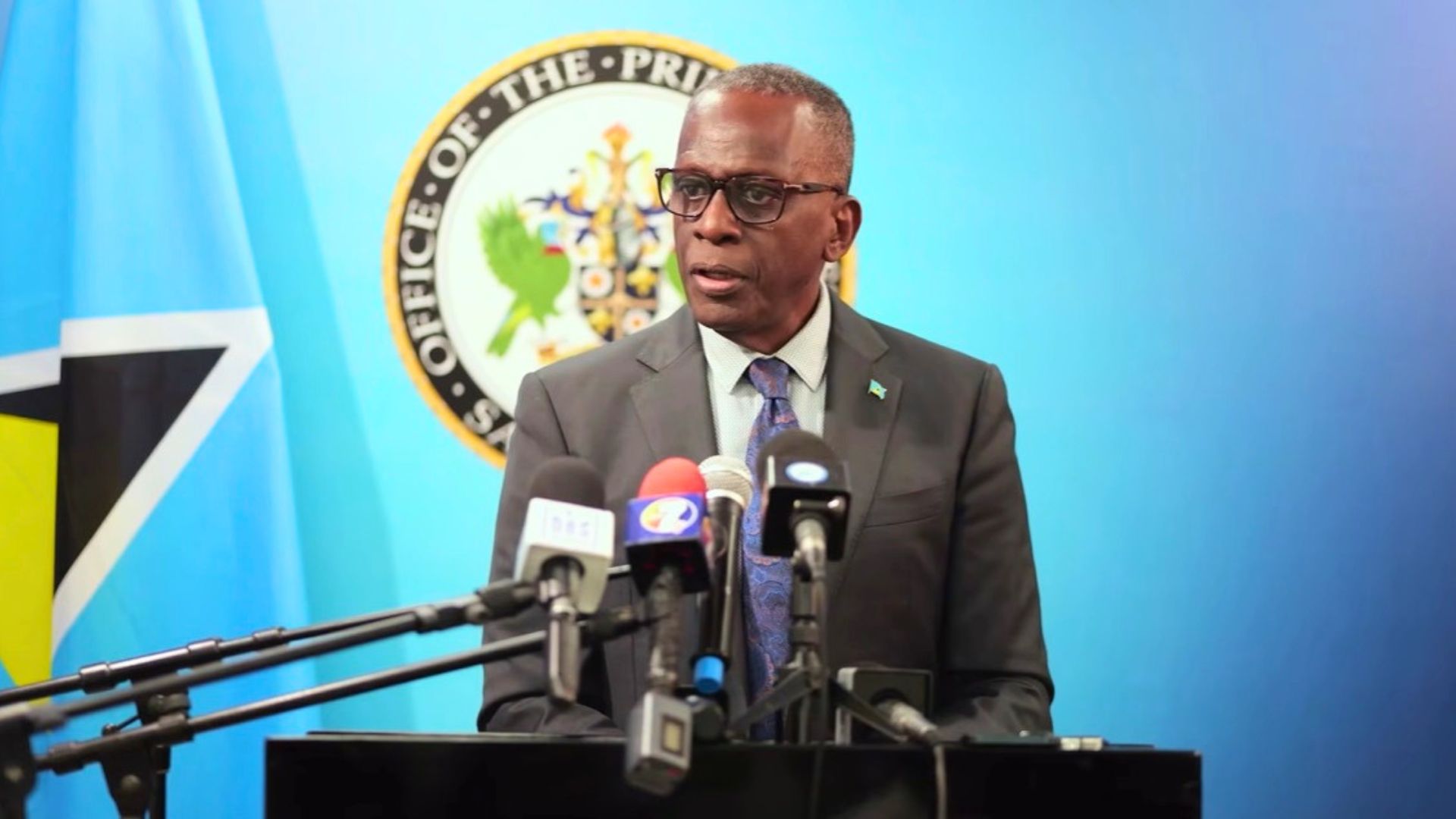
A heated political exchange over public safety has erupted in Saint Lucia, as Prime Minister Philip J. Pierre pushed back against sharp criticism from the opposition United Workers Party (UWP) during Monday’s weekly Cabinet press briefing. The clash followed a UWP-hosted press conference the prior week, where senior party figures and electoral candidates Sarah Flood-Beaubrun, Laura Jn Pierre-Noel and Titus Preville took aim at the incumbent administration’s response to a surge in violent crime, calling for bolder action and a cohesive national plan to reverse rising insecurity.
The opposition’s critique was anchored in growing public anger over recent violent incidents, most notably the fatal killing of 24-year-old Joy St Omer, whose estranged husband has been formally charged with her murder. Speaking to reporters on May 28, Jn Pierre-Noel emphasized that the killing served as a devastating reminder that hundreds of women across the island live in silent fear of gender-based violence. Beyond domestic violence, opposition leaders also highlighted that the national homicide rate has already climbed to 36 this year, a figure they say demands urgent, coordinated intervention from the national government.
When pressed by journalists to address the opposition’s demands, Pierre rejected the criticism outright, framing it as a disrespectful and opportunistic power grab. He argued that opposition leaders unfairly hold the government responsible for crimes rooted in personal passion and interpersonal conflict. “It shows a lack of respect to the people of Saint Lucia when you speak about crimes of passion and crimes of emotion and lay it on the backs of a government,” Pierre told reporters. “It’s disrespectful, it’s scornful, it’s contemptuous!”
The Prime Minister went on to defend his administration’s approach, outlining a multi-pronged, holistic strategy that combines law enforcement resourcing, social intervention, education reform, and targeted youth economic support to reduce criminal activity. A core component of the plan is enhanced investment in the Royal Saint Lucia Police Force, with Pierre noting that additional details on new policing initiatives would be unveiled to the public in the near future.
As part of the government’s upstream social intervention efforts, Pierre announced that the administration will launch a major crackdown on student truancy, linking disengagement from school to higher risks of youth involvement in crime. The government is also prioritizing expanded access to Technical and Vocational Education and Training (TVET), designed to give diverse learners practical, marketable skills aligned with their interests. Pierre argued that an inclusive, flexible education system that meets the needs of all students is a critical long-term tool to steer young people away from criminal pathways.
Economic empowerment for young Saint Lucians forms another key pillar of the crime reduction strategy, with the Prime Minister pointing to targeted grant programs and small business support delivered through the national Youth Economy Agency. He also highlighted ongoing investments in early childhood education and free emotional support services run by the Saint Lucia Social Development Fund (SSDF) that address underlying mental and social drivers of violence.
UWP economist and former Babonneau electoral candidate Titus Preville had pushed back on the government’s inaction ahead of the briefing, describing rising crime as a crippling burden that harms individual residents, destabilizes local communities, and drags down the island’s economic performance. Preville argued that all sectors of Saint Lucian society—including community groups, religious institutions, business leaders, and political parties—have a responsibility to address the growing public safety crisis.
Pierre, however, dismissed the opposition’s calls as empty and politically motivated. He claimed that the criticism comes from failed electoral candidates seeking to exploit public anxiety over crime to win political support they did not earn in past elections and are unlikely to gain in future contests. “That is why I respond in that way, when rejected politicians try to use crime to get votes that they did not get, to get votes that they most likely will not get. This is what is distasteful,” Pierre said. Closing his remarks, the Prime Minister extended an open invitation to any stakeholders with concrete, actionable policy proposals to collaborate, reiterating that the opposition’s current criticism lacks substance.