作者: admin

  • Hilaire on Carnival Pageant: ‘A tie will never happen again’

    Hilaire on Carnival Pageant: ‘A tie will never happen again’

    A landmark decision to crown two joint winners at Saint Lucia’s 2024 National Carnival Queen Pageant has triggered a full-scale review of competition rules across all of the island nation’s iconic Carnival events, with a new tie-breaker mechanism set to be introduced to prevent shared titles in future pageants.

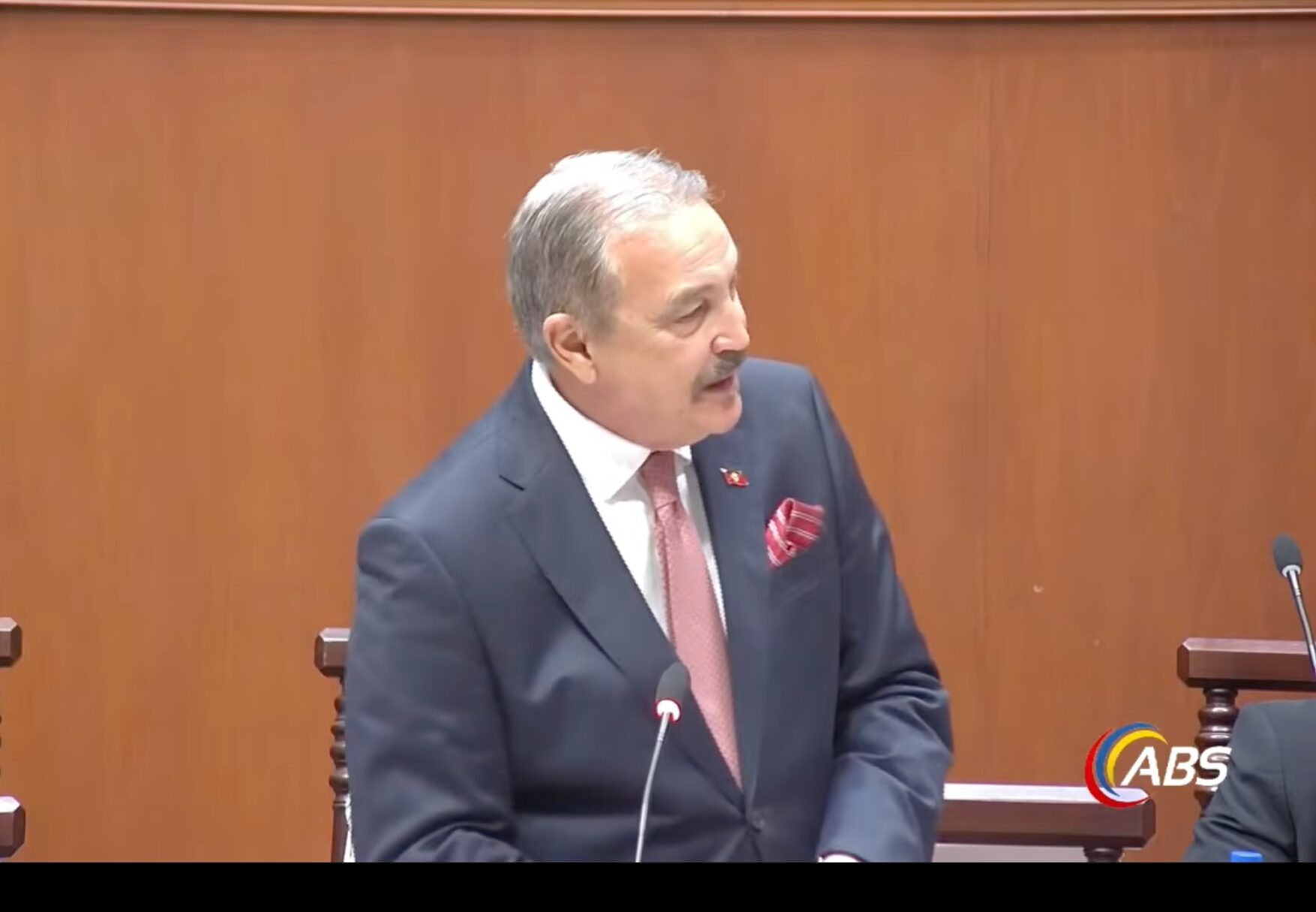
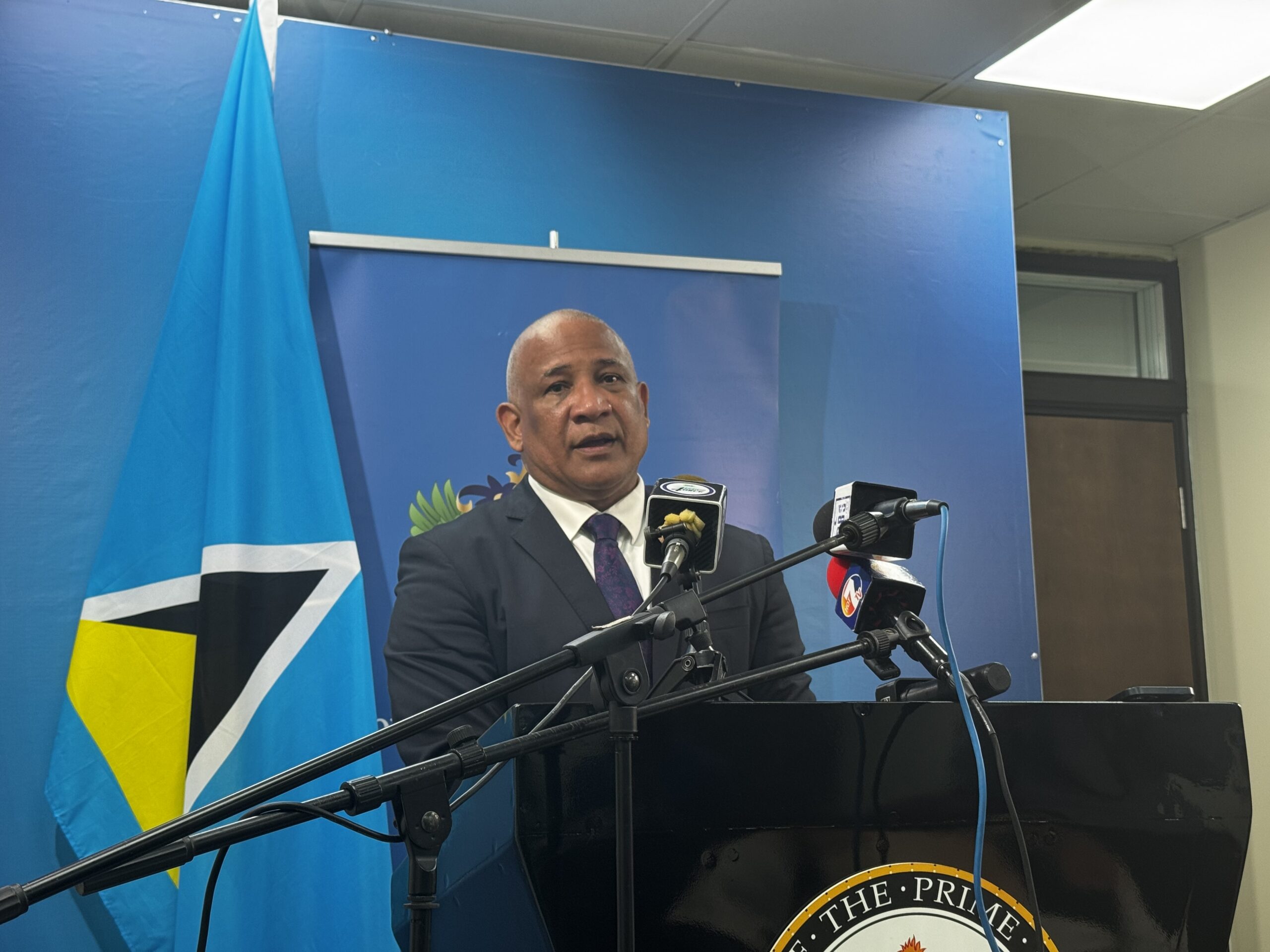
    The announcement came from Dr. Ernest Hilaire, Minister for Creative Industries and Culture, during a pre-Cabinet press briefing held on Monday. Hilaire pushed back against criticism of this year’s dual coronation, explaining that the existing regulatory framework had no provisions for resolving tied scores, leaving event organizers with no other viable option than to name two winners.

    He noted that inserting a last-minute tie-breaker mid-competition would have been unfair to competing contestants and opened the Carnival Planning and Management Committee up to potential legal disputes from participants or their teams. Despite defending the 2024 decision as the only legally and ethically sound choice under the current rules, Hilaire confirmed that this scenario will not be repeated going forward.

    “A tie will never happen again. We’re going to redo the rules,” he stated firmly.

    The planned regulatory update will extend far beyond the National Carnival Queen Pageant, Hilaire confirmed. The government is launching a comprehensive review of judging criteria and competition rules for every major Carnival event hosted on the island, with the core goals of boosting competition quality and minimizing potential scoring bias from judges.

    One of the leading reform proposals already on the table would discard judges’ highest and lowest scores when calculating final results for high-profile competitions including Soca Monarch and Calypso, a common methodology used to reduce outlier bias in judging across many international events.

    “I’m also going to ask the team to look at the rules across all competitions… just let us refresh; there are new methodologies for judging. There’s so much more we can do,” Hilaire added.

    The minister emphasized that the government will not impose new rules unilaterally. Instead, the reform process will include wide-ranging consultations with key Carnival stakeholders, a review of successful regulatory frameworks from leading regional and international Carnival hosts, and collective consensus-building before any new regulations are formally adopted.

  • Ministry of Works Employees Resume Duties After Talks Over Pay Dispute

    Ministry of Works Employees Resume Duties After Talks Over Pay Dispute

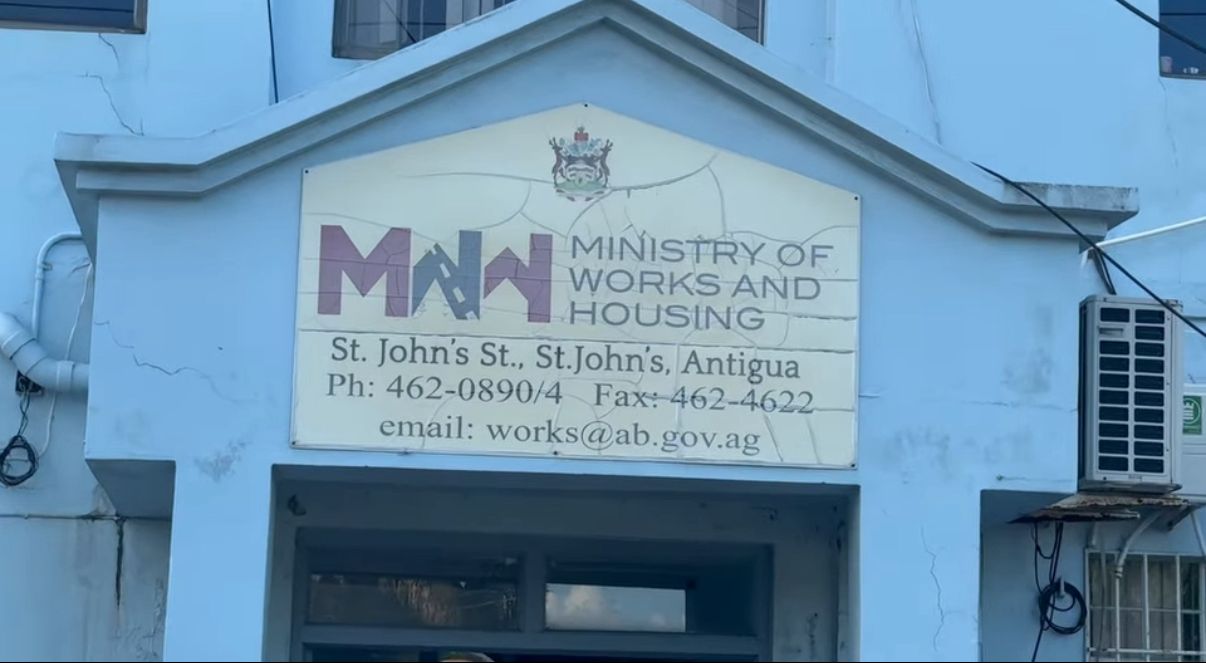
    A short-lived industrial protest staged by heavy-duty truck drivers of Antigua and Barbuda’s Ministry of Works drew to a close on Tuesday, with all participating workers resuming their duties just hours after they blocked entry to the ministry’s headquarters to demand resolution for unpaid outstanding payments.

    The demonstration, which unfolded early Tuesday morning, saw government-owned heavy trucks block the main entrance to the ministry’s Denry Lane compound, temporarily cutting off access for other staff and visitors. The action, organized by drivers over unresolved delayed payment issues, did not last long: workers agreed to enter talks with senior ministry leadership shortly after establishing the blockade, and reached a mutually acceptable resolution within the same morning.

    Following the closed-door meeting, ministry management confirmed that all concerns raised by the protesting drivers had been formally noted, and gave formal assurances that the outstanding payment issues are already being actively processed and resolved. The industrial action wrapped up quickly, with drivers vacating the entrance and returning to their work assignments. Normal daily operations at the Denry Lane compound have since been fully restored.

    In an official public statement released after the protest ended, the Ministry of Works expressed gratitude to its driving staff for their ongoing commitment to advancing the country’s national infrastructure development agenda. The statement also reaffirmed the institution’s commitment to supporting all its employees as it carries out large-scale infrastructure projects across both Antigua and Barbuda.

  • FM Greene: Antigua Engaged US to Protect Sovereignty, Not Surrender It

    FM Greene: Antigua Engaged US to Protect Sovereignty, Not Surrender It

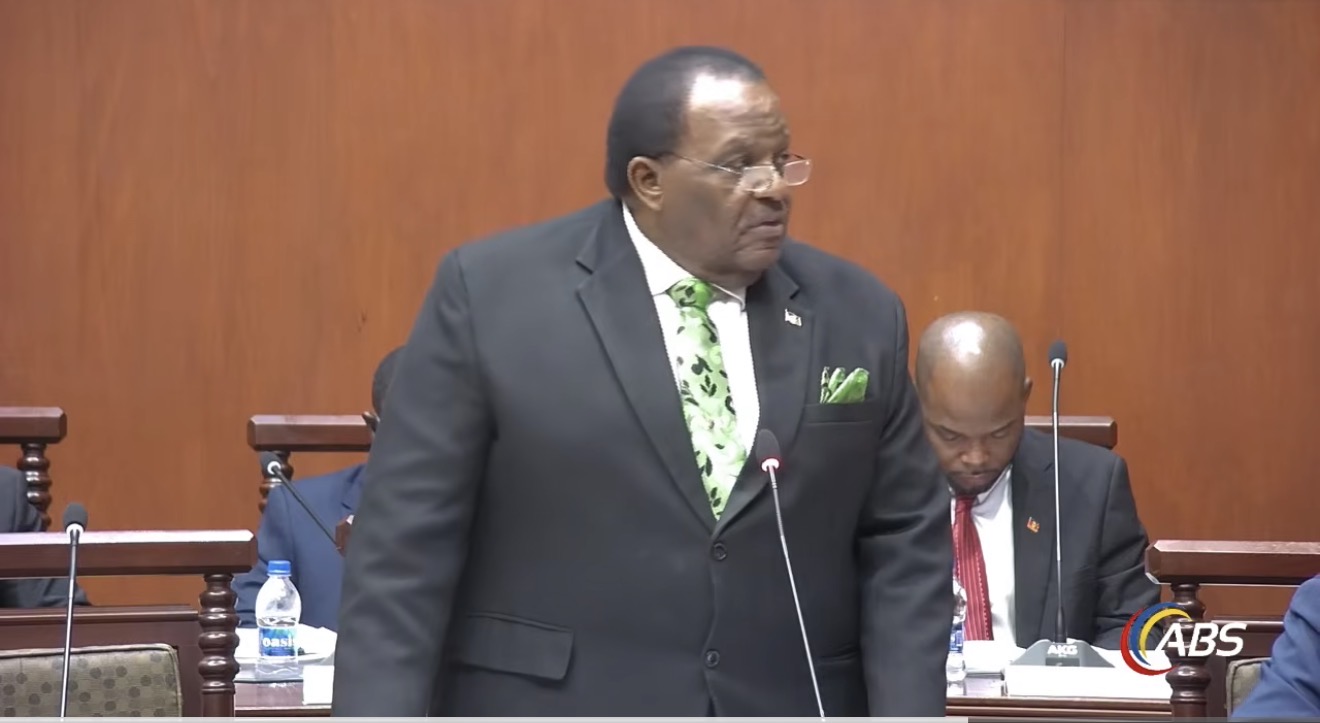
    On Tuesday, Antigua and Barbuda’s Foreign Affairs Minister E.P. Chet Greene stood before Parliament to push back against growing domestic criticism of the Caribbean nation’s ongoing negotiations with the United States over a potential third-country national transfer agreement, framing the diplomatic process as an act of proactive sovereignty protection rather than a surrender of national independence.

    The minister’s address came during parliamentary debate over a government resolution laying out core guiding principles for any final deal with Washington. Greene emphasized that responsible governing demands full assessment of proposals before rendering judgment, rejecting calls for the administration to dismiss the U.S. initiative outright before any talks had concluded. “We engage because responsible governments do,” Greene stated. “They do not make important decisions in ignorance. They do not refuse to listen before they know what is being proposed. And they do not confuse engagement with agreement.”

    Greene stressed that the negotiations carry stakes far beyond routine immigration policy, framing the discussions as a defining test of how a small, independent state navigates proposals from a major global ally that touch on core national interests. “This debate is not simply about immigration. Neither is it about the United States of America. It’s about something fundamentally much bigger,” he told lawmakers. “It’s about how Antigua and Barbuda, as a small independent nation, responds when a close and powerful neighbour and friend asks something that raises serious questions for our own sovereignty, our laws, our security and our future.”

    In a push to build cross-parliamentary consensus, Greene urged legislators to set aside partisan divides, arguing that matters of national sovereignty and foreign policy transcend party politics. “When questions arise that touch the sovereignty of our country, our immigration policy, international obligations and the welfare of our people, our first duty is not to any political party. It must be to Antigua and Barbuda,” he said.

    Rejecting repeated claims that talks have already eroded the nation’s independence, Greene reaffirmed Antigua and Barbuda’s status as a fully sovereign equal in the global community, regardless of its small geographic size. “We are a sovereign nation,” he declared. “Small in size, equal in dignity. Our flag carries exactly the same worth and legal standing in the community of nations as does the flag of any larger state.”

    At the same time, Greene acknowledged the structural inequalities that shape global diplomacy, noting that small states must navigate uneven economic and political influence while prioritizing national interests. “The responsibility of government is not to complain about that reality. It is to navigate it wisely,” he explained. “That means protecting our sovereignty without isolating ourselves, maintaining our friendships without compromising our principles, working with our partners without surrendering our judgment.”

    Against criticism that the government should have publicly rejected the proposal from the start, Greene argued that substantive diplomacy relies on quiet negotiation rather than performative political rhetoric. “Leadership is not measured by how loudly a government speaks. It is measured by how well it protects the interests of its people,” he said. Outlining the government’s process to date, he added: “We listened, we examined every proposal, we took legal advice, we consulted officials, we assessed the implications, and when we concluded that important parts of the proposal were not in Antigua and Barbuda’s best interest, we simply rejected them.”

    Throughout all discussions with U.S. officials, Greene confirmed the government has held firm to five non-negotiable core principles designed to protect national interests: rejecting any permanent standing transfer program, retaining full sovereign discretion to approve or reject each individual case, shielding the country from all legal, financial, and security risks, ensuring Antigua and Barbuda taxpayers never bear costs stemming from U.S. immigration policy, and securing reciprocal benefits from any final arrangement.

    Greene also moved to dispel widespread public misconceptions about a non-binding memorandum of understanding signed with the U.S. in December 2025. “The memorandum did not commit Antigua and Barbuda to receive a single person. It did not establish a programme. It did not create a legal obligation,” he stressed, noting the document only opens the door for further discussion and preserves the nation’s full right to decide each case independently.

    According to Greene, the administration already rejected the original U.S. draft operating procedures because they failed to meet the cabinet’s core requirements. The initial U.S. proposal included expedited removal processes for transfers, allowed for up to 10 transfers per month, and failed to adequately resolve questions of legal liability and financial responsibility. Rather than ending diplomatic discussions entirely, the government responded with its own detailed counterproposals that enforce stronger protections for Antigua and Barbuda. “We did not simply criticise. We did not simply complain. We put forward our own proposals,” Greene said. “We said instead, if this matter is to go any further, these are the conditions that must protect Antigua and Barbuda.”

    The minister also praised the work of Antigua and Barbuda’s Ambassador to the U.S., Sir Ronald Sanders, who has led negotiations in Washington under the direction of Prime Minister Gaston Browne. Greene noted that Sanders systematically reviewed every U.S. proposal, flagged unresolved legal and security concerns, and consistently defended the nation’s interests in talks with senior American officials. “He did not yield where the national interest required firmness,” Greene said.

    Among the key adjustments the government has demanded are strict eligibility limits: only individuals with final removal orders would be considered, people with criminal records beyond minor immigration offenses would be excluded, unaccompanied minors and asylum seekers with pending claims would be barred, full documentation must be provided before any decision is made, and the U.S. must assume all financial obligations in writing before any transfer can proceed. Additionally, the government rejected the U.S. proposal of up to 10 transfers per month, countering with a cap of no more than 10 total transfers across the entire 2026 calendar year, with any extension requiring a full national review of the arrangement.

    Greene emphasized that these revisions make clear the government has negotiated from a position of principle, not weakness. “We changed the framework. We set safeguards. We narrowed the categories. We reduced the numbers. We insisted upon complete information. We insisted upon complete funding,” he said. “That is not capitulation. That is negotiation. That is the essence, the true form, of diplomacy.”

    Closing his address to Parliament, Greene reaffirmed that while Antigua and Barbuda deeply values its longstanding bilateral relationship with the United States, the nation will never compromise its core sovereignty. “Antigua and Barbuda’s sovereignty is not negotiable. It never has been. It never will be,” he said. “Our friendships are valuable and will be cherished, but genuine friendship is built on mutual respect.”
  • Seniors must be protected from financial exploitation and abuse, DCOA official says

    Seniors must be protected from financial exploitation and abuse, DCOA official says

    As populations across the globe grapple with shifting demographic landscapes, the question of how to honor and protect aging populations has moved to the forefront of public discourse in Dominica. In a recent panel discussion hosted by the Dominica Council on Ageing (DCOA) at the Dominica Public Service Union (DPSU) headquarters, stakeholders gathered to unpack the legal frameworks and social responsibilities that surround the welfare of the island nation’s older adults.

    Following the dialogue, Cecil Shillingford, Chairman of DCOA’s Education and Health Committee, outlined a clear, urgent call to action: the country’s seniors must be shielded from systemic neglect, interpersonal abuse, and predatory financial scams, so that they may spend their final years with the dignity they have earned.

    Shillingford emphasized that generations of older Dominicans laid the foundation for the modern, thriving society the nation enjoys today. Decades of hard work, community building, and sacrifice from today’s seniors transformed Dominica into the better place it is for current and future generations, he argued. Now, as advancing age limits their ability to fend for themselves, every segment of society — from immediate family members to the broader public — has a moral obligation to step up and ensure their twilight years are marked by comfort, joy, and good health.

    At the core of Shillingford’s message is the need for proactive protection against exploitation. He warned that bad actors regularly target vulnerable older adults, seeking to steal their life savings and precious personal possessions through deceptive schemes. Beyond financial fraud, he highlighted the urgent need to shield seniors from all forms of harm, including physical violence, emotional manipulation, and psychological abuse, as well as harmful neglect by caregivers and family.

    Beyond protection from harm, Shillingford stressed that robust legal safeguards are non-negotiable to uphold the fundamental rights and independence of older adults. These legal protections must do more than just penalize abuse; they need to guarantee unfettered access to quality healthcare, ensure access to critical social services, and preserve two core rights that all people deserve regardless of age: the right to personal privacy, and the right to self-determination when making choices about their own lives and care.

    The panel discussion comes as part of broader efforts by DCOA to raise public awareness about elder rights, and push for stronger policy and social support systems that meet the growing needs of Dominica’s aging population.

  • Three new beach volleyball coaches certified

    Three new beach volleyball coaches certified

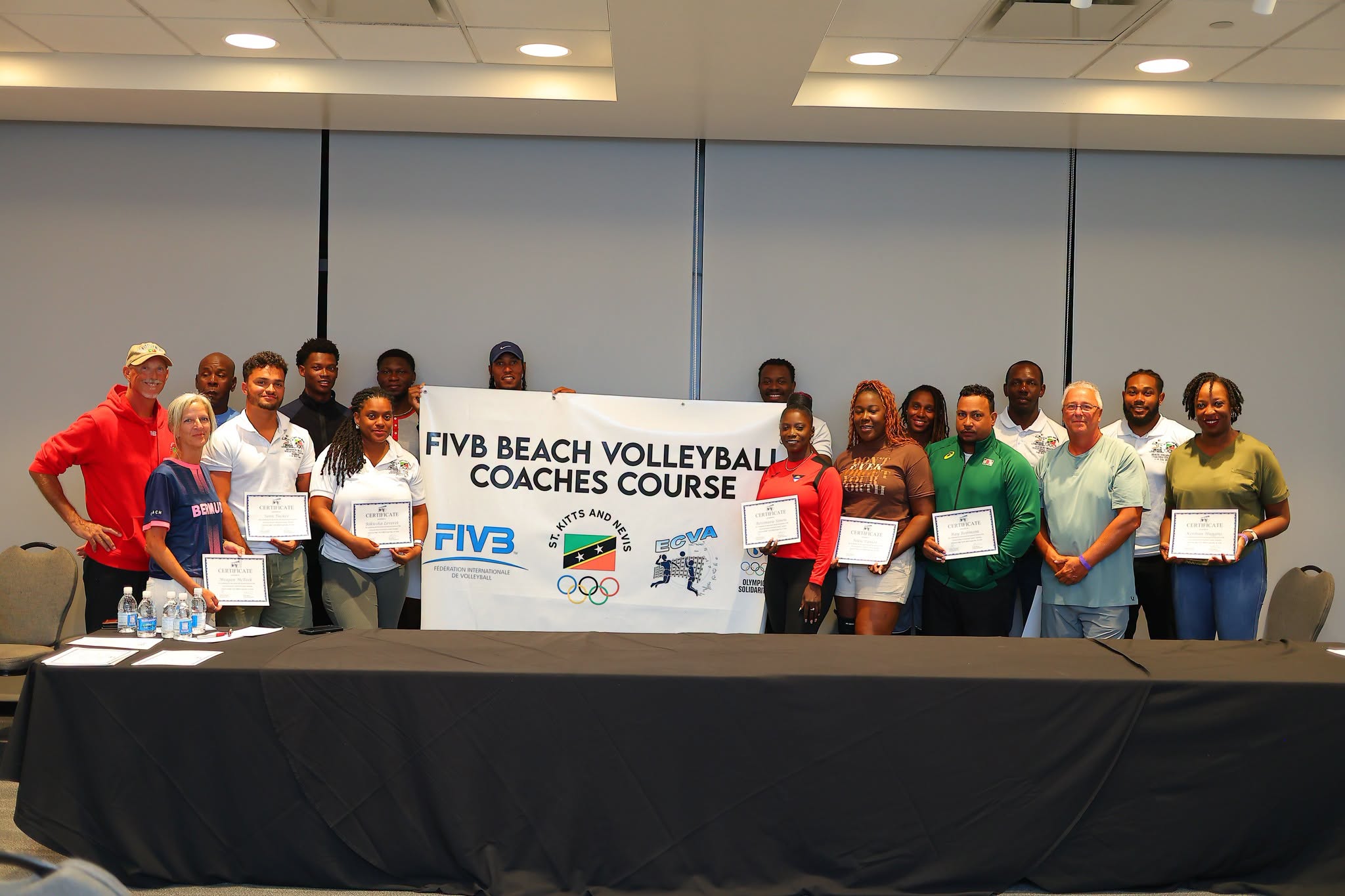
    Against the backdrop of the recently concluded Eastern Caribbean Volleyball Association (ECVA) Under-20 Beach Volleyball Championships, a landmark series of professional development courses for coaches and referees delivered tangible growth for emerging volleyball talent across the region. Hosted in St Kitts & Nevis at the Frigate Bay Marriott Hotel, the four integrated training programs—an FIVB foundational beach volleyball coaches course, an advanced coaching certification, a national referee course, and an international continental referee course—drew participants from across member territories, with five representatives from Saint Lucia earning new credentials and advanced qualifications.

    Among the Saint Lucian cohort was Terry Verdant, head coach of Saint Lucia’s medal-winning youth beach volleyball squad, which claimed gold in the men’s competition and bronze in the women’s tournament at the same Frigate Bay championship event. Verdant successfully completed the rigorous advanced coaching course, while three other Saint Lucian participants—Reala Montoute, Utilla Prosper-Charles, and Fedel Aurelise—graduated as newly certified coaches, expanding Volleyball Saint Lucia’s pool of qualified technical leadership.

    The five-day intensive training program brought together 25 total regional participants for a curriculum that blended classroom instruction, hands-on on-court practice, and physical conditioning, all led by Mark Kontopoulos, a veteran FIVB instructor and international coach educator with more than a quarter-century of experience spanning both indoor and beach volleyball. Under Kontopoulos’ guidance, attendees mastered modern evidence-based coaching methodologies and deepened their technical and tactical mastery of the fast-growing sport of beach volleyball. Instructor Rick Bevis also supported course delivery, while key regional sports leaders including ECVA president Glenn Quinlan and Dennis “Freddie” Knight, President of the St Kitts and Nevis National Olympic Committee and PanAm Sports Executive Board member, were in attendance to highlight the long-term value of the initiative.

    While no candidates from Saint Lucia completed the national referee certification course, Saint Lucia’s own Keam Charlery served as one of just two facilitators for the program, which was coordinated by Reginald Willemsberg. All participants earned official completion certificates after combining academic learning with live practical experience gained during the ongoing Under-20 championship, putting new skills into practice in a real competitive setting.

    In remarks during the event, Quinlan emphasized that grassroots professional development remains a core priority for the regional governing body. “Development will always remain at the heart of ECVA’s mission. By investing in our coaches, we invest directly in our athletes and the future of volleyball in the Eastern Caribbean,” he said, framing the training initiative as a critical step toward lifting the competitive standard of beach and indoor volleyball across all Eastern Caribbean member territories.

  • US-Iran Tensions Escalate as Naval Blockade Threatens Strait of Hormuz

    US-Iran Tensions Escalate as Naval Blockade Threatens Strait of Hormuz

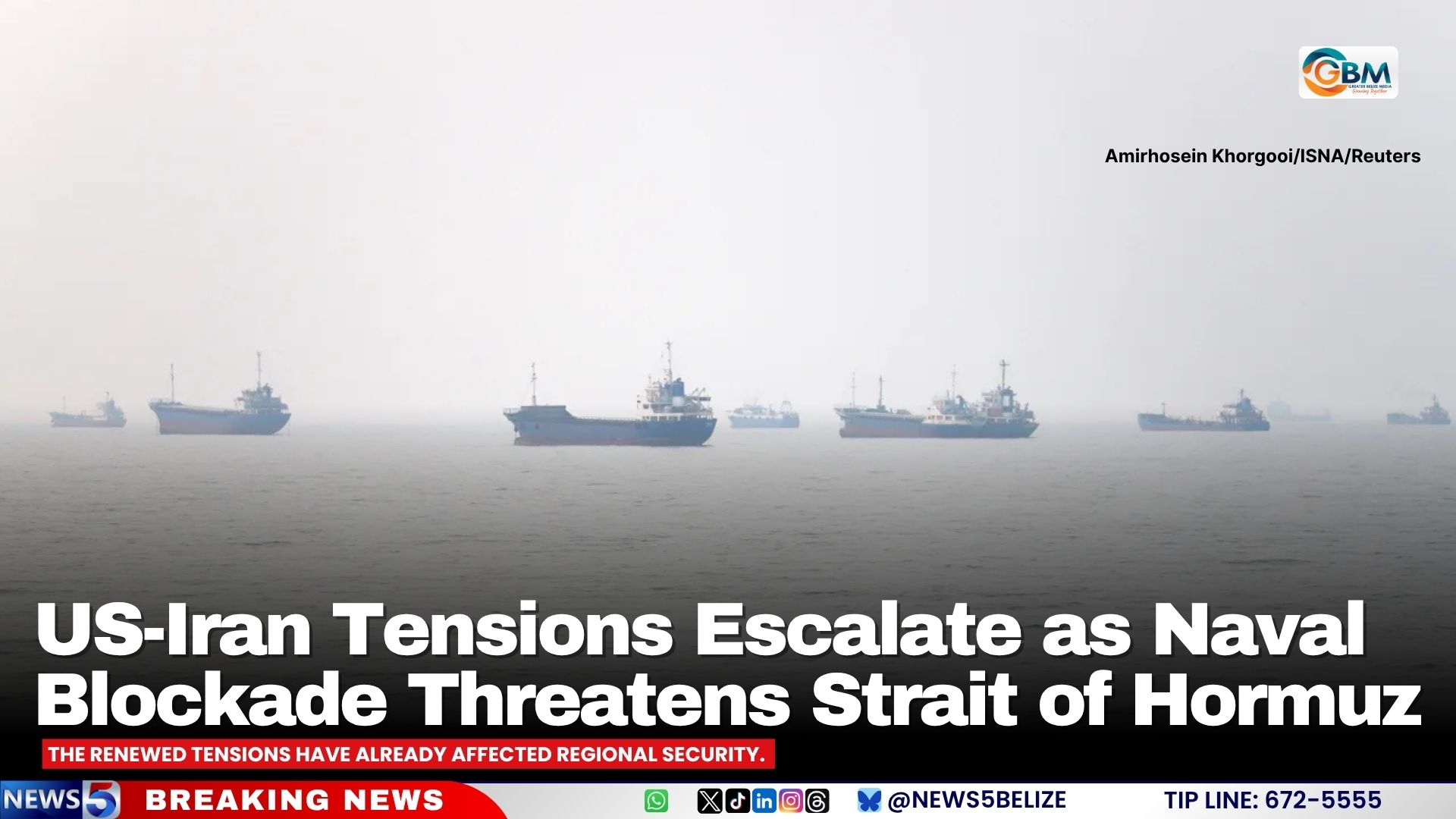
    On July 14, 2026, a fresh wave of geopolitical volatility is sweeping the Middle East, as rising tensions between the United States and Iran push the two powers closer to a broader military confrontation. The trigger for this latest escalation comes after a fragile ceasefire between Washington and Tehran collapsed, clearing the way for the US to reinstate a naval blockade in waters adjacent to the Strait of Hormuz — one of the world’s most strategically critical maritime transit chokepoints.

    According to a statement from US Central Command, the blockade is scheduled to resume at 4:00 p.m. Eastern Time on the same day the announcement was made. In response to the move, Iranian officials have issued a stark warning: any American strike targeting the suspected underground nuclear facility called Pickaxe Mountain will be met with a devastating, overwhelming counter-response.

    Stretching between the Iranian coast and the Sultanate of Oman, the Strait of Hormuz handles nearly a fifth of the world’s daily oil consumption and a third of global liquefied natural gas shipments, making any disruption to navigation here a shock to the global energy system. Its unique geography, with a narrow shipping lane just miles wide, means it has long been a flashpoint for global geopolitical rivalry.

    Already, the spike in tensions has triggered security disruptions across the Gulf region. Kuwait’s military confirmed it was actively responding to unprovoked hostile aerial attacks within its territory, and security agencies across all Gulf Cooperation Council states have maintained a high-level alert status. The European Union Aviation Safety Agency (EASA) has issued an urgent advisory urging all commercial airlines to avoid flying through the airspace of Bahrain, Qatar, Kuwait, the United Arab Emirates, and large sections of the Gulf of Oman, citing sharply elevated risks of military conflict targeting civilian infrastructure.

    In a sudden policy shift, former US President Donald Trump reversed a planned proposal to impose a 20% reimbursement fee on all commercial cargo passing through the Strait of Hormuz. The fee, initially framed as a way for the US to recoup costs for its regional security operations, drew widespread international condemnation from legal experts and trading nations who argued it would violate long-standing international law governing free passage through global waterways. Trump announced that instead of the fee, Washington will negotiate new bilateral trade and investment agreements with Gulf nations to cover security expenses.

    Global energy markets have already priced in the growing uncertainty, with benchmark Brent crude jumping to its highest level in more than a month as investors brace for potential disruptions to oil shipments. Analysts warn that any prolonged closure or blockade of the strait could send global oil prices soaring, triggering inflationary pressures across major economies and derailing fragile post-pandemic growth trajectories.

  • AG: No Final Agreement Exists on US Third-Country National Transfers

    AG: No Final Agreement Exists on US Third-Country National Transfers

    In a Tuesday address to the Antigua and Barbuda Parliament, Attorney General Sir Steadroy Benjamin moved to clear up widespread misconceptions surrounding ongoing negotiations with the United States over a proposed third-country national transfer framework. Speaking amid growing public and legislative debate over the scope of the proposed deal, Benjamin explicitly confirmed that no binding, final agreement has been signed between the two nations, and that lawmakers are only being asked to greenlight a set of guiding principles to shape future talks.

    Addressing concerns raised during discussion of the government’s resolution, Benjamin pushed back against claims that Parliament was being asked to approve a finalized deal that had already been negotiated behind closed doors. He emphasized that no completed agreement currently exists, framing the current resolution as a procedural step rather than a final vote on a done deal. “The White Paper is not presented as a complete agreement, nor is this House being asked to approve a conclusive operating agreement. None exists,” Benjamin stated to the legislative body.

    Under the terms of the resolution put forward to lawmakers, Parliament would only be granting approval for a foundational framework that outlines the government’s negotiating boundaries, leaving the executive branch – led by the Cabinet – to continue formal discussions with U.S. negotiating teams. Benjamin defended this division of responsibilities, noting that negotiation is an inherent executive function, and that Parliament’s core role in this process is to set the non-negotiable principles and limits that executive negotiators must respect.

    Once the legislative body approves these guiding guardrails, Benjamin explained, the executive branch will conduct all further negotiations within the bounds set by lawmakers. If a final agreement is reached that requires adjustments to Antigua and Barbuda’s existing domestic law, the deal will be brought back to Parliament for further review and the passage of any required enabling legislation.

    A key pillar of the government’s negotiating position that Benjamin highlighted is the protection of Antigua and Barbuda’s full sovereign authority over all immigration matters. He stressed that the Caribbean nation will never cede control over transfer decisions, and will retain the absolute right to approve or reject any individual proposed for transfer. The government’s formal counterproposal to the U.S. requires explicit written consent from Antigua and Barbuda for every transfer, and preserves the country’s right to refuse an individual without being required to provide a justification for the decision.

    Benjamin also outlined additional core conditions that have guided the negotiations from the start. The proposed framework explicitly excludes three categories of people from eligibility for transfer: individuals with prior criminal convictions, people with pending unresolved asylum claims, and unaccompanied minors. Additionally, the government’s position requires that the United States cover 100 percent of all financial costs associated with any transfers that are ultimately approved.

    Closing his address, Benjamin reaffirmed the Antigua and Barbuda government’s unwavering commitment to ensuring that any final agreement reached with the U.S. will fully protect the nation’s sovereignty, align with the country’s Constitution, and strictly adhere to the principles that Parliament ultimately endorses.

  • Fernandez: Antigua Must Strike Balance to Protect Tourism

    Fernandez: Antigua Must Strike Balance to Protect Tourism

    As the Caribbean nation of Antigua and Barbuda enters sensitive negotiations with the United States over the potential transfer of third-country nationals, its top tourism official has emphasized the urgent need for careful strategic balancing between defending national sovereignty and preserving the country’s economic lifeline: tourism. Tourism Minister Charles Fernandez delivered these remarks during a parliamentary debate on a framework resolution outlining core principles to guide the upcoming talks, warning that a breakdown in negotiations could trigger catastrophic damage to the small island nation’s tourism-reliant economy.

    Fernandez stressed to sitting lawmakers that Antigua and Barbuda cannot dismiss the hard economic realities that define its relationship with the United States, which stands as the country’s single largest source of international tourism. “The point I’m making is yes, might is right,” Fernandez told the legislative body, noting that the country must pursue a pragmatic, measured approach to talks while still upholding its core national interests.

    Current economic data places tourism’s contribution to Antigua and Barbuda’s gross domestic product between 60 and 65 percent, a share that makes protecting the industry from avoidable risk a top national priority. Fernandez outlined a key leverage point the United States holds in the negotiations: Washington has the authority to block U.S. air carriers from operating routes to Antigua and Barbuda, a move that would cut off the primary flow of visitor arrivals to the country.

    That scenario, he warned, would deliver an devastating blow to the national economy. “If we lose our tourism, 60, 65 percent of GDP [would go] down the drain,” he said. The economic fallout would not be limited to large hotel operators, Fernandez added. Thousands of working-class Antiguans and Barbudans employed across the wider tourism ecosystem – including restaurant teams, local tour guides and activity operators, transport workers, and other service providers whose livelihoods are entirely tied to visitor spending – would also see their incomes and job security put at risk.

    Against this backdrop, Fernandez argued that the government cannot take an extreme position on the talks: rejecting negotiations entirely is untenable, nor is it feasible to accept every proposal put forward by Washington. “So it is a balancing act,” he explained. “We have tried to strike a balance whereby we can stand up and say with dignity and pride, this is what we obtained, this is what we asked you to put into the agreement and that is what we’re looking for.”

    To contextualize the challenges small island states face when negotiating with major global powers, Fernandez referenced Antigua and Barbuda’s years-long World Trade Organization dispute over online gaming with the United States. Even after securing a WTO ruling that favored Antigua and Barbuda’s position, the country still faced significant, sustained pressure from Washington, he recalled. That prior experience, he said, clearly demonstrates the unique challenges small nations face in talks with much larger partners, and reinforces the need for a deliberate, strategic approach rather than rash action.

    In addition to laying out his position on the negotiations, Fernandez also criticized Opposition Leader Jamale Pringle for choosing not to participate in the key parliamentary debate. He characterized the negotiation framework as an issue of critical national importance that requires input and perspective from all parliamentary blocs to ensure the best outcome for the entire country.

  • Sexual Assault Case Against Former Police Officer Dismissed

    Sexual Assault Case Against Former Police Officer Dismissed

    In a high-profile court decision handed down on July 14, 2026, a San Ignacio magistrate has dismissed the sexual assault charge brought against former Belize Police Department officer Durmen Dawson, ruling the defendant has no case to answer on that count.

    The proceeding, held at the San Ignacio Magistrate’s Court, saw both Dawson and his accuser, Luanna Gillett, present in the courtroom. While the sexual assault allegation will not move forward to a full trial, Dawson remains required to defend against a lesser charge of harm in subsequent court proceedings. Notably, Dawson appeared without legal representation during this critical hearing.

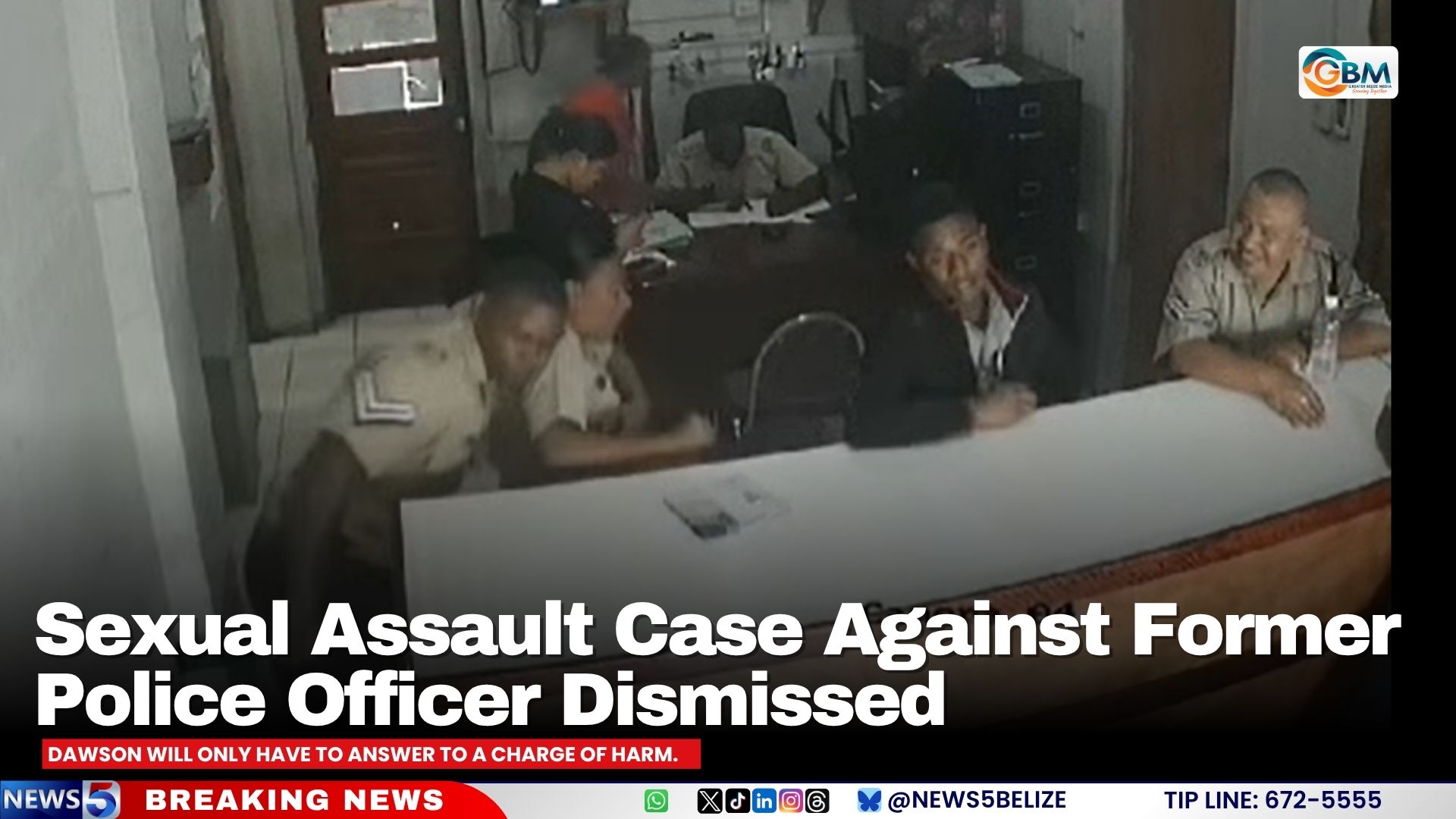
    The case traces its origins back to a February 14, 2024 incident that unfolded inside the San Ignacio Police Station. At the time of the alleged incident, Gillett was also an active-duty officer with the Belize Police Department. She claimed that Dawson had sexually assaulted her while on department premises. Footage of the encounter, captured by the station’s built-in surveillance system, spread widely across public channels shortly after the incident became public, drawing significant public attention to the case.

    Following the initial allegations, the Belize Police Department launched an internal disciplinary tribunal to investigate the conduct of Dawson. Then-Commissioner of Police Chester Williams confirmed the outcome of that internal process in public statements at the time. The tribunal’s adjudicator found Dawson guilty of the allegation and formally recommended his termination from the force, citing the severity of the sexual assault charge. Williams affirmed that recommendation, and Dawson was officially dismissed from the department after the internal process concluded. Beyond the internal disciplinary action, law enforcement authorities also brought formal criminal charges of both sexual assault and harm against Dawson, leading to the two-year-long court process that culminated in this week’s ruling.

  • Sexual Assault Case Against Fomer Police Officer Dismissed

    Sexual Assault Case Against Fomer Police Officer Dismissed

    In a recent ruling delivered on July 14, 2026, a San Ignacio magistrate has dismissed the sexual assault charge brought against former Belize Police Department officer Durmen Dawson, determining that Dawson has no case to answer on that count.

    Both Dawson and the complainant, Luanna Gillett — herself a former police officer — appeared before the San Ignacio Magistrate’s Court for the latest proceedings. While the sexual assault allegation will not move forward, Dawson remains required to respond to a separate charge of harm stemming from the same 2024 incident. Notably, Dawson appeared in court without legal representation during the ruling.

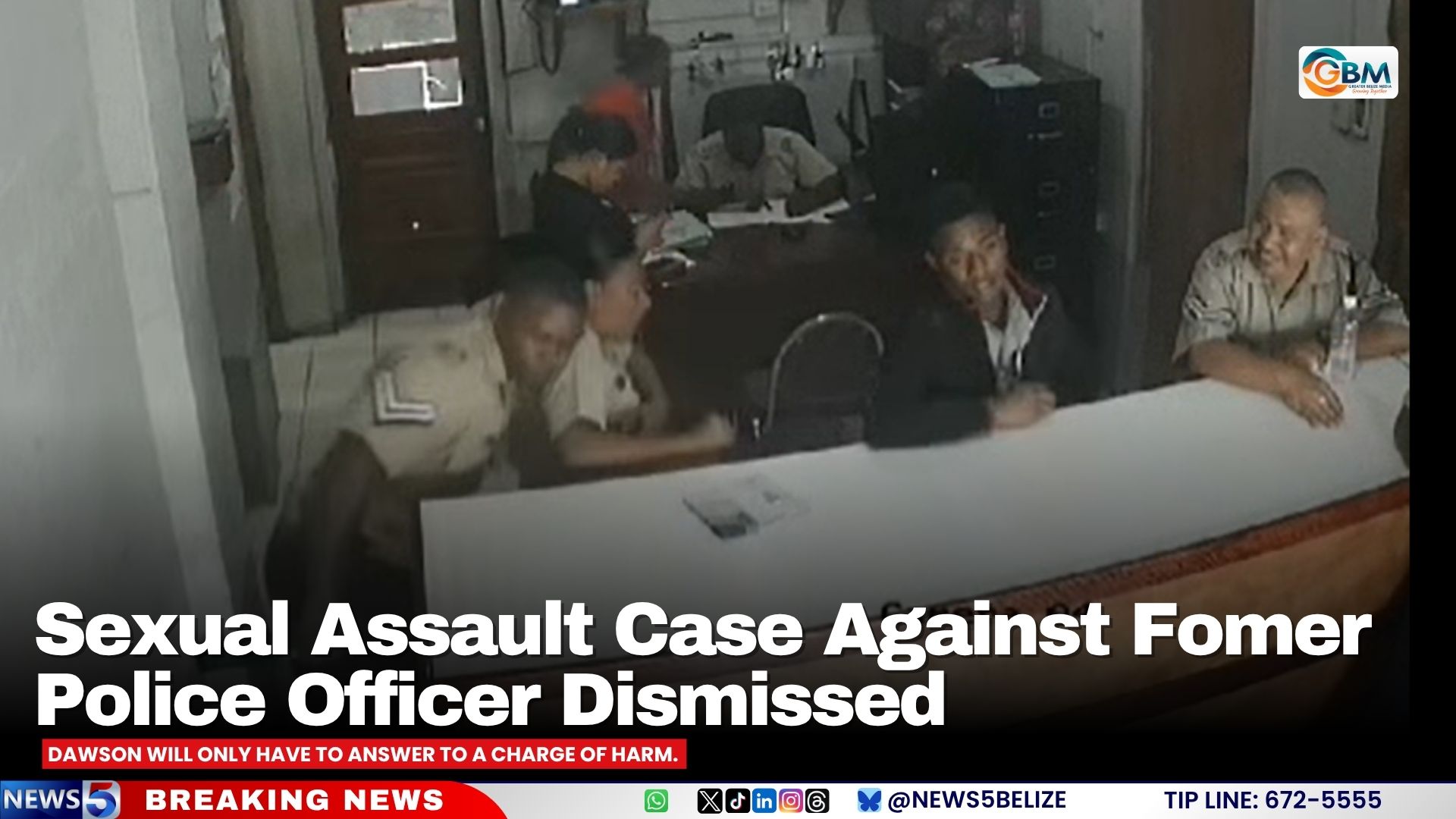
    The case traces back to an incident that unfolded on February 14, 2024, inside the San Ignacio Police Station. Gillett alleged that Dawson sexually assaulted her while both were serving as members of the Belize Police force. Security camera footage of the encounter was leaked and spread widely across public channels shortly after the incident made headlines.

    Following the initial allegation, the Belize Police Department launched an internal disciplinary tribunal to investigate the claims. The tribunal found Dawson guilty of misconduct, and recommended his termination from the force due to the severity of the sexual assault allegation. Then-Commissioner of Police Chester Williams confirmed to media outlets that he upheld the tribunal’s recommendation, and Dawson was formally dismissed from the department after the internal process concluded. Alongside disciplinary action, criminal charges for both sexual assault and harm were brought against Dawson ahead of the court proceedings.