作者: admin

  • Trump Orders Marijuana Reclassification

    Trump Orders Marijuana Reclassification

    In a landmark move on December 19, 2025, President Donald Trump enacted a significant shift in U.S. drug policy by signing an executive order to accelerate the reclassification of marijuana at the federal level. The directive mandates the removal of cannabis from its current status as a Schedule I substance—a category reserved for drugs deemed to have no medical value and high abuse potential, such as heroin and LSD—and transitions it to Schedule III.

    Schedule III classification acknowledges recognized medical applications and a lower potential for dependency than Schedules I and II. This category includes pharmaceuticals like ketamine and Tylenol with codeine. From the Oval Office, President Trump framed the decision as a matter of “common sense,” emphasizing its aim to aid individuals suffering from chronic pain while explicitly ruling out the legalization of recreational use.

    “This action in no way legalizes marijuana in any form,” Trump stated. “My position is clear: unless a medical professional recommends it for a legitimate health reason, you should not use it.”

    The executive order specifically tasks Attorney General Pam Bondi with overseeing the completion of the rescheduling process and issuing a final ruling. This administrative change would empower the Food and Drug Administration (FDA) to conduct comprehensive research into the medicinal properties and potential applications of cannabis, a process heavily restricted under the previous classification.

    The policy shift aligns with evolving public opinion. A recent Gallup poll from November, cited by NBC News, indicates that 64% of Americans now support the full legalization of marijuana, highlighting a significant cultural and political trend that the administration’s action appears to partially address.

  • Newly Appointed Home Affairs CEO Bennet Enters Belize City’s Gang Zones

    Newly Appointed Home Affairs CEO Bennet Enters Belize City’s Gang Zones

    In a decisive first-day move, Rear Admiral Elton Bennett, the newly installed CEO of Belize’s Ministry of Home Affairs, embarked on an unflinching tour of Belize City’s most notorious gang-dominated neighborhoods this Thursday. Accompanied by Minister Oscar Mira and Police Commissioner Dr. Richard Rosado, Bennett conducted a firsthand assessment of volatile zones including Majestic Alley, George Street, and Banak Street.

    The high-level delegation engaged directly with residents and community leaders, navigating narrow alleyways and entering homes to gain an unfiltered understanding of the challenges on the ground. Bennett characterized the visit as essential for formulating effective strategies, emphasizing the critical need for community engagement beyond traditional law enforcement approaches.

    During the inspection tour, officials evaluated the operations of the Leadership Intervention Unit (LIU), a key program dedicated to mentoring at-risk youth and providing socio-economic alternatives to gang affiliation. Bennett stressed that successful intervention requires substantial societal investment and community cooperation, noting that policing measures alone cannot sustainably address the complex root causes of gang violence.

    The unprecedented visit by the country’s top home affairs official signals a potential shift toward more ground-level, community-inclusive approaches to tackling urban violence and gang-related activities in Belize’s largest city.

  • STATEMENT: DAIC on announced partial travel restrictions affecting Dominican passport holders

    STATEMENT: DAIC on announced partial travel restrictions affecting Dominican passport holders

    ROSEAU, DOMINICA – November 19, 2025 – The Dominica Association of Industry and Commerce (DAIC), the nation’s primary private sector body, has issued a formal response to newly imposed U.S. travel restrictions affecting specific visa categories for Dominican passport holders. While acknowledging the measures are partial and not a blanket ban, the association highlighted their potential ramifications for the nation’s economic ecosystem.

    The DAIC emphasized that international mobility is a critical enabler for commerce, foreign investment, educational pursuits, and tourism. The announcement, therefore, raises legitimate concerns regarding its impact on business operations, investor sentiment, and overall economic vitality. The association expressed apprehension over the uncertainty such a development creates for corporations, investors, students, and families with international ties.

    In its statement, the DAIC called for the dissemination of precise and timely information to ensure the public and business community can navigate the new landscape effectively. It welcomed the ongoing diplomatic engagement between the Government of Dominica and U.S. authorities, encouraging a continued constructive dialogue to resolve the underlying issues that prompted the policy shift.

    The business group urged its members to maintain composure, rely solely on official channels for verified updates, and conduct thorough assessments of any travel or commercial plans that might be impacted. Furthermore, the DAIC advocated for sustained transparency from officials to allow enterprises to devise contingency strategies and minimize potential operational disruptions.

    Reaffirming its role, the DAIC pledged to actively collaborate with policymakers and stakeholders to advocate for solutions that foster economic stability, bolster confidence, and protect Dominica’s international standing. The association remains dedicated to fortifying a resilient private sector and supporting initiatives that enhance the country’s global economic relationships and reputation.

  • Grenada’s IMA moment of truth: A warning we should not ignore

    Grenada’s IMA moment of truth: A warning we should not ignore

    Dr. Adrian Joseph highlights growing concerns over Grenada’s economic stability as Citizenship by Investment (CBI) revenues become increasingly integral to the nation’s fiscal framework. Recent travel restrictions imposed by the United States on Caribbean nations utilizing CBI programs have amplified scrutiny on these revenue streams, prompting urgent calls for policy reassessment.

    Financial data from January to July 2025 reveals IMA/CBI contributions reached EC$117 million, accounting for approximately 14% of Grenada’s total revenue of EC$540 million. This places CBI revenues nearly equivalent to import duties and exceeds combined revenues from petrol tax, stamp tax, excise tax, and environmental levies. Despite overall revenue performance remaining on target, the country continues operating under deficit conditions, with CBI funds increasingly supporting recurrent expenditures rather than strategic investments.

    The article presents a household budget analogy: traditional tax revenues (VAT, income tax, import duties) represent stable employment income, while CBI revenues resemble unpredictable windfalls. This dependency creates significant vulnerability to external factors including geopolitical shifts, regulatory changes, and international policy decisions beyond Grenada’s control.

    Analysis demonstrates concerning scenarios: a 10% reduction in CBI revenues would decrease total revenue by 1.4%, while a 50% reduction would result in a 6.9% overall revenue decline. Recent regional developments suggest these are not hypothetical concerns, as increased scrutiny affects all Caribbean CBI programs regardless of individual management quality.

    Dr. Joseph proposes a five-point strategy for fiscal resilience: ring-fencing CBI revenues for capital investment and debt reduction; establishing stabilization buffers for revenue shocks; improving domestic revenue mobilization through compliance rather than increased burden on vulnerable populations; pursuing genuine economic diversification through agriculture, tourism, digital services, and renewable energy development; and maintaining rigorous transparency and international engagement.

    The conclusion emphasizes that nations relying on exceptional revenues for recurrent obligations lack true fiscal security. While not advocating CBI program abandonment, the analysis urges immediate policy introspection to build economic resilience before external pressures force abrupt adjustments.

  • U.S Visa Update From Sir Ronald Sanders Ambassador of Antigua and Barbuda to the United States

    U.S Visa Update From Sir Ronald Sanders Ambassador of Antigua and Barbuda to the United States

    In a significant diplomatic development, Antigua and Barbuda has secured crucial assurances from the United States regarding visa arrangements following Washington’s recent security proclamation. Ambassador Sir Ronald Sanders, acting under direct instructions from Prime Minister Gaston Browne, held high-level discussions with U.S. State Department officials to address concerns arising from the December 16, 2025 proclamation restricting foreign national entry.

    The negotiations yielded three key agreements that provide substantial protection for Antiguan and Barbudan citizens. First, all currently valid U.S. visas held by passport holders will remain fully recognized and accepted for entry without exception. This comprehensive protection covers all visa categories including tourist (B-1/B-2), exchange visitor (J), and student (M) visas.

    Second, U.S. authorities confirmed there will be no revocation of any visas issued to nationals prior to December 31, 2025. This guarantee provides stability for existing visa holders amid changing security protocols.

    Third, for new visa applications submitted after December 31, 2025, both governments will develop mutually agreeable arrangements focusing specifically on biometric information collection. The enhanced system will ensure full compatibility with U.S. biometric standards while applying equally to all citizens regardless of acquisition method—whether by birth, descent, naturalization, or investment.

    Ambassador Sanders expressed appreciation for the constructive engagement from U.S. officials, acknowledging America’s security concerns while emphasizing Antigua and Barbuda’s commitment to cooperative security measures. The agreement represents a balanced approach that protects U.S. national security interests while preserving legitimate travel and people-to-people exchanges between the two nations.

  • CARICOM-Republic of Korea fund sows into nine projects across region since 2021

    CARICOM-Republic of Korea fund sows into nine projects across region since 2021

    The strategic partnership between the Caribbean Community (CARICOM) and the Republic of Korea has evolved into a substantial development framework, with the CARICOM-Republic of Korea Cooperation Fund serving as its financial backbone. Since its establishment in 2021, the fund has accumulated approximately $7 million, financing nine significant initiatives across critical sectors including digital transformation, climate resilience, public health, and cybersecurity.

    According to Dr. Armstrong Alexis, CARICOM Deputy Secretary-General, Korea has demonstrated longstanding commitment to expanding developmental assistance throughout the Caribbean region. “We are grateful for the strong bonds of friendship, and we thank the Government and people of the Republic of Korea for its support to the Community in several critical areas,” Dr. Alexis stated.

    The collaboration has yielded concrete results across multiple domains. In digital innovation, a comprehensive three-phase project is modernizing regional records management while upgrading IT infrastructure and human resource systems. The Enterprise Resource Planning (ERP) initiative aims to optimize management processes through cutting-edge ICT systems.

    Statistical capacity building has received significant attention through a specialized project enhancing data interoperability between national statistical offices and the CARICOM Secretariat. This initiative promotes adherence to international data standards, improving the quality and accessibility of regional statistics for evidence-based policymaking.

    Climate diplomacy represents another pillar of cooperation, with the deployment of a dedicated Climate Change Envoy advocating for regional interests on international platforms. The recently launched KORA-CARE project focuses on climate-resilient water safety planning, integrating smart water management tools to mitigate health impacts related to water systems.

    Public health collaboration has produced substantial outcomes through the Caribbean Public Health Agency (CARPHA). Korean support has established the Caribbean Regional Field Epidemiology and Laboratory Training Program, maintained biosecurity Level 3 laboratory capabilities, and advanced communicable disease diagnostics with state-of-the-art testing systems.

    Cybersecurity cooperation has materialized through the “Strengthening CARICOM’s Resilience Against Ransomware (SCAR)” project, implemented jointly by CARICOM IMPACS and Korea’s Internet and Security Agency. This initiative builds regional infrastructure capabilities to counter evolving cyber threats.

    The partnership has extended to addressing Haiti’s complex crisis through security enhancement programs and has launched the Korea-Caribbean Agricultural Research Innovation Platform (KoCARIP). This agricultural partnership advances post-harvest technologies, reduces crop losses, and promotes climate-resilient farming practices.

    The relationship traces its roots to historical connections, including Korean aid during the Korean War to several Caribbean nations. During the 45th CARICOM Heads of Government meeting in July 2023, former Korean Prime Minister Han Duck-Soo announced plans to increase Korea’s contributions to the Cooperation Fund fivefold starting in 2024. Additional proposals included establishing an annual Korea-Caribbean Ministerial Dialogue and expanding cooperation into renewable energy and marine research.

    The formal partnership, established through a 2006 agreement, continues to evolve through high-level engagements. The recent Fifteenth High-Level Forum in November 2025 set the agenda for enhanced maritime and ocean governance cooperation in 2026. During the COVID-19 pandemic, Korea further demonstrated commitment by providing $1 million worth of medical supplies and PPE, reinforcing the partnership’s resilience-focused orientation.


  • 170 politieambtenaren maken promotie bij jaarafsluiting KPS

    170 politieambtenaren maken promotie bij jaarafsluiting KPS

    In a significant year-end ceremony marking career advancement within the Suriname Police Force (KPS), 170 police officers were promoted to higher ranks during Friday’s proceedings at the Police Academy. The promotions represented substantial progressions across multiple levels of the law enforcement hierarchy.

    The comprehensive promotion list included 116 first-class police officers elevated to the rank of brigadier, while 40 second-class officers advanced to first-class status. Additionally, two third-class officers received promotions to second-class positions. The advancement initiative extended to senior ranks as well, with eight police majors rising to the position of sub-inspector and four brigadiers ascending to major.

    Distinguished officials addressed attendees prior to the formal promotion ceremonies. Speakers included Revelino Eijk, Head Inspector and Chairman of the Surinamese Police Union (SPB), Acting Police Commissioner Melvin Pinas, and Minister of Justice and Police Harish Monorath. The series of addresses concluded with remarks from Attorney General Garcia Paragsingh.

    Following the official promotions, the formal segment concluded with a traditional toast. Notably absent was the customary firing of the pagara (firecracker chain), as legal regulations permit this practice only during the period from December 27, 2025, through January 2, 2026.

    The police leadership extended congratulations to all promoted officers, expressing confidence that they would continue their dedicated service toward maintaining safety and livability in Suriname within their new capacities. The event concluded with opportunities for informal gathering among participants. The KPS additionally conveyed holiday greetings to the community, wishing citizens blessed celebrations and a peaceful, prosperous 2026.

  • STATEMENT: UWP calls for a greater efforts at halting deadly violence in Dominica

    STATEMENT: UWP calls for a greater efforts at halting deadly violence in Dominica

    Dominica is confronting a severe public security emergency as gun-related violence continues to escalate across the nation. The recent drive-by shooting deaths of two young men in Cottage represent the latest tragedy in a disturbing pattern of homicides that have claimed at least 22 lives so far this year.

    Law enforcement authorities have identified the proliferation of illegal firearms as a critical factor driving the violence. Recent intelligence from United States enforcement agencies has revealed the existence of an organized gun smuggling network that has successfully trafficked numerous illegal weapons into Dominica. While customs officials have intercepted substantial shipments of firearms and ammunition on multiple occasions at port facilities, no arrests have been made in connection with these seizures.

    The opposition UWP-Team Dominica has issued a strong statement characterizing the violence as detrimental to both national security and the country’s international reputation. The political group has called upon Security Minister Rayburn Blackmoore to intensify governmental efforts to combat the crisis, emphasizing the need for comprehensive investigations and swift prosecution of those responsible for the violence.

    Beyond immediate security measures, the opposition party has highlighted underlying socioeconomic factors contributing to the crisis, particularly the country’s deteriorating economic conditions that have left numerous young people unemployed and without prospects. The statement further urged implementation of mental health support services for victims’ families and at-risk youth, advocating for a bipartisan approach that includes public awareness campaigns and community discussions to address the root causes of violence.

    The UWP-Team Dominica concluded their statement by extending heartfelt condolences to all families affected by the ongoing gun violence across the nation.

  • Rotary Club of Grenada brings holiday cheer to Grenada School for Special Education

    Rotary Club of Grenada brings holiday cheer to Grenada School for Special Education

    On December 11, 2025, the Rotary Club of Grenada reaffirmed its enduring commitment to community service by hosting a festive Christmas gathering for 71 students and staff members of the Grenada School for Special Education. The event, held at Quarantine Recreational Park, embodied the spirit of seasonal generosity and inclusive community engagement.

    The celebration featured a memorable appearance by Santa Claus, who spread holiday cheer among the enthusiastic students. The Rotary Club of Grenada generously provided gifts for all children, while Honourable Andy Williams, Parliamentary Representative for South St George, made a surprise visit bearing additional presents, creating a doubly joyful experience for the attendees.

    This annual event represents just one aspect of the Rotary Club’s profound, long-standing relationship with the special education institution. The organization played an instrumental role in establishing the school in 1976 through collaboration with Canadian Rotary clubs and has maintained unwavering support for nearly five decades. Throughout this period, the club has consistently championed initiatives focused on improving welfare, education, and social inclusion for students with special needs.

    Rotary President Julia Lawrence emphasized the significance of the event, stating: ‘This gathering truly captures the essence of Rotary’s mission. We are dedicated to enhancing and brightening lives. Sharing the Christmas season with these remarkable students and dedicated staff remains a cherished privilege that has been central to our club’s humanitarian work for generations.’

    The successful execution of this heartwarming event was made possible through the generous support of corporate sponsors and community partners, including Tropical Catering, Waggy T Rentals, St George’s University, Sugar and Spice, S Kumar, and Deloni Edwards, among other contributors.

    The Rotary Club of Grenada continues to uphold its founding principle of ‘service above self’ and remains actively committed to advancing educational opportunities, fostering inclusion, and supporting community development initiatives throughout Grenada.

  • Should Belize Toughen Laws to Defend Against Attackers?

    Should Belize Toughen Laws to Defend Against Attackers?

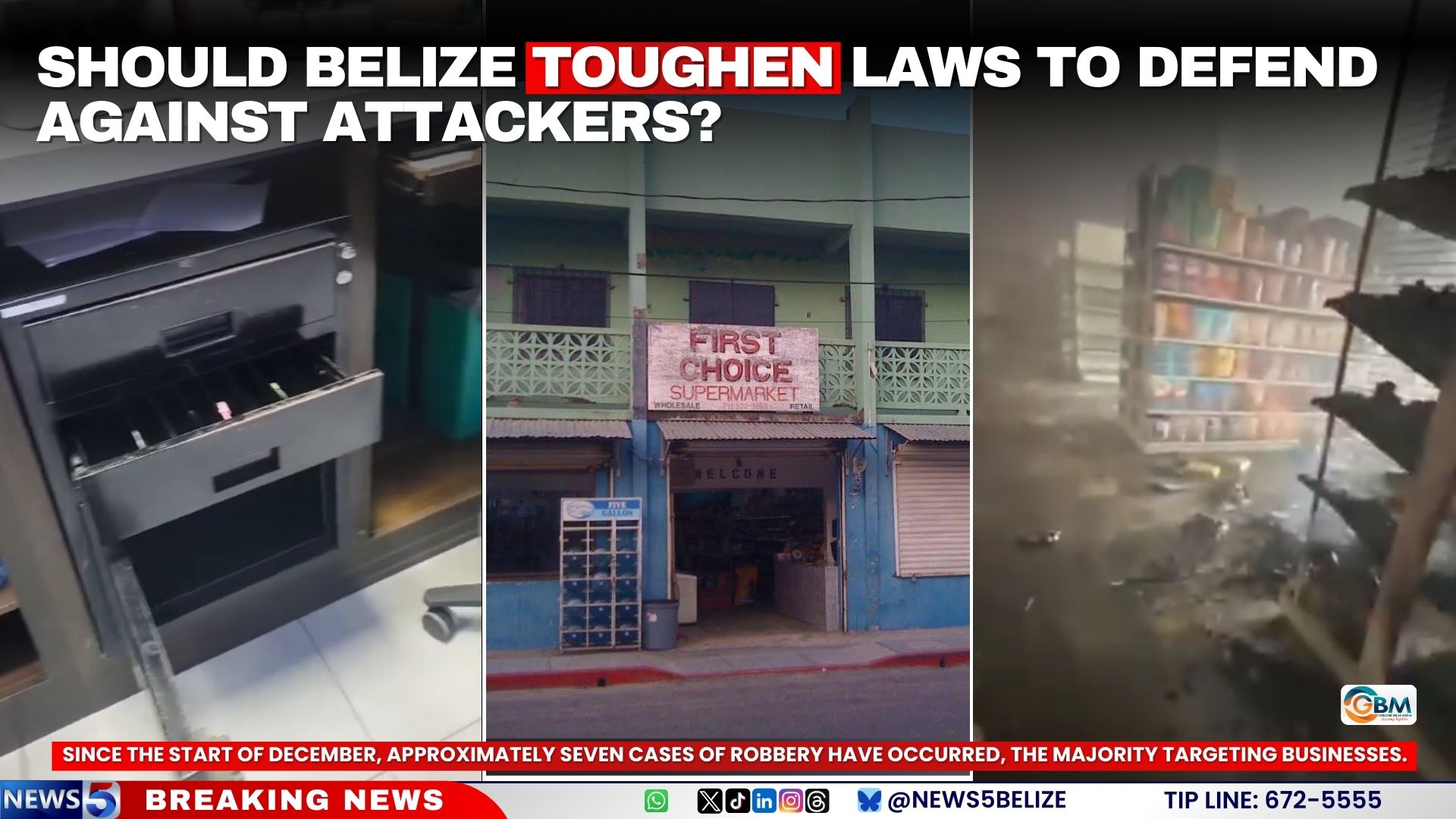
    A dramatic escalation in criminal activities across Belize has ignited a crucial national dialogue concerning the legal boundaries of self-protection and property defense. The Caribbean nation finds itself at a legislative crossroads following a disturbing pattern of commercial burglaries that culminated in a particularly violent incident in Dangriga.

    On Wednesday, December 17, 2025, two unidentified perpetrators forcibly entered the upper residence of First Choice Supermarket, where they physically restrained owner Lindy Zhou and employee Miaoru Yang before absconding with a substantial amount of cash. This violation represents merely one among approximately seven documented robbery cases targeting businesses since the beginning of December, creating an atmosphere of heightened anxiety among merchants and residents alike.

    In response to this crime wave, Belizean authorities have issued urgent advisories recommending enhanced security measures for commercial establishments, including the employment of professional security personnel and the prioritization of digital financial transactions over cash handling. The police department’s recommendations highlight the growing concern over organized criminal operations targeting vulnerable businesses.

    This security crisis has prompted comparative legal analysis with neighboring Trinidad and Tobago, which recently enacted the groundbreaking Home Invasion (Self-Defence and Defence of Property) Act, 2025. This progressive legislation explicitly permits property owners to employ proportional force, including potentially lethal measures, against intruders during home invasion scenarios. Notably, while the Trinidad and Tobago statute provides legal protection for defensive actions, it deliberately avoids promoting firearms as the primary means of protection.

    The emerging debate in Belize centers on whether similar legislative reforms should be adopted to strengthen citizens’ legal protections when confronting criminal elements, balancing the right to self-defense with concerns about escalating violence and vigilantism.