作者: admin

  • Trini in troubled Tanzania seeks help to replace lost passport

    Trini in troubled Tanzania seeks help to replace lost passport

    A Trinidadian expatriate residing in Tanzania finds herself in a precarious legal limbo after immigration authorities misplaced her passport, leaving her without valid identification during a period of significant political turmoil. The woman, who chose to remain anonymous, originally relocated to Tanzania seeking career advancement opportunities unavailable in her homeland.

    Her residency renewal process typically involved submitting documentation through local immigration channels to the national headquarters in Dodoma. However, during her 2023 renewal attempt, officials claimed to have misplaced a supplementary travel document and subsequently refused to release her passport. The situation deteriorated further this year when immigration authorities admitted they could no longer locate her passport entirely.

    Her attempts to secure replacement documentation through Trinidad and Tobago’s diplomatic channels proved frustratingly ineffective. The High Commission in Nigeria redirected her to London, where communications went unanswered, leaving repatriation as the only apparent solution—an option she resisted due to professional commitments and seasonal business demands.

    This personal crisis escalated against the backdrop of Tanzania’s contentious October 29 general elections. Official results claiming a 97.66% victory for the ruling Chama Cha Mapinduzi party were met with widespread skepticism amid reports of electoral irregularities. Violent protests erupted, resulting in alleged hundreds of casualties according to external sources, though government figures remain unconfirmed.

    The administration responded by attributing the unrest to foreign agitators, implementing widespread identity checks and roadblocks. President Samia Suluhu Hassan publicly condemned the violence while emphasizing the involvement of non-Tanzanian elements. This official narrative intensified the Trinidadian woman’s vulnerability, as she lacked the documentation to prove her legal status.

    Following media intervention, immigration officials in Trinidad provided direct contacts to the London High Commission, which holds jurisdiction over passport issuance for citizens in Europe, Africa, and China. An officer suggested the passport might have been diverted for illegal trade, noting the high value of Trinidad and Tobago passports in document trafficking circles due to their visa-free access to numerous countries.

    The Minister of Foreign Affairs has pledged assistance, and the woman has now received assurances from London that her replacement documents will be expedited once processed.


  • ‘Painting’ with coloured paper – Allisha Ali’s rising profile as Caribbean artist in Canada

    ‘Painting’ with coloured paper – Allisha Ali’s rising profile as Caribbean artist in Canada

    In an extraordinary fusion of technology and tradition, Toronto-based software engineering manager Allisha Ali has emerged as an unexpected force in the art world through her innovative paper-quilling techniques. Born in Trinidad and migrating to Canada at age ten, Ali has developed a distinctive artistic practice that transforms colored paper strips into vibrant visual narratives of Caribbean heritage and personal memory.

    Without formal art training, Ali discovered paper artistry as therapeutic expression during intervals between managing tech teams and raising her two daughters. Her unconventional medium involves meticulously layering and blending paper strips to create textured compositions that mimic brushstrokes—all without using any paint. “Just glue and paper,” Ali explains. “I have stacks of different colors and I blend them. It’s very tactile, very therapeutic.”

    Her engineering background profoundly influences her creative process. She describes her approach as “modular,” constructing artworks from individual components much like software systems are designed. This methodological crossover demonstrates how her technical expertise informs her artistic vision.

    At the heart of Ali’s work lies her Trinidadian roots and family history. Her breakthrough piece, “Oropouche,” depicts cocoa pods connected to her father’s lineage and the agricultural legacy of northeastern Trinidad. The artwork emerged from a deeply personal journey—returning to Trinidad seven years after her father’s death. “There was a lot of emotion in that trip—grief, nostalgia, joy,” she recalls. “I always think of Trinidad as paradise, but it’s layered.”

    Another significant work, “Bazodee,” captures the overwhelming experience of returning to bury her father, transitioning visually from anxiety to intense emotional release. Her portfolio has expanded to include socially conscious works like “The Water Protector,” honoring Indigenous water activists in Canada, and “Soul Rebel,” a portrait of Bob Marley that pays homage to the music that filled her childhood home.

    Despite recent recognition—including her first sale after someone discovered her work on Instagram and her inaugural exhibition in the Greater Toronto Area—Ali maintains her full-time tech career. She now aims to participate in juried exhibitions and eventually stage a solo show, all while continuing to develop more complex, message-driven works that create space for Caribbean stories in Canadian cultural spaces.

  • Why everyone’s talking about batana oil – from ancestral wisdom to modern haircare hero

    Why everyone’s talking about batana oil – from ancestral wisdom to modern haircare hero

    A traditional Honduran hair care ingredient has captured global attention, transitioning from indigenous ritual to social media sensation. Batana oil, extracted from the nuts of the American oil palm, has become the latest obsession in beauty circles, praised for its remarkable hair-restorative properties.

    This amber-brown oil with a distinctive nutty aroma originates from the rainforest region of La Mosquitia, Honduras, where the indigenous Miskito people have hand-processed it for generations. The area’s reputation for hair health is so established that it’s commonly referred to as “the Land of Beautiful Hair.”

    Biochemist Cheryl Bowles, founder of Cher-Mere products with over three decades of experience studying plant-based ingredients, explains the science behind batana oil’s effectiveness. “When you strip away the hype, every ingredient must stand on its own chemistry,” Bowles states. “Batana oil has a very specific profile that makes it effective for strengthening, conditioning, and protecting the hair shaft.”

    The oil’s potency derives from its unique composition: essential fatty acids (oleic and linoleic) that nourish and soften hair, antioxidants including Vitamin E and beta-carotene that protect against oxidative stress, and a balanced combination of saturated and unsaturated fatty acids that provide both richness and protective coating abilities.

    For Caribbean hair specifically, which faces constant exposure to heat, humidity, hard water, and chemical treatments, batana oil offers particular benefits. Its heavy yet penetrative structure works deep into the hair shaft while forming a protective barrier that helps retain moisture—especially valuable in humid climates where hydration evaporates quickly.

    Beyond its cosmetic applications, batana oil represents a cultural legacy. The Miskito people’s traditional techniques—slow-roasting, hand-cracking, and filtering—have supported community development while preserving the palm’s ecosystem for generations.

    Bowles emphasizes the importance of honoring these origins while applying modern scientific rigor. Her development process involved testing batana oil’s performance on varying hair textures and creating blends with complementary oils like rosemary and tea tree to enhance strength and scalp health.

    The current popularity of batana oil reflects a broader shift toward ingredients with authentic roots and proven efficacy. As Bowles notes, “We’re seeing a return to ancestral knowledge. People want ingredients that come from the earth, from real history, and that actually work.”

    Users report multiple benefits including softer, more manageable hair, reduced scalp dryness and flaking, decreased shedding, and improved shine without greasiness. The oil can be used as a pre-shampoo treatment, overnight mask, scalp massage oil, leave-in sealant, or enhancer when blended with other botanical oils.

  • Law meets compassion — Sherise Hosein shows up at Xmas and beyond

    Law meets compassion — Sherise Hosein shows up at Xmas and beyond

    While Christmas traditionally evokes images of festive gatherings and abundance, for Trinidad’s homeless and socially displaced populations, the season amplifies feelings of isolation and hardship. Attorney Sherise Naseem Hosein, 33, embodies an alternative spirit of Christmas through her dual commitment to legal excellence and humanitarian service.

    Operating from Mandamus Law Chambers in Couva, Hosein has dedicated her nine-year legal career to courtroom advocacy while simultaneously volunteering with the Socially Displaced Restoration Centre (SDRC). Her motivation stems from childhood values instilled by her taxi driver father Shameel Mohammed, secretary mother Fareza Hosein, and grandparents Jamadar and Zaibun Hosein. “They taught me kindness, empathy and consideration for others through daily actions,” she reflects, noting how the principle that “service to God is service to man” guided her development.

    Despite early academic challenges in reading, Hosein’s perseverance led her to pursue international relations at UWI, law through the University of London, and an MBA from Anglia Ruskin University. This educational foundation now supports her work with SDRC’s initiatives, including weekly food distributions and quarterly “care days” at Couva’s Inshan Ali Promenade. The organization is currently advocating to convert an abandoned Couva building into an overnight shelter with rehabilitation services.

    Hosein’s volunteer engagement extends to the TTPS Community Justice Clinic, where she has served as team lead for four years. This collaborative effort between police and volunteer attorneys provides accessible legal guidance on family matters, domestic violence, and land issues—cases often intersecting with social vulnerability. “The goal is to empower the community with knowledge so justice isn’t out of reach,” Hosein explains.

    The attorney challenges common misconceptions about homelessness, emphasizing that “many people are displaced due to circumstances beyond their control—loss, trauma, unemployment, or untreated mental-health challenges.” She identifies systemic gaps including affordable housing shortages and limited social support as contributing factors, advocating for both policy reform and community-driven solutions.

    Balancing legal practice with volunteer commitments requires meticulous organization, but Hosein finds the experience transformative. “Volunteering has reinforced how even smallest acts of kindness impact lives,” she observes. Her Christmas perspective has evolved beyond celebration to emphasize “compassion, presence, and small acts of kindness that bring comfort and dignity.”

    Hosein’s message to the public transcends seasonal giving: “Compassion isn’t only for special occasions. Even small contributions of time or support can build a stronger, caring community year-round.”

  • Shanti’s floral designs with an Xmas twist

    Shanti’s floral designs with an Xmas twist

    In the heart of San Fernando, a remarkable story of resilience and creativity unfolds at Pretty V’s Petals floral boutique. Shanti Kissoon, 55, has transformed life’s profound hardships into an extraordinary talent for creating beauty through floral arrangements.

    Growing up in rural Cumuto as one of thirteen children, Kissoon faced early adversity when she lost her mother to cancer at just 13 years old. This tragic loss became the catalyst for developing both practical skills and emotional resilience that would later define her artistic vision. “I learned to help maintain our home quickly,” Kissoon reflects, “but more importantly, I learned to see potential where others saw only limitation.”

    Her floral business, co-operated with Amaan Dar at the Arcade Mall, represents more than commercial enterprise—it embodies a philosophy of transforming “ugly into beauty” and “pain into pleasantries.” This approach stems from childhood influences; her mother, Phoolmat, was an avid craft enthusiast and plant lover whose passion became Kissoon’s inheritance.

    “My mother instilled in me this deep appreciation for nature’s overlooked treasures,” Kissoon explains. “While others might dismiss certain materials as ‘old bush,’ I see inherent beauty. This perspective extends beyond floristry—it’s how I approach life itself.”

    Completely self-taught, Kissoon developed her distinctive style through observation and experimentation. Her creations have gained particular attention for their non-conventional designs and colors, with clients increasingly seeking arrangements that maintain their appeal beyond seasonal celebrations.

    The Christmas season holds complex emotional resonance for Kissoon, evoking memories of impoverished but joyful celebrations. “We created decorations from saved matchboxes wrapped as gifts and used pine branches as Christmas trees,” she recalls. “Those experiences taught me that celebration isn’t about material wealth but about shared joy and creativity.”

    This philosophy now informs her business ethos: “Christmas represents faith, family, and love—not commercial competition. I strive to help people remember those less fortunate and brighten lives through floral artistry that carries emotional significance beyond aesthetic appeal.”

    Kissoon’s journey from Cumuto to successful entrepreneurship demonstrates how personal history can shape professional excellence. Her story stands as testament to the transformative power of viewing challenges as opportunities and finding beauty in unexpected places.

  • Ken Renard – Trinidad and Tobago’s most successful actor

    Ken Renard – Trinidad and Tobago’s most successful actor

    Despite achieving near-total obscurity in his native Trinidad and Tobago, Kenneth Renwick (1907-1993), professionally known as Ken Renard, forged one of the most remarkable and prolonged acting careers among Caribbean-born performers. His journey from tire retreading laborer in Harlem to celebrated Broadway and Hollywood actor represents an extraordinary narrative of artistic perseverance amid racial barriers.

    Renard’s immigration records confirm his 1923 arrival in the United States from Port of Spain, where he initially worked in industrial jobs before discovering theater. His breakthrough came during the twilight of the Harlem Renaissance, performing with the Lafayette Theatre’s productions of ‘Sailor Beware’ and ‘The Front Page’ in 1935. This led to his involvement with the historically significant Federal Theatre Project, where he performed under Orson Welles’ direction in the legendary ‘Voodoo Macbeth’ (1936) and was cast as Emperor Haile Selassie in the controversially canceled ‘Ethiopia’ production.

    His career trajectory defied racial conventions of the era, transitioning from Harlem stages to Broadway productions throughout the 1940s-50s, including Jean-Paul Sartre’s ‘The Reluctant Prostitute.’ Renard simultaneously established himself in radio dramas for major networks like CBS and NBC before breaking into cinema with black-cast musicals like ‘Murder with Music’ (1948).

    Renard’s cinematic significance culminated in his dignified portrayal of Haitian revolutionary leader Toussaint Louverture in ‘Lydia Bailey’ (1952), marking his transition to substantial Hollywood roles. Throughout the 1960s-80s, he appeared alongside icons including Sidney Poitier (as his father in ‘Something of Value’), Jane Fonda, and Marlon Brando while accumulating over twenty film credits and dozens of television appearances. His versatility shone through westerns (‘Bonanza’, ‘The Virginian’), legal dramas (‘Perry Mason’), espionage thrillers (‘Mission: Impossible’), and science fiction (‘The Outer Limits’).

    Despite confronting limited opportunities for Black actors—noted in his 1960 interview with The New Pittsburgh Courier—Renard mastered diverse ethnic roles including Latin, Native American, and African characters. His legacy remains preserved at the California African American Museum in Los Angeles, housing photographs, theater programs, and personal memorabilia from his groundbreaking six-decade career. The single word engraved on his Los Angeles gravesite—’ACTOR’—encapsulates the identity he forged through relentless artistic dedication.

  • Los Parranderos de UWI, 45 years going strong

    Los Parranderos de UWI, 45 years going strong

    The University of the West Indies (UWI) witnessed a remarkable cultural celebration as Los Parranderos de UWI marked its 45th anniversary with a special concert at the Learning Resource Centre in St. Augustine on November 30. The event brought together past members, former leaders, and distinguished guests from the parang community to honor the group’s enduring legacy in Trinidad and Tobago’s musical landscape.

    Founded in 1980 by members of UWI’s Spanish Society, the ensemble has evolved from a student initiative into a nationally recognized parang institution. Their journey into competitive parang began in 1993 through the National Parang Association of TT (NPATT), where they achieved an extraordinary record of seven consecutive second-place finishes (1999-2005) before clinching the national championship title in 2006.

    The anniversary concert featured nostalgic recollections from founding member Farzan Ali and former leaders Sharon Beharry (1985-86), Keith Dalip (1987-90), and Miguel Browne (1999-2024). They shared anecdotes about the group’s adventures traveling to the Paramin festival, the challenges of convoy transportation, and their commitment to ensuring all members returned safely after late-night performances.

    Musical highlights included performances of the group’s greatest hits from their four albums: ‘Mi Parranda’ (2003), ‘Vamos A Celebrar’ (2005), ‘Parranda Ta Nos’ (2010), and ‘Nuestra Canción’ (2025). The setlist blended original compositions like ‘Canta’ and ‘Recordemos’ with tributes to parang legends Gloria Alcazar, Henry Periera, and the Lara Brothers.

    The ceremony included the induction of five members into the group’s honor roll: Keisha Mark, Camivel Cova, Jerry Ramdass, Brandon Akai, and Khadine Bovell. Special recognition awards were presented to Tony Narine for 29 years of sound system support and retired principal’s assistant Elizabeth McComie for her instrumental role in securing the group’s presence at major campus events. Longest-serving members Miguel Browne (41 years) and Desdra Bascombe (40 years) received distinctive honors for their enduring dedication.

  • Finance Minister to public servants – Save some back pay for rainy days

    Finance Minister to public servants – Save some back pay for rainy days

    In a significant development for Trinidad’s public sector, Finance Minister Davendranath Tancoo has issued a compelling appeal to public servants receiving partial back payments, emphasizing the critical importance of financial prudence. The minister’s advisory comes amidst ongoing economic pressures and rising living costs, urging recipients to prioritize saving and long-term financial security over immediate expenditure.

    The backdrop to this financial advisory stems from the recent memorandum of agreement signed between the Public Service Association (PSA) and Chief Personnel Officer Dr. Daryl Dindial on December 2. This landmark agreement secured a ten percent wage increase for public servants, with new salaries scheduled for January implementation and an advance on arrears promised before December 23. Notably, the complete $3.8 billion in back pay will not be distributed in full cash payments immediately, with the initial disbursement capped at approximately $500 million for the PSA’s 80,000 members.

    Financial experts have reinforced the minister’s message with practical guidance. Ian Chinapoo, Group CEO of Guardian Group with three decades of financial expertise, introduced ‘The 4T Framework’ for managing windfall payments. His comprehensive approach emphasizes emotional regulation (Take a breath), financial assessment (Think out loud), strategic debt management (Tactical moves), and future-oriented investing (Target your future). Chinapoo specifically recommends allocating no less than 50% of back pay to secure investments like mutual funds, stocks, and government bonds.

    Adding depth to the financial counsel, Miguel Martinez, President of Guardian Asset Management, warned against the psychological trap of treating lump sums as ‘found money.’ He advocated for a balanced allocation strategy dividing funds between enjoyment, debt reduction, and savings/investments. Martinez particularly emphasized building emergency reserves covering six months of income and pursuing purpose-driven investing through professionally managed funds with strong track records and transparent fee structures.

    Both experts concur that this disbursement presents a unique opportunity for public servants to establish lasting financial stability, transform their economic outlook, and create intergenerational wealth through disciplined financial management and strategic partnership with reputable financial institutions.

  • Green addresses vets’ concerns over dog rescue claim

    Green addresses vets’ concerns over dog rescue claim

    Jamaica’s Agriculture, Fisheries, and Mining Minister Floyd Green has addressed mounting concerns from veterinary professionals regarding the government’s handling of animal rescue operations following Hurricane Melissa. The controversy emerged after Minister Green’s December 3 media briefing created the impression that government-led aerial reconnaissance missions had directly rescued and facilitated international relocation for 58 dogs affected by the late October hurricane.

    At a Jamaica Observer Press Club event on December 16, 2025, Minister Green acknowledged the communication error, describing it as “an unfortunate conflation of two separate things.” The minister specifically sought to reassure Jamaicans who had lost pets during the hurricane that no animals were taken abroad without proper protocols.

    The clarification comes after clinical veterinarians Dr. Sarah Wilkinson-Eytle and Dr. Paul Cadogan challenged the initial narrative. According to their professional assessment, the dogs transported to the United States and Canada were already housed at the Negril Pup Rescue shelter prior to Hurricane Melissa’s landfall on Jamaica’s southwestern coast.

    Dr. Wilkinson-Eytle of Phoenix VetCare explained that the ministry’s role was strictly administrative: “What happened was that the ministry, along with the International Fund for Animal Welfare, had to accelerate that movement post-Melissa because the shelter sustained damage. All the ministry did was facilitate paperwork so that the export permits and veterinary inspections could be completed expediently.

    Both veterinarians confirmed that government veterinary personnel did participate in aerial surveys with the Jamaica Defence Force, but these missions focused exclusively on assessing storm impact on agricultural animals and identifying areas with large concentrations of animal casualties—not rescuing stranded pets.

    Minister Green expressed regret over the misleading narrative, emphasizing the government’s collaborative relationship with animal welfare organizations like Montego Bay Animal Haven and Humane World for Animals. He clarified that while the Veterinary Services Division plays a crucial regulatory role in animal exports, the actual rescue and rehoming efforts are primarily conducted by specialized non-governmental organizations.

  • Early potential unlocked

    Early potential unlocked

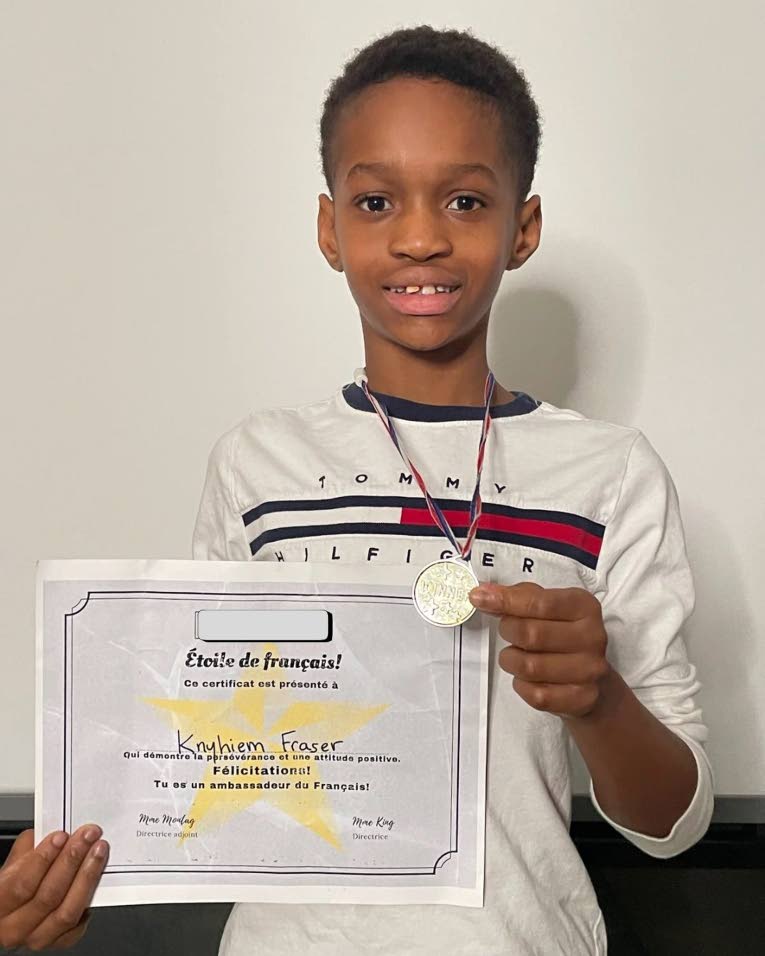
    In an extraordinary academic achievement, 10-year-old Jamaican expatriate Knyhiem Fraser has successfully conquered the Caribbean Secondary Education Certificate (CSEC) technical drawing examination—typically undertaken by high school students after years of preparation—while residing in Canada and attending a French-language institution.

    Knyhiem’s remarkable journey involved a year of intensive independent study and online tutorials under the guidance of his father, Everett Fraser, an accomplished technical drawing instructor and textbook author whose works are utilized throughout Caribbean secondary schools. The young scholar traveled to Jamaica specifically to complete the examination at Kingsway High School, all while maintaining an active schedule that includes competitive soccer, ice hockey, and creating educational content for his YouTube channel.

    What makes Knyhiem’s accomplishment particularly noteworthy is his dual-language educational environment. In Canada, he has simultaneously distinguished himself as the top-performing French-speaking student in his fifth-grade class, demonstrating exceptional linguistic and academic versatility.

    The foundation of his success lies in his parents’ educational philosophy. Both Jamaican educators, Tricia Smith and Everett Fraser have long championed early childhood potential development. Fraser’s innovative teaching methodology, which incorporates video-based learning originally designed for academically struggling students, proved equally effective for his son. This approach has historically resulted in 100% pass rates among his students in external examinations.

    Knyhiem confronted the challenge with remarkable maturity, transforming initial apprehension into determined confidence through psychological repositioning. “I changed the words from ‘I can’ to ‘I can, and I will pass the exam, no matter what,’” he recounted to the Sunday Observer.

    His resilience was tested during the actual examination when technical difficulties disrupted his AutoCAD software. Demonstrating composure beyond his years, Knyhiem calmly reset the system and continued, attributing his poise to parental guidance and cultivated mental fortitude.

    This same determination characterizes his athletic pursuits. Having begun ice hockey at eight years old without prior skating experience, Knyhiem diligently practiced to become team goalkeeper for the West London Hawks competitive squad.

    The Fraser family advocates strongly for early childhood stimulation, arguing that children possess sponge-like learning capabilities during formative years. “If we stimulate them earlier at this age, they’re way more focused,” Everett Fraser explained, noting that Knyhiem frequently outperformed older students in regional revision classes.

    Both parents encourage greater parental involvement in childhood education, emphasizing that learning extends far beyond classroom walls. Smith advised: “Having a strong foundation is a plus. Most of the time it helps to determine the path that our children will move in life academically.”

    With aspirations toward professional soccer and entrepreneurship, Knyhiem offers simple yet profound advice to peers: maintain clarity of mind, prioritize rest, and embrace calculated risks. “The way to heaven is like hell,” he philosophizes, “because you have to make sacrifices and take risks.”