作者: admin

  • PHOTOS: Full Steam Ahead On Road Repairs

    PHOTOS: Full Steam Ahead On Road Repairs

    After years of growing public frustration over crumbling road infrastructure, the national government has launched a full-scale, island-wide road rehabilitation programme, bringing in heavy construction machinery and deploying round-the-clock work crews to tackle dangerously degraded road conditions that have impacted communities across the country.

    Headed by Public Works Minister Maria Bird Brown, the Ministry of Public Works has laid out clear priorities for this initiative, focusing on long-unaddressed infrastructure problems that have upended daily commutes, pushed up vehicle maintenance expenses for drivers, and created persistent public safety hazards for pedestrians and motorists alike. Multiple high-need areas have already been marked for full-scale rehabilitation and complete resurfacing, including well-known problem zones at Seaton’s Hill, Fry’s Hill, Bendals, and Glanvilles.

    At the center of the government’s infrastructure push is All Saints Road, a major thoroughfare that has faced intense public criticism from commuters and local leaders for years over its poor condition. Preparations for full rehabilitation work on the route are already complete, and construction is set to get underway in the very near future.

    To cut down on project timelines and minimize disruption to daily travel for local residents, officials announced that they will expand overnight construction operations across all project sites. This move marks a clear shift from months of planning and public consultation to full, on-the-ground execution, cementing this effort as the most ambitious nationwide road repair push the region has seen in recent years.

  • Project Polaris Groundbreaking Ceremony

    Project Polaris Groundbreaking Ceremony

    On a historic plot of land that has carried centuries of Grenadian narrative—from Indigenous Amerindian settlement through colonial slave and sugarcane plantations—Prime Minister Dickon Mitchell has officially launched the groundbreaking ceremony for Project Polaris, the nation’s ambitious new state-of-the-art Grenada General Hospital. Far more than a construction milestone, the event marked a defining step forward for the island nation’s long-term national development plan, Vision 75, which aims to transform Grenada into a resilient, inclusive, innovation-driven economy by its 75th independence anniversary in 2050.

    For more than a century, Grenada’s existing General Hospital, originally built as a colonial infirmary by French rulers, has stood as a quiet witness to the nation’s tumultuous history. It survived the 1850 Great Fire of St. George’s, weathered devastating hurricanes Janet and Ivan, and endured through Grenada’s political revolution. Over generations, successive governments have patched and expanded the aging facility: adding new wings, expanding overcrowded wards, repainting walls, and repairing leaky roofs. But officials have long acknowledged that retrofitting a 19th-century structure to meet 21st-century clinical standards is no longer feasible. For years, Grenadian healthcare workers have delivered life-saving care against steep odds, working within severe space constraints while the public has waited patiently for systemic change. Today, that change finally begins, Mitchell emphasized.

    The path to this groundbreaking ceremony was the result of deliberate, accelerated action by Mitchell’s administration, which took office in 2022. Built on the non-negotiable principle that all Grenadians deserve access to world-class healthcare without leaving their home country, the project moved from concept to land acquisition in just 12 months, with the 2023 purchase of the strategic plot from the Neckles family. Mitchell highlighted the family’s stewardship of the land for a full decade, from 2013 onward, when they chose to hold the entire parcel intact rather than subdivide and sell it for private development, recognizing its long-term strategic value to the nation.

    Mitchell acknowledged that the road ahead still holds significant hurdles, from financial constraints to logistical challenges, and that skeptics have questioned the project’s feasibility. But he reaffirmed that the government’s commitment to delivering tangible progress for the Grenadian people remains unwavering. Years of rigorous feasibility studies, environmental impact assessments, and intensive negotiations have laid a strong foundation for the project, which is designed not just as a new hospital building, but as a sustainable, integrated ecosystem of care. Today’s ceremony moves the project from planning to active construction, turning a decades-long policy discussion into tangible progress.

    Project Polaris stands as the cornerstone of Vision 75, the government’s national development roadmap. “You cannot have a wealthy nation without a healthy nation,” Mitchell noted, framing public health as the bedrock of all national prosperity. A productive economy depends on a healthy workforce, and a thriving society cannot exist without a modern, accessible healthcare system that meets the needs of all citizens. Echoing the transformative impact of two of Grenada’s most iconic national infrastructure projects—the Maurice Bishop International Airport completed in 1984 and St. George’s University founded in 1977—Project Polaris is set to reshape the nation’s trajectory. During construction, the project will create hundreds of local jobs, and once completed in 2029, it will support thousands of high-skilled clinical and support roles, strengthening Grenada’s human capital for decades to come.

    The new hospital facility is the core infrastructure, or “hardware,” of a broader public healthcare transformation that includes complementary policy and system reforms, labeled the initiative’s “software.” Key reforms include transitioning hospitals to a semi-autonomous management structure to speed up procurement, improve operational efficiency, and boost maintenance standards; laying the regulatory and financial groundwork for a national universal health insurance scheme that will eliminate the cruel choice for Grenadians between life-saving care and losing their life savings; revitalizing local community health centers and village medical outposts to expand preventative primary care, reducing the burden of advanced illness on the acute care hospital; and implementing a system-wide quality improvement program at the existing General Hospital to boost patient experience and clinical outcomes immediately, while construction on the new facility progresses.

    Beyond improving domestic care, Project Polaris will position Grenada as a regional leader in healthcare excellence among the Organisation of Eastern Caribbean States (OECS), turning the Spice Isle into a global health tourism destination and a regional hub for specialized clinical care. To mark the occasion, the government of Grenada signed a new Letter of Intent with CAF, the Development Bank of Latin America and the Caribbean, outlining a framework for expanded collaboration to strengthen the nation’s health sector, advance digital health integration, and develop sustainable, high-impact initiatives that improve health outcomes for all Grenadians. Mitchell extended an open invitation to local private sector stakeholders, the Grenadian diaspora, and international partners to join the project, framing the initiative as proof that small island developing states can lead regional progress when they commit to bold ambition. “Grenada is no longer a passenger in the story of Caribbean development; it is a pilot,” he said.

    To underscore the shared responsibility of building a healthier nation, every member of the Grenadian Cabinet has pledged to donate one month of their annual salary to the project each year until its completion in 2029. Mitchell extended a call to all Grenadians at home and abroad to join the effort, whether through public advocacy, personal commitment to healthy lifestyles, or direct partnership. Beyond bricks and mortar, he framed the project as a shift in national mindset: health is not just a service to access when illness strikes, but a collective priority to protect every day.

    In closing, Mitchell extended gratitude to the cross-government team that brought the project to this milestone, international development and financing partners, and the Neckles family for their stewardship of the land. He also recognized long-standing institutional partner St. George’s University, whose expertise in medical education will make the new hospital a hub for clinical training as well as patient care. “May God bless this project, and may God bless our beautiful nation,” he said.

  • From Barefoot Schoolgirl to Assistant Superintendent of Police

    From Barefoot Schoolgirl to Assistant Superintendent of Police

    As Women’s Month draws to a close in 2026, Belize is spotlighting an extraordinary story of grit and survival that defies every early-life obstacle stacked against a small-town girl who grew up to become one of the country’s leading law enforcement officers. Hortence Hernandez, now Assistant Superintendent and Press Officer for the Belize Police Department, has opened up about her decades-long journey from a poverty-stricken, abuse-plagued childhood to leading uniformed service, sharing unflinching insights into the unique barriers women in policing still face today.

    Hernandez’s earliest years were rooted in Crooked Tree Village, a remote rural community where she grew up with almost no material resources to her name. Unlike many children her age, she often walked to classes barefoot, frequently missed lessons to stay home caring for her younger siblings, and sometimes went entire school days without even a basic exercise book to complete assignments. “We were literally dirt poor,” she recalled in her candid interview. “Many days I go to school barefooted. I could remember I often don’t even have an exercise book to write in.”

    Her childhood was defined not just by poverty, but by chronic instability and abuse. She bounced between two households: a violent home with her mother and stepfather, and her grandparents’ home, which offered safety but remained crippled by financial hardship. One searing memory from her early school years still stands out: while sitting on her home steps laughing as neighbors gathered to play in the yard, her stepfather pressed a lit cigarette into her back before kicking her down the concrete steps. Now, as a survivor of both childhood physical and sexual abuse, she says she understands firsthand the isolating pain that keeps many victims from speaking out.

    These traumatic early experiences, paired with a childhood instinct to play “police” instead of leaning into traditional gendered play, set the course for her future career during a defining encounter at age 18. That day, she witnessed a severely injured woman stumble across a nearby field, her clothing nearly burned away, screaming that her partner had doused her and set her on fire. “From that day,” she said, “if ever I become a police officer, it is definitely at the Family Violence Unit I wanted to work.”

    When Hernandez finally left Crooked Tree Village, the opportunity to join the police force came almost by accident: a friend alerted her to the upcoming recruitment exam just 24 hours before it was scheduled. Even after passing the exam and earning a spot in training, the challenges had only just begun. Unable to afford required training gear, she made the desperate choice to pawn her mother’s wedding ring to cover costs. The only training shoes she could afford were too small, leaving her feet raw and bleeding every single day through months of drills. When she appealed for leniency, a female sergeant refused to grant her any accommodation. “It tested my faith, and I wanted to leave, but nonetheless, I prayed to God and said, ‘This is where I wanted to be.’ So I stuck it out,” she shared.

    That relentless perseverance would become a throughline in every part of her life, including her role as a parent. Over nearly 26 years, she raised five daughters almost entirely on her own, sacrificing countless birthdays, school events, and report card ceremonies to meet the demands of her shift work. She recalled a time when a school principal publicly shamed her for missing a parent event, completely unaware of the constant balancing act that working mothers in law enforcement are forced to navigate. “It is almost impossible to dedicate your life to policing and be a mother,” she said. “We don’t live a normal life.”

    Hernandez has also been open about ongoing challenges she has faced within the police department itself, pointing to a surprising source of tension for women in uniform. “Women are our own greatest enemies,” she argued. “At every point that a woman can get to bring down another woman, they will do that.” She recalled a particularly hurtful moment when fellow female officers openly celebrated when she was passed over for a promotion to sergeant.

    Despite every barrier, Hernandez never stopped prioritizing education alongside her rising career. She earned degrees in paralegal studies and public sector management, followed by a master’s degree in management, and only made her final student loan payment this past December. “Every step of what I do is God,” she said. For all her professional accomplishments, she calls her five daughters her proudest achievement; one has even followed in her footsteps and joined the Belize Police Department.

    When asked what advice she would give to young women considering a career in policing, she was unflinchingly honest. “I will never encourage a woman to become a police officer,” she said. “However, if you want to become one, do it because it is a calling, not a salary…You cannot be a police officer and give it 100% and be a mother and a wife and give it 100%.”

    As Women’s Month wraps up, Hernandez summed up what the uniform means to her in one word: resilience. “It means that you must always go above and beyond to protect and serve. Being a woman does not mean sitting behind a desk. It means that we will compete with men because we are capable of doing just as men are doing and even better,” she said. Hernandez will mark 26 years of service with the Belize Police this coming June, after joining the force on June 18, 2000.

  • Republic Bank workers to receive 9.5% pay hike under new deal

    Republic Bank workers to receive 9.5% pay hike under new deal

    After weeks of closed-door negotiations, two key stakeholders in the Eastern Caribbean financial sector have reached a landmark consensus that will reshape working conditions for hundreds of bank employees. Republic Bank EC Limited, a leading regional financial institution, and the National Workers Union, the representative body for the bank’s clerical, technical and IT staff, have successfully finalized a new three-year industrial agreement that delivers tangible wage gains, retroactive compensation and upgraded workplace benefits for more than 140 workers.

    Under the terms of the newly struck deal, covered employees will see a cumulative 9.5% general wage increase spread across the three-year term of the agreement. The raises are phased incrementally, with a 3% increase set for the first year, a second 3% increase for the second year, and a final 3.5% adjustment in the third year of the contract. In addition to the scheduled incremental raises, the agreement also grants eligible workers more than 12 months of retroactive back pay, compensating them for the period between the expiration of the previous collective agreement and the finalization of the new deal.

    The breakthrough in negotiations was mediated by the Office of the Labour Commissioner, which stepped in to facilitate discussions and help both sides bridge remaining gaps on key issues. Alongside wage adjustments, the new agreement introduces a suite of upgraded benefits designed to address rising daily work costs for employees. These include a new $30 daily breakfast allowance, increased vehicle allowances for workers who use personal transportation for work purposes, and an annual uniform allowance of $1,400 for male staff and all probationary employees. The deal also formalizes a long-sought recognition for business banking officers, reclassifying the role as an official travelling position to align with the role’s actual day-to-day work requirements, which regularly require off-site client visits.

    Both parties have scheduled a formal signing ceremony to mark the conclusion of negotiations, set for Tuesday, March 31, 2026. The ceremony will be held at an official venue, with senior officials from the Department of Labour in attendance to witness the signing of the final agreement.

  • Postponement Of Antigua Carnival 2026 Event Launch!

    Postponement Of Antigua Carnival 2026 Event Launch!

    Organizers of one of the Caribbean’s most anticipated annual cultural celebrations have announced a last-minute change to the kickoff of their 2026 event. The Antigua and Barbuda Festivals Commission (ABFC), the governing body that oversees the planning and execution of Antigua Carnival, has confirmed that the official launch party for Antigua Carnival 2026 will not go forward as originally planned.

    Initially, the launch was set to take place on Saturday, April 11, 2026, at the popular Rising Sun Grounds venue. However, unforeseen overlapping commitments and the scheduling of other major community and national activities during the same window have forced the commission to reschedule the launch event.

    In a public statement shared this week, ABFC expressed gratitude to the local community and carnival fans around the world for their ongoing patience and support of the iconic annual celebration. Organizers have encouraged all those excited for the 2026 carnival to embrace the event’s official theme “Feel the Rhythm” and follow the commission’s verified social media channels and official communication platforms to receive real-time updates as soon as a new launch date is confirmed. The full carnival celebration itself is still expected to proceed as planned later in the year, with only the introductory launch event affected by this scheduling adjustment.

  • From Sea to Plate: The Story Behind Every Bite of Belize’s Seafood

    From Sea to Plate: The Story Behind Every Bite of Belize’s Seafood

    For visitors and locals alike, Belize’s signature seafood dishes — tangy ceviche, crispy conch fritters, golden fried fish served alongside classic rice and beans — carry an unmistakable flavor of the Caribbean coast. But few stop to question the complex, multi-layered process that brings each fresh catch from open water to the dining table.

    Over the past several years, Belize has built a coordinated management system to govern every step of the seafood supply chain, from harvest to service. Core rules include designated fishing zones, species size limits, and seasonal fishing closures, all designed to safeguard the nation’s vulnerable marine ecosystems and ensure the fishing industry remains a viable livelihood for future generations of Belizeans. At the center of this sustainability push is the Belize Fund for a Sustainable Future, which funds targeted programs to connect responsible ocean harvesting with transparent, ethical end-to-end supply chain management.

    Building and maintaining this system, however, has proven far from simple, with regulators and conservation groups constantly adapting to address unforeseen gaps. For hundreds of coastal Belizean families, fishing is more than an industry — it is a multigenerational way of life that anchors local communities. While enforcement of catch rules at sea is well-established, senior officials with Belize’s Fisheries Department say the largest unaddressed challenge lies not in what is pulled from the water, but in what happens to the catch after it lands.

    Senior Fisheries Officer Adriel Castañeda explained that one of the weakest links in the current regulatory framework is the unregistered middle tier of the supply chain: vendors and brokers who purchase catch directly from fishers to resell to hotels, restaurants, and other bulk buyers. Currently, these actors operate outside formal registration requirements, creating a critical transparency gap. “We are going through the revision of our regulations, and some of the things that we’re including are for vendors, for those middlemen … to also be registered, because they are currently not registered. So, there’s a little gap, per se,” Castañeda said. He added that registered middlemen would also be required to report data on what they buy and where products are distributed, information that is essential for regulators to track total catch volumes and maintain accurate fisheries records. This unregulated gap leaves a portion of Belize’s seafood trade untraced, raising questions about the origin of some products, whether they were caught legally, and if they meet national sustainability standards. Closing this gap would not only strengthen marine protection efforts but also reinforce shared accountability across every actor in the seafood chain.

    Beyond formal government regulation, local communities and international conservation organizations have long played a central role in advancing Belize’s sustainable fishing goals. The Wildlife Conservation Society (WCS) has operated in the country for more than 40 years, focusing on scientific research, community education, and habitat protection to preserve vulnerable marine species. A key part of WCS’s strategy centers on engaging working fishers directly in data collection, rather than framing them as targets of regulation. This collaborative approach helps the broader fishing community understand catch patterns by species, location, and volume, turning that data into actionable conservation strategies that make fishers active partners in protection. Henry Brown, Technical Research Assistant at WCS, used the critically endangered Nassau Grouper to illustrate the impact of these rules. “Take the Nassau Grouper, a critically endangered species. Size limits help juveniles grow to maturity, while the larger ‘mega spawners’ hold the most eggs to replenish the population. These measures give the species a chance to bounce back,” Brown explained.

    Simple, targeted rules like size limits and closed spawning seasons do more to protect ecosystem health than many complex policy interventions, giving vulnerable populations time to reproduce and replenish. Kiefer Alvarez, Enforcement Coordinator at the Turneffe Atoll Sustainability Association (TASA), outlined how on-the-water enforcement works in practice: “Once a fisher has more than ten undersized conch, for example, he automatically commits an infraction. Once he has less than ten, we issue a written warning, and it all depends on our discretion because we can charge them for one, two, or three.” Brown emphasized the stakes of this work for the entire nation: “Our entire country is bounded by the sea, so the sea is one of our main resources, especially for our coastal communities, so by properly managing it as well as using sustainable fishing activities [we protect that future].”

    Accountability does not end when seafood leaves the supply chain and reaches the dining sector. Restaurants, food vendors, and everyday consumers are the final drivers of market demand, and their choices can either strengthen or undermine years of conservation and regulatory work. One Belizean business leading by example is Smokeez Seaside Restaurant & Bar, where owner Ramon Salgado has built his brand around working exclusively with a small network of vetted, trusted local suppliers to guarantee all seafood served is legally caught, ethically sourced, and fully traceable. Salgado noted that restaurants bear unique responsibility for shaping sustainable markets: “I think restaurants play an important role because we are the purchasers. If we continue as restaurants to purchase anything just so that we can sell it … at the end of the day, five or 10 years from now, we may not even have any conch or seafood to sell.” He added that regular, unannounced compliance checks from fisheries enforcement teams help keep local businesses accountable, creating a lasting culture of sustainable sourcing. “That keeps us in compliance,” he said. “It creates a habit for us to source sustainably.” For consumers, every menu selection is a choice that ripples back up the supply chain, influencing fishers’ practices and shaping the long-term abundance of Belize’s coastal waters.

    Ultimately, every bite of Belizean seafood is the product of a shared journey that links fishers, middlemen, regulators, conservation groups, restaurants, and diners in a common mission to protect the nation’s most precious coastal resource. Every decision, from what a fisher chooses to catch to what a diner orders off the menu, carries tangible consequences for the future of Belize’s oceans, the livelihoods of coastal communities, and the survival of the iconic cuisine that defines the country. As stakeholders continue to close gaps in the regulatory system, that mission remains clear: sustainable seafood is a shared responsibility for all.

  • Belize City Gears Up for Two-Night Holy Week Revival Concert

    Belize City Gears Up for Two-Night Holy Week Revival Concert

    As Holy Week 2026 approaches, the coastal capital of Belize is finalizing preparations for one of its most anticipated community gatherings: the biennial two-night Holy Week Revival Concert, organized by the Belize City Council. First launched in 2023, this unique fusion of spiritual worship and live gospel music is set to welcome attendees across two consecutive evenings, bringing together a diverse lineup of both homegrown Belizean talent and world-famous international gospel performers.

    Deputy Mayor Eluide Miller emphasized that the event is far more than just a musical series. Rooted in a vision of communal connection forged by Mayor Wagner, the concert was conceived to address a growing need for collective renewal and renewed hope among Belize City residents, Miller explained in a press statement ahead of the event.

    “When we first started planning this, Mayor Wagner put forward the idea that our city needed a moment of revival — a chance to reset, reconnect, and rebuild that shared sense of purpose,” Miller said. “This year, we have an incredible lineup of performing groups lined up, including the internationally acclaimed reggae gospel band Christafari and fan-favorite Sinach, who is returning to the stage after a previous appearance. What attendees can count on is an experience that welcomes entire families and centers on community bonding. We’re just hoping people turn out, enjoy the music, and leave feeling that sense of togetherness we’ve worked so hard to build.”

    While past iterations of the concert have drawn massive, enthusiastic crowds, the event has not escaped public criticism, most centered on questions about its use of public funds and overall cost. Taking that community feedback to heart, the Belize City Council implemented a major restructuring of the event’s funding model for the 2026 iteration, partnering with a mix of private sector businesses and public sector institutions to spread the cost and ease the burden on public coffers.

    So far, the collaborative approach has yielded strong results: Deputy Mayor Miller confirmed that organizers have already raised more than $100,000 in cash and in-kind donations from partners. The total projected cost for the 2026 concert comes out to $236,000, meaning the city council will only need to cover the remaining $130,000 — a sharp reduction in public expenditure compared to past events.

    Miller noted that the outpouring of private sector support speaks volumes about the event’s value to the city. “This level of backing shows just how much confidence the local business community has in this initiative,” he said. “They recognize what this event contributes to strengthening the social fabric of our city, and they’ve stepped up to help make it happen again this year.”

  • Child health system assessed six years after $20m boost

    Child health system assessed six years after $20m boost

    On Monday evening, stakeholders from across Barbados and the global health community converged to celebrate and evaluate six years of groundbreaking work at the Shaw Centre for Paediatric Excellence, a landmark initiative that is positioning the small Caribbean nation as a regional trailblazer in child healthcare.

    Founded in 2019, the centre grew out of a transformative $10 million philanthropic donation from the Canada-based LesLois Shaw Foundation, with hands-on implementation support from Toronto’s world-leading SickKids hospital. Local partners including Barbados’ Ministry of Health, the Queen Elizabeth Hospital, and the University of the West Indies joined the collaboration to build a locally rooted paediatric care model from the ground up.

    At the commemorative reception hosted at the Canadian High Commissioner’s Holetown residence, Jennifer Bernard, President and CEO of the SickKids Foundation, outlined the far-reaching progress the partnership has delivered to date. Fifty nurses have completed specialized training in high-demand paediatric care fields, core clinical infrastructure at the Queen Elizabeth Hospital has undergone comprehensive upgrades, and cutting-edge specialized medical equipment has been rolled out to raise the standard of care across the island. A key priority has been shifting care toward proactive intervention, exemplified by a three-year newborn screening pilot program that is laying the groundwork for earlier detection and treatment of childhood health conditions.

    Bernard emphasized that the centre’s success defies assumptions about the capacity of small island states to deliver systemic public health change. “If we know we can do it in the West Indies, we can do it anywhere,” she noted, adding that the centre’s integrated cross-sector model – which unites government, academic institutions, and frontline healthcare providers – serves as a replicable blueprint for low- and middle-income countries working to strengthen their own child health systems.

    Dr. Clyde Cave, programme director of the Shaw Centre, explained that the initiative represents a fundamental paradigm shift from the traditional reactive model of healthcare delivery to a coordinated, prevention-focused framework. The programme adopts a life-course approach to child wellbeing, extending care from the pre-natal period all the way through adolescence, while addressing long-standing gaps in service access for young people. It has also grown local paediatric expertise: the number of home-grown specialized paediatric nurses has expanded significantly, and new clinical specializations including neonatology, adolescent gynaecology, and paediatric psychiatry have been established locally, eliminating the need for many families to seek costly care abroad.

    Research has also been a core pillar of the centre’s work. The Barbados Childhood Nutrition Study, the centre’s flagship research project, has established the first robust national baseline for childhood obesity rates, providing critical data that has shaped national public health policy, particularly the government’s school nutrition programme.

    Virginia Shaw, director of the LesLois Shaw Foundation, shared that the foundation’s involvement has always centered on delivering measurable impact rather than public recognition. She even revealed that she initially pushed back against the decision to name the centre after her family. A self-described “Bajan Canadian”, Shaw has deep personal ties to the island, noting that her parents were once patients at the Queen Elizabeth Hospital. She thanked the full network of partners and frontline staff for their work, stressing that progress has only been possible through collective collaboration and that the initiative’s work to improve child health outcomes remains an ongoing commitment.

    While celebrating six years of achievement, stakeholders also acknowledged the persistent challenges that lie ahead. Key among these is the need to build stronger, more robust systems to measure long-term programme impact and drive systemic cultural change within Barbados’ broader healthcare system, a priority the centre will continue to focus on in coming years.

  • Grenada launches landmark vision restoration programme

    Grenada launches landmark vision restoration programme

    In the coming weeks, 50,000 residents across Grenada’s tri-island territory will gain access to life-changing vision care through a new pioneering national vision restoration programme, a initiative set to deliver clearer sight, restored personal dignity, and expanded opportunity for thousands living with unaddressed vision impairment.

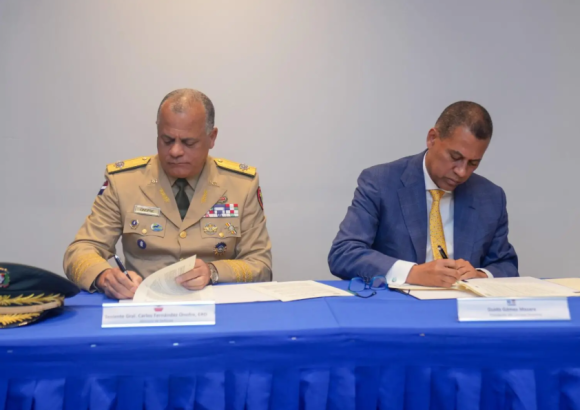
    The official partnership for the programme was formalized on March 27, 2026, during a signing ceremony held in St. George’s. The Memorandum of Understanding (MOU) was signed by Grenada’s Minister of Health, Hon. Philip Telesford, and Keisha McGuire, Chief Global Affairs Officer of the global non-profit organization Restoring Vision. Since details of the programme were made public, it has sparked widespread national attention and enthusiasm, rooted in the personal commitment of Grenada’s Prime Minister, Hon. Dickon Mitchell, who first championed the initiative.

    Prime Minister Mitchell opened up about his own experience struggling with unaddressed vision problems during his secondary school years, framing the programme as a deeply personal priority. “For me, any opportunity to help someone who suffers from vision loss is something I am deeply passionate about,” he said. He further emphasized that the project centers on tangible, people-focused healthcare improvement, noting that uncorrected poor vision creates unnecessary barriers to nearly all routine daily activities for affected people.

    Minister Telesford echoed this sentiment, highlighting the urgent need and strategic importance of the cross-sector collaboration. “This comes at a critical time in our efforts to strengthen primary health care and expand access to essential services. Vision health is often overlooked, yet it is fundamental to productivity, independence, and quality of life,” he explained. For Small Island Developing States like Grenada, unaddressed presbyopia represents a widespread public health gap: data shows 6 out of 10 adults over 40 live with the age-related vision condition, yet the vast majority lack access to even a basic pair of reading glasses to correct it.

    Over the 12-month pilot period, the programme will integrate free vision screenings and near-vision eyeglass distribution directly into Grenada’s existing public health system. The rollout will leverage the country’s established primary care network and trained community health workers to bring services directly to citizens, both at local clinics and in remote, hard-to-reach communities across all three islands.

    McGuire, representing Restoring Vision, framed the partnership as a model for other small island nations facing similar public health challenges. “This programme reflects a shared vision to advance the health and wellbeing of our people. No one in Grenada should be held back by something so easily corrected as poor near-vision,” she said. Restoring Vision, the global non-profit behind the collaboration, has made addressing uncorrected presbyopia its core mission: the age-related near-vision deterioration is the most common cause of vision impairment across the globe, and the organization works to expand affordable access to correction globally.

    The partnership marks a major turning point for essential eye care access in Grenada, with the shared goal of helping all residents access the care they need to see clearly, participate fully in daily life, and build more stable futures. Approximately 50 Grenadians already confirmed to have unaddressed near-vision impairment will be the first to receive free eyeglasses as the programme launches in the coming weeks.

  • High hopes as first athletes depart for CARIFTA

    High hopes as first athletes depart for CARIFTA

    As one of the most anticipated regional track and field competitions on the Caribbean sports calendar approaches, Barbados’ delegation to the 2024 CARIFTA Games has kicked off its journey to host nation Grenada, with athletes and coaching staff carrying strong morale and quiet confidence into the April 3-6 tournament.

    Team manager Angela Jackson shared updates on the squad’s preparations and mindset with local outlet Barbados TODAY on departure day at Grantley Adams International Airport. The first contingent, made up of 42 competing athletes, departed Barbados on the scheduled timeline, while the remaining 18 team members are scheduled to arrive in Grenada within 24 hours to join the group. Jackson was among the officials accompanying the first batch, alongside co-manager Duante Harvey, Athletics Association of Barbados president Noel Lynch and multiple lead coaches. First-time and returning competitors alike completed their pre-departure check-in procedures, with many first-time athletes accompanied by family members as they prepared for the biggest regional meet of their young careers so far.

    Jackson emphasized that the entire squad is brimming with excitement to compete on the Grenada track, describing the overall team mood as consistently positive heading into the championships. “The mood is very good. The athletes are all excited and looking forward to arriving in Grenada and giving of their very best,” she noted.

    When asked about potential medal expectations for the Barbados team, Jackson declined to make any concrete predictions on the team’s final medal haul, but highlighted that the 2024 delegation has strong, well-balanced depth across events, particularly in the Under-20 division. Instead of focusing on pre-set medal targets, the coaching and management staff’s core goal is to encourage every athlete to perform to the best of their personal ability. “I can agree that the team is very strong in certain areas, and all that we can do is to expect them to give of their best. Of course, I am not going to touch on any medals prediction whatsoever. We are just encouraging each and everyone on the team to give of their best and once that is done we will be quite satisfied,” Jackson explained.

    She also reflected on the team’s preparation cycle, noting that the build-up to CARIFTA was largely smooth, despite facing minor time constraints caused by the tight gap between the Barbados Secondary Schools Athletics Championships (BSSAC) and this year’s regional tournament. Due to the compressed timeline, the team was only able to host one mandatory pre-competition workshop focused on anti-doping education, a critical session given that nearly a third of the squad are first-time CARIFTA competitors. Coaching staff have been working closely with these rookie athletes to help them adjust to the higher stakes of regional competition and get into the right competitive frame of mind before the opening event.

    Beyond the official delegation, dozens of parents, friends and local sports supporters were present at the airport to send off the team, with many of these well-wishers also planning to travel to Grenada in the coming days to cheer on the Barbados squad throughout the four-day championships.