作者: admin

  • Should Retail Vendors Unite to Push for More Selling Days?

    Should Retail Vendors Unite to Push for More Selling Days?

    A growing debate over selling day restrictions at Belize’s Michael Finnegan Market has moved into the spotlight this week, as city authorities confirm they are willing to revise existing rules— but only if retail vendors band together to formally push for change.

    Currently, local retail vendors at the popular public market are only permitted to sell goods on Saturdays, a regulation that has sparked growing frustration among small-scale producers and street vendors who rely on the market for their primary income. The dispute boiled over earlier this week, when a routine regulatory enforcement operation turned away multiple retail vendors who attempted to set up their stalls outside of the allowed single weekend day.

    Delroy Herrera, the manager of Michael Finnegan Market, outlined the city council’s position in an interview with local outlet News 5 on Tuesday. He emphasized that the council does not reject the idea of expanding selling days, but any adjustment to existing policy must follow official legal and procedural channels.

    “Every organization, every public space operates with clear rules, right? It’s straightforward: you can follow the rule, work within the framework of the rule, or push to amend the rule. But that change has to happen respectfully, and it has to stay within the constraints of local law,” Herrera explained.

    For many retail farmers and small vendors, the current one-day restriction has already caused measurable financial harm. Multiple vendors reported that their weekly incomes have dropped significantly under the existing policy. Some producers, who travel multiple hours from outlying districts to reach the Belize City market, added that many of their regular customers only attend the market on Tuesdays and Fridays, forcing them to lose out on consistent sales that they depend on to cover living and production costs.

    Herrera reiterated that the Belize City Council is prepared to hear vendors’ concerns and negotiate potential changes, but collective organization from the vendor community is a non-negotiable prerequisite for moving forward.

    “Once vendors have organized themselves and presented a unified position, we can work through whatever amendments are needed to create a framework that works for all stakeholders: the city council, local farmers, and every person who relies on this market,” he said.

    The next step, Herrera explained, will be for organized vendors to collaborate with market leadership to draft a formal proposal outlining their requested changes, which will then be submitted to the Belize City Council for review and a final vote on whether to amend the existing market day regulations.

  • Rotary Club Donates Renovated Classroom to Police Youth Intervention Unit

    Rotary Club Donates Renovated Classroom to Police Youth Intervention Unit

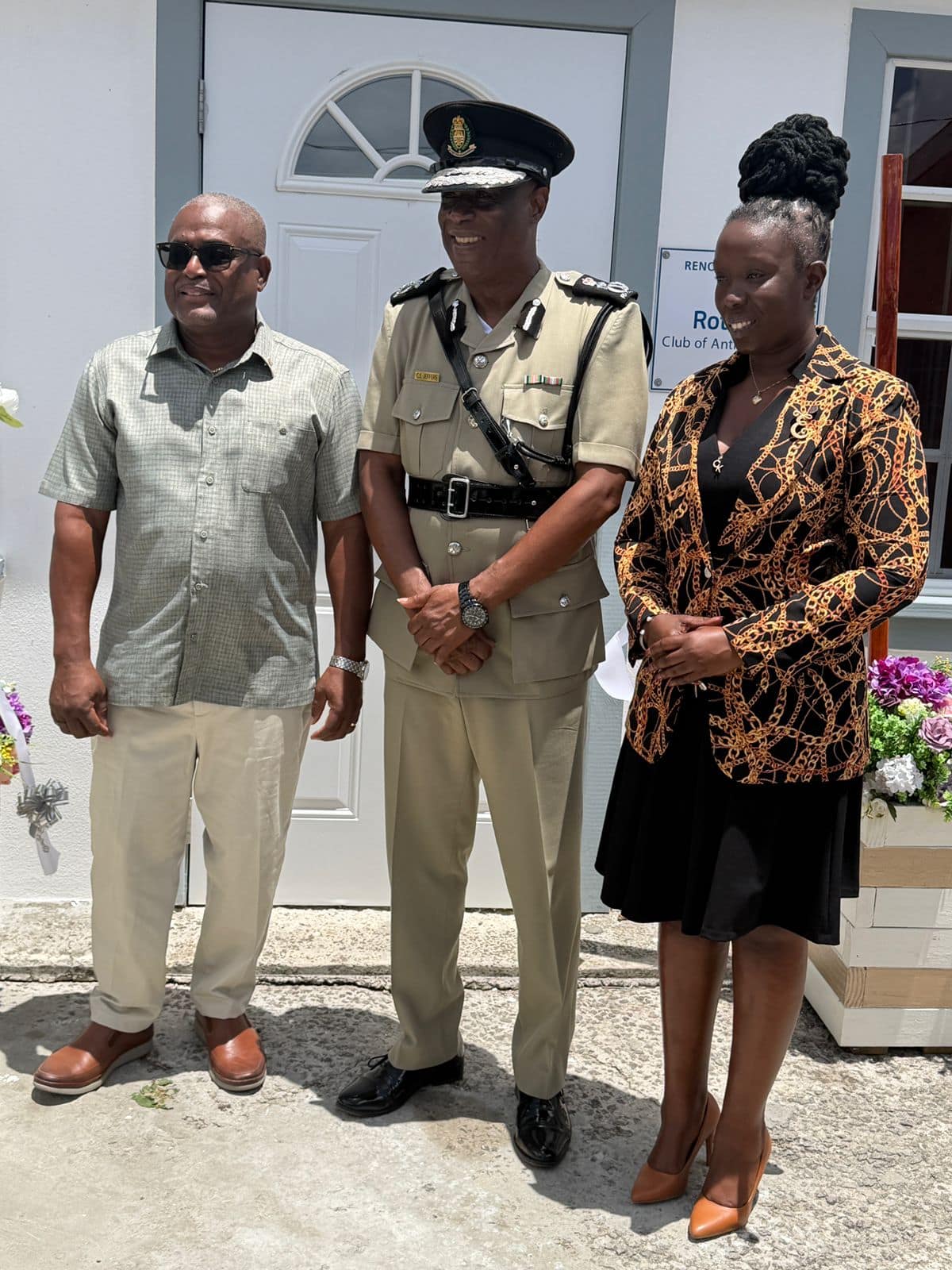
    On Thursday, May 14, 2026, a landmark community partnership reached its completion in St. John’s, Antigua and Barbuda, as the Rotary Club of Antigua formally transferred a fully renovated classroom space to the Youth Intervention Unit of the Royal Police Force of Antigua and Barbuda. This project marks another milestone in the service organization’s long-standing dedication to nurturing youth growth and driving public good across the twin-island nation, building on a prior renovation of the same space the club completed back in 2016.

    Carrying an estimated total investment of Eastern Caribbean $28,000, the refurbishment covered a comprehensive suite of upgrades to bring the aging facility up to modern standards. Work crews carried out critical structural repairs to the roof and ceiling, installed new energy-efficient lighting systems, completely overhauled the on-site bathroom facilities, applied fresh coats of paint throughout the space, and completed general structural repairs to restore the building’s functionality and safety.

    Everton Jeffers, Commissioner of the Royal Police Force of Antigua and Barbuda, opened the handover ceremony by welcoming the ongoing collaboration between local community groups and law enforcement, and extended sincere praise to the Rotary Club for its targeted investment in the country’s younger generation. Jeffers stressed that modern policing extends far beyond traditional law enforcement activities, placing equal importance on proactive crime prevention, intentional youth mentorship, and creating pathways for vulnerable young people to access positive, constructive opportunities that keep them away from harmful paths.

    Going further, Commissioner Jeffers issued a call for expanded participation from across Antigua and Barbuda’s civil society to support the Youth Intervention Unit’s mission. He highlighted that the unit relies on community contributions ranging from volunteer mentorship and vocational training to professional counseling services to effectively support young people at risk of falling into delinquent behavior.

    Jeffers also took the opportunity to recognize the individual contributions that made the renovation project possible, singling out Inspector Claudina Nathaniel-Morgan, retired Sergeant Randy Christopher, the project’s contracted construction team, all participating Rotary Club members, and every other stakeholder who dedicated time, resources, or labor to bring the project to successful completion.

    The official handover ceremony closed with an opening prayer led by a local faith leader, followed by a guided tour of the newly upgraded facility for all attendees, who got to see firsthand the impact of the community’s collective investment in youth support.

  • Johnny Kasdjo toegelaten tot DNA: focus op verantwoordelijkheid en daadkracht

    Johnny Kasdjo toegelaten tot DNA: focus op verantwoordelijkheid en daadkracht

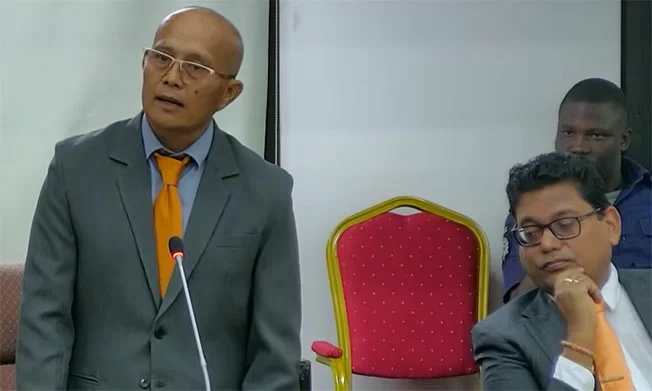
    On May 14, Suriname’s National Assembly confirmed its return to full membership following the formal swearing-in of Johnny Kasdjo, a member of the VHP party. Kasdjo fills the vacant seat left by the passing of former parliamentarian Chan Santokhi on March 30, closing a six-week gap in the legislature’s representation.

    After completing the required oath of office and passing the mandatory credentials review, Kasdjo received welcomes and congratulations from lawmakers across every parliamentary faction. Speakers across party lines acknowledged the unusual circumstances of his appointment, noting the weight of responsibility he carried stepping into the role mid-term. Lawmakers emphasized that parliamentary service is far from a simple honor, requiring consistent time, immense energy, and significant personal sacrifice. Many also centered their remarks on the shared value of cross-party collaboration and the core mandate of all elected officials: serving the people of Suriname. Leaders of the VHP faction expressed particular relief at restoring the party to full legislative strength, and voiced unanimous confidence in Kasdjo’s ability to deliver for constituents.

    The centerpiece of the day’s proceedings was Kasdjo’s maiden address to the assembly, and the new lawmaker immediately set himself apart from standard political convention. Rejecting the flowery, empty rhetoric that defines many first speeches, Kasdjo opened with a stark, unflinching commitment: he would not come to the legislature with grand, unfulfillable promises that do nothing for ordinary people. “I do not come here with big promises I cannot keep. Suriname has already had enough of that,” he stated, laying out a clear marker for his policy approach and governing style from day one.

    Kasdjo went on to outline the harsh daily realities that millions of Surinamese residents navigate, issues he argues have been ignored by the political establishment for too long. He called attention to the growing exodus of young people, who now feel forced to build their futures outside of Suriname due to limited opportunity at home. He also highlighted the struggles of elderly Surinamese, who after decades of hard work still cannot make ends meet on their retirement benefits. Finally, he spoke of local small business owners, who are constantly stymied by bureaucratic red tape and pervasive economic uncertainty that makes long-term planning impossible. None of these crises, Kasdjo stressed, can continue to be pushed aside for political convenience.

    The new parliamentarian argued that the Surinamese public has grown tired of political posturing and is now counting on elected leaders to deliver tangible, measurable results. To that end, he summarized his governing approach in three core pillars: listen to the people, act decisively on critical issues, and accept full accountability for outcomes. Rejecting the traditional model of lawmaking that happens exclusively behind closed committee room doors, Kasdjo pledged to remain rooted in community life. “I am the man who will go out into the streets. I will go into the neighborhoods. I will listen to the people who do not sit in these meeting rooms, but who feel the consequences of every decision we make here,” he said.

    Kasdjo emphasized that effective policy cannot only exist on printed government documents—it must improve daily life for all Surinamese, a standard he will hold for every proposal that comes to the floor. He added that Suriname urgently needs leaders willing to make difficult, unpopular choices when they serve the public good, even when those choices make political life more complicated. Closing his address, Kasdjo reiterated his core motivation: he did not seek a seat in the National Assembly for prestige or personal power, but out of a deep sense of responsibility to the constituents who placed their trust in him.

  • Body of murdered man found, missing thumb

    Body of murdered man found, missing thumb

    A homicide investigation is underway in central Trinidad after hikers stumbled across a partially decomposed body matching the description of a 37-year-old man who vanished from his home more than a week ago. Authorities confirmed the grim discovery was made shortly before 11:30 a.m. Wednesday in a remote ravine accessible only by an unmaintained gravel path off Caparo Valley Brasso Road in Longdenville.

    Local law enforcement sources say the initial report of the body came from a Longdenville resident who was checking property lines at the back of his private garden off Palmiste Gravel Road when he made the unsettling find. The man immediately contacted the Longdenville Police Post to alert officers of what he had discovered.

    Two uniformed officers, Corporal Ramdeen and Constable Lewis, responded to the call within minutes, accompanying the reporting witness deep into the wooded area off the main road. After traveling roughly 1.5 kilometers along the rutted gravel track, the first responders located the body in a steep ravine. The corpse was found lying supine, with its feet bound, clad in a dark jersey and red three-quarter length pants. Forensic investigators also noted a distinct trauma: the victim’s left thumb was missing from the scene.

    Following the discovery, cross-checking with missing person reports led investigators to identify the man as Jevon Stewart, a resident of Pecan Crescent in Cashew Gardens, North Chaguanas. Steward had been listed as missing after his mother, Mahalia Stewart, reported him missing to authorities on May 5. Family accounts confirm Mahalia Stewart last saw her son alive at approximately 9 p.m. on May 4, when he was at the family home. When she woke the following morning, he was gone, and repeated attempts to reach him through relatives, friends and coworkers turned up no clues to his whereabouts.

    Police have not yet released a formal cause of death, pending the results of an autopsy scheduled for later this week. Investigators are asking any members of the public who have information about Stewart’s disappearance or the circumstances of his death to contact the Longdenville Police Post or the nearest police station to share details anonymously.

  • Gonsalves wants CARICOM to help West Indies cricket

    Gonsalves wants CARICOM to help West Indies cricket

    West Indies cricket, once a powerhouse of the global game that dominated international competition for decades, finds itself mired in a deepening crisis that threatens its long-term survival, according to former St. Vincent and the Grenadines Prime Minister Dr. Ralph Gonsalves. In a candid interview with the Jamaica Observer, the 24-year incumbent leader, who stepped down after last November’s general election, has issued a urgent call for Caribbean regional governments to claim a formal, integrated seat at the decision-making table to reverse the sport’s steady decline.

    Worsening on-field performance and crippling financial instability have combined to paint a grim picture for West Indies cricket in recent years. While fan and stakeholder anxiety over the sport’s trajectory has simmered for decades, public and institutional scrutiny spiked dramatically over the last 12 months following a humiliating Test series defeat to Australia last summer. The low point of that series came at Kingston’s Sabina Park, where the entire West Indies batting line-up was bowled out for just 27 runs — a result that sent shockwaves through the global cricket community. Current International Cricket Council (ICC) rankings reflect the depth of the on-field slump: the regional men’s side sits 8th in Test cricket, 10th in One-Day Internationals, and 7th in Twenty20 Internationals, placing it firmly in the bottom half of all ranked ICC member nations.

    Off the field, the financial outlook is equally troubling. Cricket West Indies (CWI), the sport’s regional governing body, projects it will post a $26 million USD loss in the current year, though it has outlined a long-term forecast that predicts a return to profitability by 2027. Gonsalves argues that CWI’s current governing structure — which excludes formal government input — is ill-equipped to tackle these overlapping crises. He insists that closer collaboration between CWI and regional governments is the only path to meaningful reform, noting that governments are unwilling to commit public funding to the sport without receiving proportional decision-making power in return.

    “The governments have to get involved but the governments are not going to get involved seriously if Cricket West Indies continues to think that governments will pour money into Cricket West Indies without them having a say,” Gonsalves told the Jamaica Observer. Though the Caribbean Community (CARICOM) maintains a cricket subcommittee, once chaired by Gonsalves himself, the regional body holds no formal governing authority within CWI. ICC rules currently prohibit direct government interference in the administration of member organizations, but Gonsalves argues that the historic and cultural importance of cricket to the Caribbean demands an exception to this regulation.

    He pointed to precedents in other major cricket nations to back his argument, noting that the Indian Supreme Court has already ruled that cricket is a public good that cannot be managed exclusively by private entities. “I’m sure if it comes to our courts that they will rule similarly because it makes perfect sense,” Gonsalves said. “The law is right reason and right reason indicates that you can’t have a public good of this type being run by a private entity and certainly you can’t expect the parliaments to vote money to put it inside the organisation. I’ve thought long and hard about this thing and I dare anybody to tell me that my conclusions are not correct.”

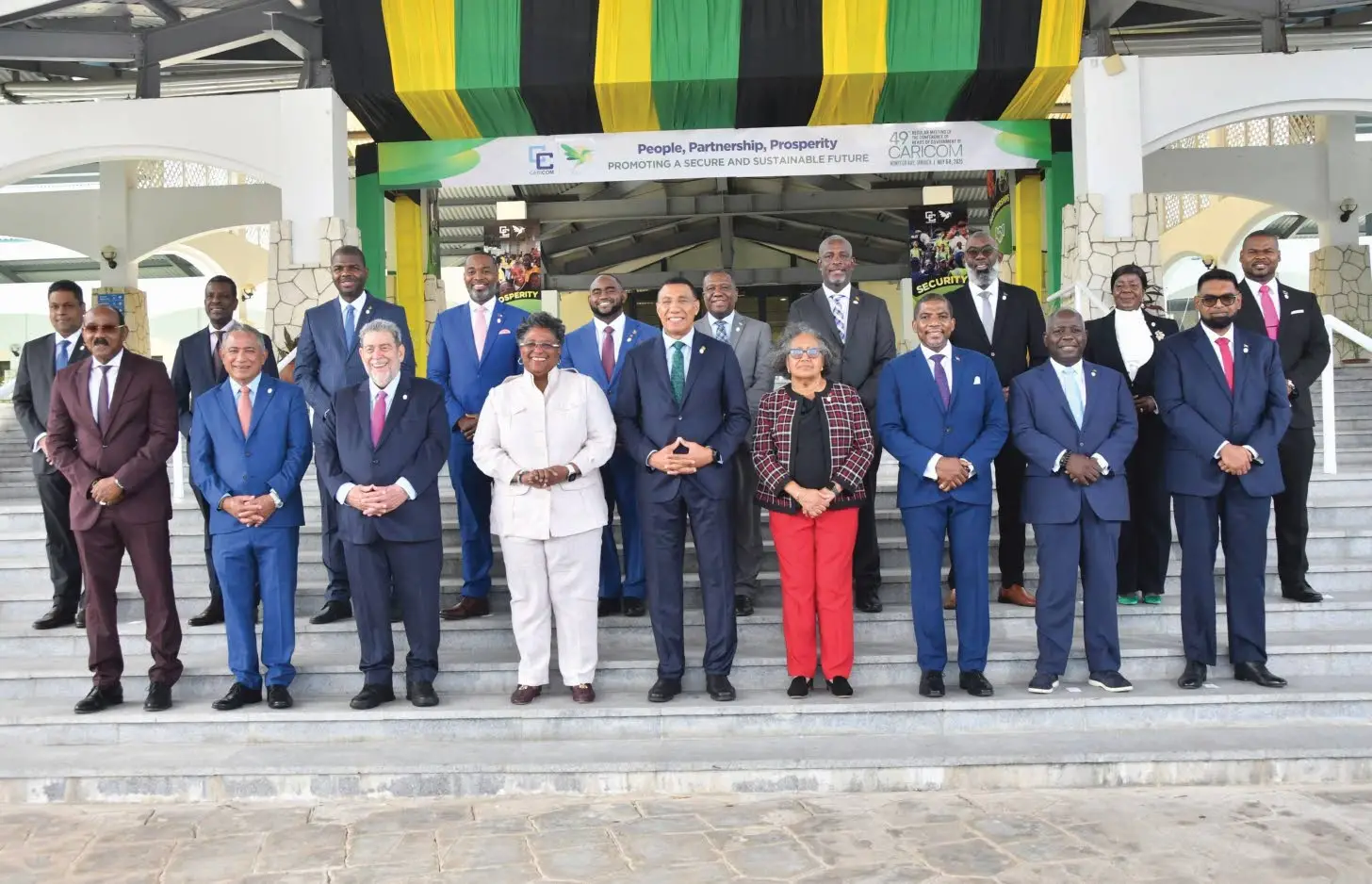
    Gonsalves’ proposed path forward calls for regional leaders to collectively approach the ICC with a formal diplomatic demarche, laying out the severity of the crisis and requesting approval for expanded government involvement in restructuring and managing West Indies cricket. “If this matter is discussed within the context of the region and governments decide this is the way we’re going to do it and we want to play a part in the management of it and to restructure it, we have to make a demarche to the ICC and say this thing cannot continue like this, because if it continues like this, it would fold,” he explained. “So I don’t think it’s a question of trust, it’s whether we as governments in the region decide whether we’re going to be involved in this matter, and in order to comply with the perspectives of the ICC, where are the tolerable limits for the state’s involvement because we are in a crisis.”

    The West Indies men’s team is set to return to international competition next month, hosting Sri Lanka for three ODIs and three T20Is at Sabina Park, the same ground that hosted the devastating 27 all-out collapse against Australia last year. The upcoming series will put the team’s current form under the microscope once again, as calls for structural reform continue to grow across the region.

  • Government reports continued recovery efforts in Salybia and Kalinago Territory after April 26 weather event

    Government reports continued recovery efforts in Salybia and Kalinago Territory after April 26 weather event

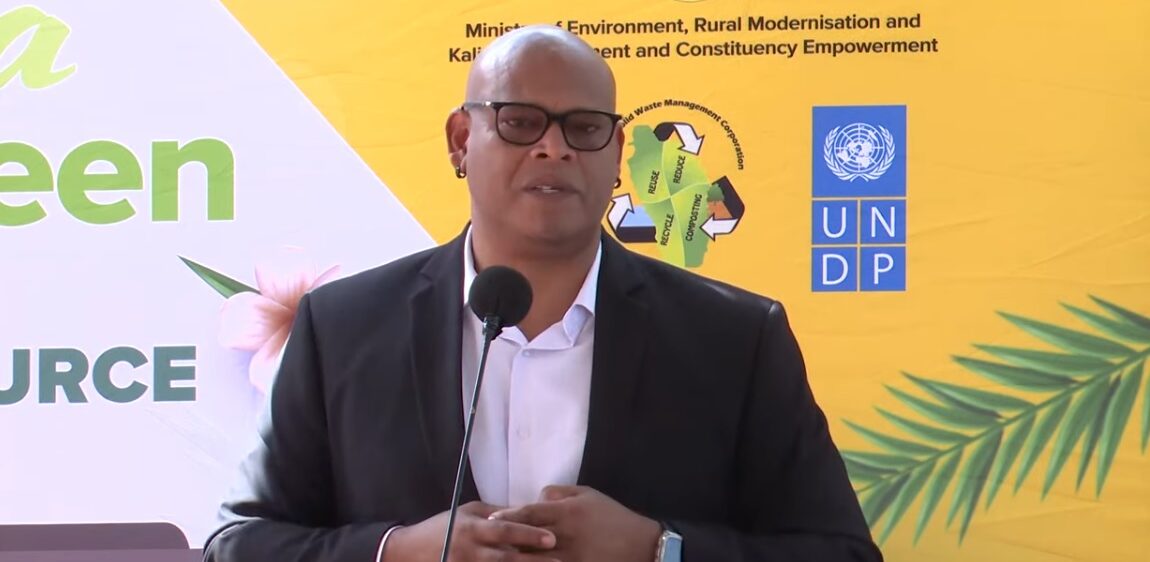
    In the wake of a destructive severe weather event that struck Dominica on April 26, 2026, the island nation’s government is ramping up coordinated recovery and relief operations across the hard-hit Salybia Constituency and Kalinago Territory, led by the Ministry of Environment, Rural Modernisation, Kalinago Upliftment and Constituency Empowerment.

    A recent official press release from the ministry outlined that it has partnered closely with national government agencies, humanitarian organizations, local governing bodies, and community leaders to deliver support to affected residents and speed the return of daily life to impacted areas. Current response efforts are centered on four key priorities: reopening blocked access routes, completing comprehensive damage assessments, supporting at-risk vulnerable households, and boosting community preparedness ahead of the upcoming Atlantic hurricane season.

    Hon. Cozier Frederick, the minister heading the ministry and parliamentary representative for Salybia, has been embedded with response teams on the ground throughout the operation, and Dominica’s Prime Minister has also traveled to the Kalinago Territory to meet directly with impacted residents and inspect storm damage firsthand. Minister Frederick reported that substantial progress has already been achieved across the constituency.

    “We have made significant progress in the Salybia Constituency,” Frederick explained in the release. “We have cleared multiple landslides to reopen access between Hatton Garden and Castle Bruce. We have also begun evaluating damage to residential properties impacted by the weather system, completed full assessments of small farms and agricultural holdings whose owners lost critical livelihoods, and we are already addressing the psychosocial trauma that storm exposure has caused for local residents.”

    A diverse coalition of response teams has been deployed to support recovery work across the region, including crews from the Ministry of Public Works, contracted private heavy equipment operators, staff from the Forestry, Wildlife and Parks Division, and teams from the National Employment Programme (NEP). Together, these groups have worked to clear storm debris, reopen closed roads, inspect damaged culverts, and resolve urgent public safety hazards across affected zones. Joint assessments have identified 18 culverts that require immediate repair, with input from four key stakeholders: the Ministry of Environment, Ministry of Public Works, NEP, and local equipment operators.

    The Forestry Division has dispatched specialized chainsaw crews to remove fallen trees, clear blocked access routes, and support slope and environmental damage assessments alongside the Office of Disaster Management (ODM). NEP teams drawn from seven communities across the island — Salybia, Delices, La Plaine, Marigot, Riviere Cyrique, Grand Fond, and Belles — have also joined ongoing community clean-up operations to speed recovery.

    On the humanitarian assistance front, support for affected households has expanded steadily over the course of the response. To date, approximately 1,041 households have received emergency food hampers through the government’s national Rapid Response Programme, with priority distribution allocated to elderly residents, households with young children, people living with disabilities, and other high-vulnerability groups.

    Mental health and psychosocial support services have also been launched to address the emotional toll of the storm. The Ministry of Health and UNICEF are providing trauma counseling for residents impacted by the disaster, and UNICEF has rolled out its specialized “Return to Happiness Programme” at three primary schools in Atkinson, Salybia, and Sineku. The program uses play-centered therapeutic activities including art and music to help children process their storm-related experiences and recover emotionally.

    Agricultural recovery efforts are also moving forward according to the official update. Assessments led by the Ministry of Agriculture have currently evaluated 100 separate agricultural holdings: 70 located within the Kalinago Territory and 30 in the neighboring community of Atkinson. Emanuel Joseph, Animal Health and Production Officer and Acting Team Leader of the East Agricultural Region, confirmed that local farmers have identified four core unmet needs: support to restore damaged farmland, livelihood assistance to offset income losses, improved access to farm areas, and investment to strengthen long-term resilience against future climate-driven extreme weather.

    Housing damage assessments are also ongoing, conducted jointly by the Ministry of Housing and Urban Development and the Kalinago Affairs Department. Oswald James, Quality Assurance Officer at the Ministry of Housing and Urban Development, shared that early assessments have already uncovered urgent housing needs across multiple affected communities. “To date, initial assessments have been completed for 26 impacted households, with 14 of these households identified as requiring urgent relocation support,” James stated. “Immediate needs we have documented include emergency construction repair materials, roof rehabilitation assistance, temporary shelter provision, and slope mitigation work around homes located at high risk of further landslides.”

    The Dominica government has emphasized that it is continuing to coordinate closely with a broad network of partner organizations and international donors to scale up relief and recovery, including UNICEF, UNDP, IsraAID, Tropical Shipping, local private sector groups, and international overseas donors. Support received so far has covered a range of critical needs: psychosocial support services, clean-up tools and heavy equipment, emergency supplies, potable water provision, and logistics support for response operations.

    For long-term recovery planning, the ministry has requested specialized technical assistance from the Economic Commission for Latin America and the Caribbean (ECLAC) to conduct a comprehensive national post-disaster damage and economic loss assessment. Per the official release, a team of six ECLAC experts is scheduled to arrive in Dominica in early June to conduct environmental and geospatial assessments that will inform evidence-based recovery planning and long-term resilience building.

    In addition to these efforts, the government has launched a local community work crew recruitment program that serves two goals: it supports ongoing clean-up, agricultural restoration, and road rehabilitation work, while also creating short-term income opportunities for residents whose livelihoods were disrupted by the storm. To date, six local residents have already been recommended for immediate hiring, with additional applications still under review.

    The Government of Dominica reaffirmed its ongoing commitment to supporting residents through every stage of the recovery process, with a core focus on rebuilding communities that are stronger, safer, and more resilient to future extreme weather events.

  • Barbados to lean on IMF if necessary

    Barbados to lean on IMF if necessary

    On Thursday, the Caribbean nation of Barbados wrapped up a three-year precautionary standby arrangement with the International Monetary Fund, securing access to up to $260 million in emergency funding designed as a financial buffer against unforeseen external economic disruptions.

    Crucially, Prime Minister Mia Mottley emphasized in a press briefing held at Illaro Court immediately after the staff-level agreement was signed with the visiting IMF delegation that Barbados has no immediate need to draw down any portion of the allocated funds. The agreement, she explained, was structured as a proactive safety net rather than a response to an existing economic crisis within the country.

    Mottley noted that ongoing volatility and widespread uncertainty across the global economy create real risks of sudden adverse shocks that could upend Barbados’ economic stability and quality of life for its residents. By locking in this precautionary arrangement now, the country has positioned itself to respond quickly if challenging conditions emerge. She added that accessing the funds would be a straightforward process: a single formal phone call to the IMF would be enough to activate a withdrawal of any portion of, or the full, $260 million allocation.

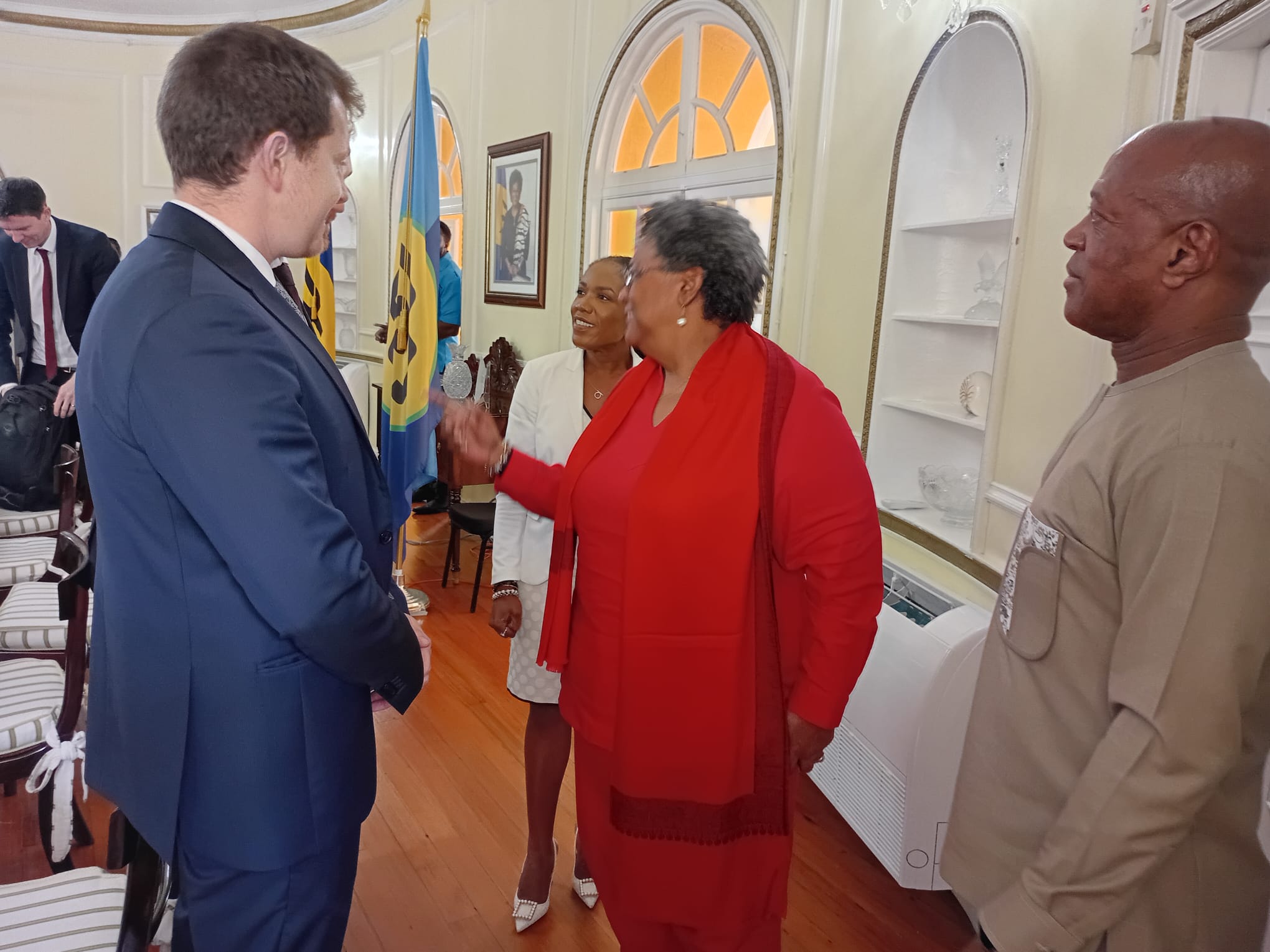
    The agreement signing event was attended by key economic and financial leaders from Barbados: the picture from the briefing captures Mottley in conversation with Michael Perks, head of the IMF’s visiting mission to the country, while Marsha Caddle, Barbados’ Minister of Economic Affairs, and Dr. Kevin Greenidge, Governor of the Central Bank of Barbados, observe the discussion.

  • Tiffany Strann-Peters Sworn In as Senator as Female Representation Grows

    Tiffany Strann-Peters Sworn In as Senator as Female Representation Grows

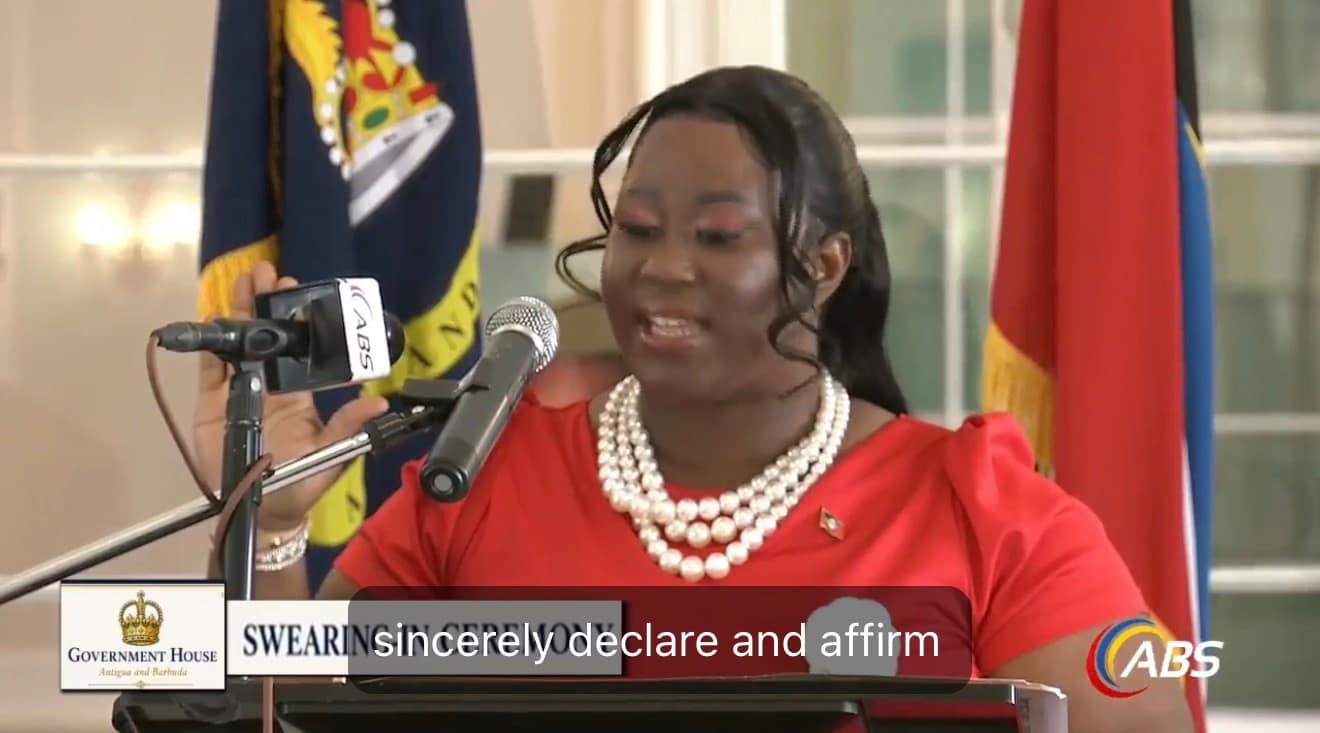
    In a formal ceremonial event held at Government House on Wednesday, Tiffany Anthea Lauren Strann-Peters officially took office as a new Government Senator, a milestone that senior national officials have framed as a transformative step forward for gender parity in Antigua and Barbuda’s legislative branch.

    Governor General Sir Rodney Williams, the country’s highest ceremonial official, emphasized that Strann-Peters’ appointment carries far broader national weight than a single individual’s career advancement. With her swearing-in complete, the count of women serving in the nation’s Senate has climbed to six, marking a notable jump in female representation in the upper parliamentary chamber.

    When combined with the two women already holding seats in the Lower House, women now occupy eight of the 3 total seats in Antigua and Barbuda’s national Parliament — one of the highest shares of female legislative representation the country has ever seen in its modern history.

    Sir Rodney characterized this growing gender balance as both a meaningful milestone and an encouraging sign for the country’s democratic development. He stressed that expanding women’s participation in public governance does more than just improve representation — it also strengthens institutional effectiveness and brings a wider range of lived experiences and perspectives to critical national policy decisions.

    Beyond legislative impacts, Sir Rodney noted that the milestone sends a resounding message to young women and girls across Antigua and Barbuda: positions of leadership, public service, and national influence are accessible to anyone willing to serve with unwavering integrity and a commitment to excellence.

    During the ceremony, Strann-Peters completed three updated constitutional oaths: the Oath of Allegiance, the Oath of Office, and the Oath of Secrecy. Senior officials explained that the inclusion of these updated oaths underscores Antigua and Barbuda’s longstanding commitment to its constitutional independence and the core principle of accountability for all public office holders.

  • Senator Joel Rayne Sworn In as Parliamentary Secretary

    Senator Joel Rayne Sworn In as Parliamentary Secretary

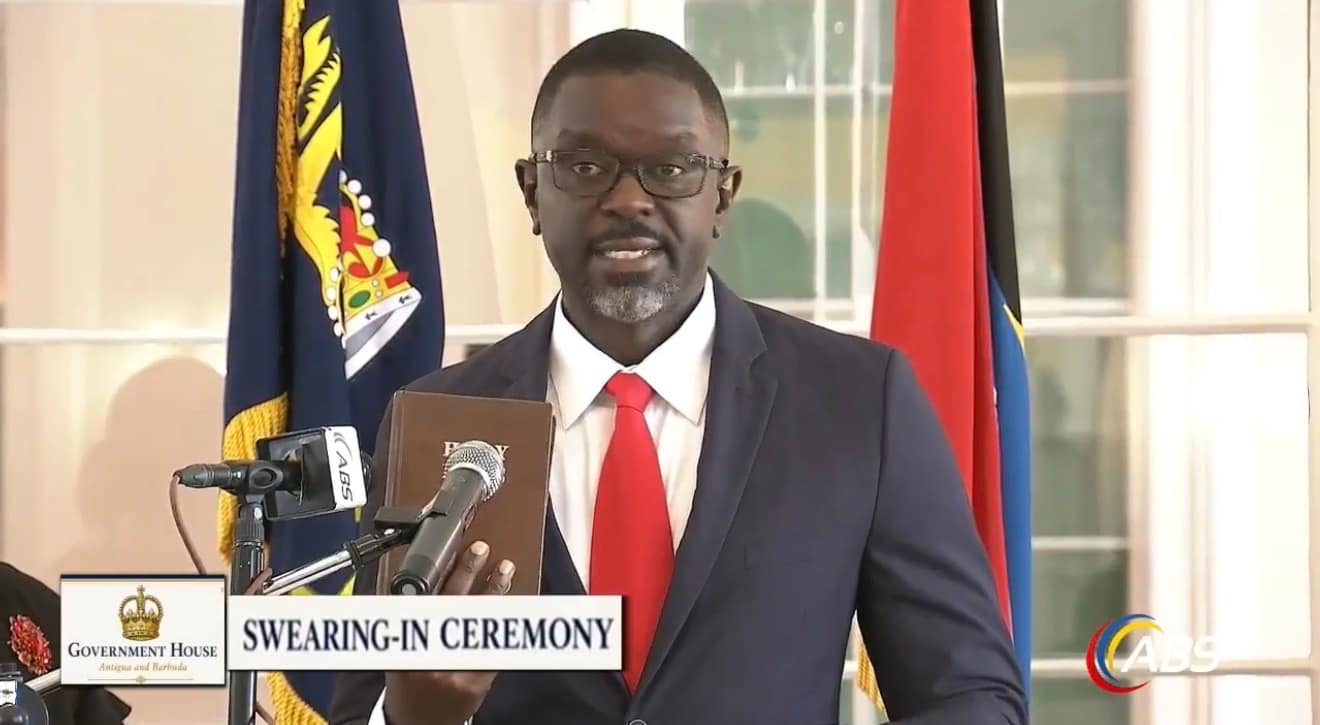
    In a rapid progression of political responsibility that has drawn attention across Antigua and Barbuda, newly minted Senator Joel Anderson Rayne took the oath of office as Parliamentary Secretary for the Ministry of Finance, Corporate Governance and Public Private Partnerships on Wednesday. The formal swearing-in ceremony was hosted at Government House, just days after Rayne’s initial appointment to the country’s upper legislative chamber, marking an expanded mandate for public service.

    Governor General Sir Rodney Williams led the ceremony and emphasized that the early promotion of Rayne to this junior ministerial post signals the administration’s strong trust in the new appointee’s ability and dedication to delivering for Antigua and Barbuda’s citizens. Barely one week after his Senate appointment on May 8, Rayne now takes on a broad portfolio of responsibilities, ranging from supporting core ministerial administrative work to coordinating parliamentary engagement and streamlining day-to-day government operations.

    Addressing gathered attendees, which included sitting cabinet ministers, fellow senators, senior public officials, and members of Rayne’s family, Sir Rodney laid out the high expectations for the role, noting that it demands consistent discipline, unwavering dedication, and a consistent commitment to diligent public service. “Before even taking his seat for the first official sitting of the Senate, he has already been entrusted with this additional critical duty and a broader scope of service to the people of our nation,” the Governor General stated.

    A notable constitutional shift accompanied Wednesday’s ceremony, one that officials have framed as a meaningful step toward aligning oaths of office with national sovereignty. The updated constitutional oath administered to Rayne now requires allegiance to the Constitution and laws of Antigua and Barbuda, replacing the longstanding requirement to pledge allegiance to the British monarchy. This adjustment marks a quiet but significant milestone in the country’s constitutional evolution, underscoring the ceremony’s broader significance beyond a single political appointment.

  • Minister Usher Reviews Hurricane Preparedness with NEMO

    Minister Usher Reviews Hurricane Preparedness with NEMO

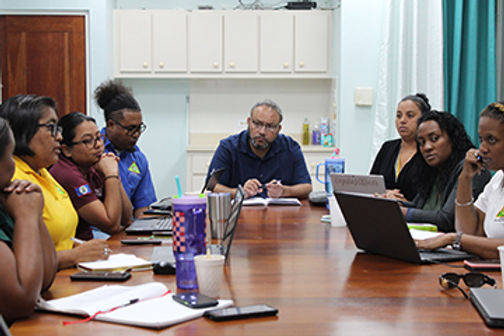
    With less than two months remaining before the 2026 Atlantic Hurricane Season officially kicks off on June 1, Belize is moving full steam ahead to shore up its disaster readiness capabilities, led by top government officials and the nation’s emergency management authority. On a recent inspection tour, Henry Charles Usher, the country’s Minister of Public Service and Disaster Risk Management, traveled to the National Emergency Management Organization (NEMO) headquarters in the capital city of Belmopan to conduct a first-hand review of the nation’s preparedness standing.

    During his visit, Minister Usher held in-depth working sessions with Daniel Mendez, NEMO’s National Emergency Coordinator, alongside the entire NEMO technical team. The closed-door talks centered on two core priorities: refining existing national readiness plans for the six-month storm season, and mapping out optimized response protocols that would enable rapid, coordinated action in the event a tropical cyclone or hurricane makes landfall in Belize.

    NEMO officials presented the latest progress updates on a slate of ongoing preparedness initiatives, which range from updating inter-agency emergency response blueprints to strengthening cross-stakeholder coordination frameworks. Participants also used the meeting to address gaps in current operations, with a particular focus on improving public communication channels and streamlining emergency protocols across every regional and local jurisdiction in the country.

    One key initiative highlighted during the briefing is the ongoing update to the national hurricane shelter registry. Working hand-in-hand with local municipal authorities and non-government partners, NEMO has been verifying shelter locations and capacity to build an accurate, up-to-date list for public distribution. In the coming weeks, the inter-agency Shelter Repair Committee will convene for its pre-season inspection tour, where teams will assess every registered shelter facility to flag structures requiring urgent repairs or structural upgrades ahead of the season’s mid-August to October peak, when the majority of Atlantic storms typically develop.

    Beyond shelter preparations, cross-cutting needs assessments are currently underway at both the national and district levels to ensure all emergency stockpiles, heavy response equipment, and critical resources are accounted for, properly maintained, and positioned for rapid deployment when needed. Any gaps identified through these assessments will be addressed in the coming weeks to avoid shortfalls during a crisis.

    Following the briefing, Minister Usher emphasized that proactive preparedness, seamless inter-agency coordination, and widespread public awareness are the three most critical pillars for reducing the loss of life and damage caused by hurricanes and other extreme weather events. He extended formal commendation to the NEMO team for their consistent, rigorous work ahead of the season, and reaffirmed the Belizean government’s full financial and policy commitment to supporting disaster risk reduction and preparedness initiatives across the country.

    As final preparations continue, both NEMO and the Ministry of Public Service and Disaster Risk Management are issuing a public call to action for all Belizean residents. Officials are urging households to review and update their personal family emergency plans, monitor official weather and emergency updates from trusted sources, and complete all personal preparedness steps well in advance of the season’s June 1 start, rather than waiting for a storm to approach the country’s coast.