作者: admin

  • Humble Official releases debut studio album to help boost Saint Lucia’s music scene

    Humble Official releases debut studio album to help boost Saint Lucia’s music scene

    Emerging from Saint Lucia’s vibrant music scene, independent artist Berty James, who performs under the stage name Humble Official, has launched his highly anticipated 16-track studio project titled *The Grammy*, a genre-defying collection crafted to resonate with listeners across diverse musical tastes. The album breaks conventional genre boundaries by weaving together a rich tapestry of Caribbean and global sounds: from the energetic rhythms of soca, bouyon, and Dennery segment (a signature local Saint Lucian style) to the catchy beats of dancehall and Afrobeat, plus the soulful depth of gospel influences. This intentional fusion is designed to welcome a broad, varied audience, ensuring there is something for every listener to connect with.

    Among the project’s standout tracks is *Summertime*, a laid-back, upbeat cut positioned to become the defining Caribbean summer anthem for 2026. What sets the album apart beyond its eclectic sound is its collaborative core: it brings together emerging local Saint Lucian talent alongside both homegrown and internationally acclaimed award-winning producers, blending grassroots artistry with top-tier production expertise.

    In an exclusive interview with local publication *St Lucia Times*, James opened up about his gratitude for the opportunity to share his work with the world. “I feel grateful and I give thanks to the Most High for allowing me to be a blessing to this world by releasing this album,” he shared. For the artist, the project is more than just a collection of songs—it is a career milestone that he believes will solidify his standing as a serious professional in the global music industry.

    Beyond his own career goals, James has his sights set on lifting up his home community. The artist has long prioritized advancing Saint Lucia’s local music ecosystem, and he says *The Grammy* is a key step in his mission to push Saint Lucian music onto the global stage and elevate the entire regional industry to new heights. “I am really interested in taking music in St. Lucia to another level,” he emphasized.

    James describes the album as one-of-a-kind in both its sonic identity and structural approach, highlighting its multi-faceted nature as its biggest strength. “My album is different from other albums because it’s multi-faceted,” he explained. “It consists of a wide variety of genres to cater to the wider audience. Everyone can find a song or more on there that they love.” That cross-genre appeal, he argues, allows different fans to build personal connections with the project, regardless of their preferred style of music. He remains confident that the album will win over listeners both in Saint Lucia and across international markets.

    True to its name, *The Grammy* carries a bold core ambition: James is openly targeting a nomination for the prestigious Grammy Awards, calling this his top career goal for the year. While he acknowledges that earning a spot among Grammy nominees is no small feat and a long shot for an independent Caribbean artist, he maintains an unshakable optimism about his chances. “I know it’s a long shot but my mind is limitless,” he said. He attributes his confidence to a mix of unwavering self-belief and his faith, noting, “If anyone can do it, I can because I believe in myself and I believe in the Most High and together we are unstoppable.”

    *The Grammy* is available for streaming now on YouTube, via the official album playlist, as well as all major global music streaming platforms.


  • Dems question Vineyard estate’s conversion to housing project

    Dems question Vineyard estate’s conversion to housing project

    Barbados’ main opposition Democratic Labour Party (DLP) has launched a scathing critique of the Mia Mottley administration’s latest major infrastructure push, condemning a plan to turn 80 acres of fertile agricultural land in the parish of St. Philip’s Vineyard district into one of the country’s largest affordable housing developments. The rebuke comes just days after the government and private sector partners formally broke ground on the joint venture between the state-owned National Housing Corporation (NHC) and private firm Vineyard Development Inc., which aims to deliver roughly 1,100 residential units over the next five to six years, with entry-level house-and-land packages priced starting at $170,000 Barbadian dollars.

    In an official public statement released Thursday, Amoy Gilding-Bourne, the DLP’s spokesperson on agriculture and national food security, framed the initiative as a major step backward for Barbados’ struggling agricultural sector. “It is deeply alarming that this administration continues to trade irreplaceable prime farmland for residential development,” Gilding-Bourne said, noting that the 80-acre site marked one of the largest recent conversions of agricultural land to non-farming use on the island.

    Gilding-Bourne first challenged the government’s justification for the new project, pointing to a backlog of stalled and unfinished public housing developments across the country, including multiple phases of the Hope Housing initiative in Dodds, Cliffden Hill, and Brighton. She argued that the administration owes Barbadian citizens a full accounting for these uncompleted projects, and for millions in taxpayer funds that have already been allocated without delivering finished homes. “Before breaking ground on another massive residential development, the government owes every Barbadian a clear explanation for these unfinished projects and the millions of taxpayer dollars already squandered,” she emphasized.

    Beyond the backlog of existing housing work, the opposition spokesperson disputed the government’s labeling of the development as “affordable housing,” arguing that the $170,000 starting price puts the units out of reach for the low-income and working-class households that are most in need of subsidized housing. Amid sustained high inflation, stagnant wage growth, and a rapidly rising cost of living across the Caribbean island, Gilding-Bourne noted that even the cheapest available units in the new development would be inaccessible to many vulnerable families, effectively locking out the very group the project claims to serve. “Housing starting at $170,000 simply cannot be described as affordable for many working-class families struggling under the weight of rising inflation, stagnant wages, and an ever-increasing cost of living,” she said.

    The most significant criticism, however, centers on the project’s direct threat to Barbados’ long-stated national goal of improving food security. Gilding-Bourne argued that the conversion of 80 acres of prime farmland directly contradicts the government’s public commitments to boosting local food production and reducing reliance on costly, carbon-intensive imported food. “If we do not produce, we will perish,” she said, adding that every acre of fertile agricultural land lost to development erodes the island’s ability to feed its own population and makes it more vulnerable to global food price shocks. “Food security cannot be achieved while reducing the very land base upon which local food production depends. Every acre of fertile agricultural land lost to housing or commercial development weakens Barbados’ ability to feed itself.”

    Gilding-Bourne also took aim at the Ministry of Agriculture, accusing the department of prioritizing flashy public relations over tangible, practical support for local farmers. She highlighted ongoing unresolved issues across the sector, including inadequate irrigation infrastructure, unfair competition from cheap imported pork, and a persistent lack of progress on key government-backed agricultural initiatives.

    The DLP is now demanding full transparency around the public-private partnership structure of the housing development. The party has raised a series of unanswered questions, including whether the arrangement received required parliamentary approval, how the public land contribution was independently valued, whether the property will be transferred to a special purpose private vehicle, and what legal and financial safeguards are in place to guarantee that taxpayers receive fair full value for the public land asset being used for the project.

    Additionally, Gilding-Bourne called on the administration to release public updates on a handful of stalled or underperforming government agricultural programs, including the prison farming initiative, the Black Belly sheep genetic improvement program, the imported heifers livestock project, and the newly legalized medicinal cannabis industry.

    “Barbadians deserve clear answers, measurable outcomes, and responsible stewardship of our national resources,” Gilding-Bourne said. She closed by emphasizing that meaningful progress on national food security “requires vision, planning, investment, and above all, the protection of the finite agricultural lands upon which our nation’s future depends.”

  • The demand for justice against the police erupts again in the streets.

    The demand for justice against the police erupts again in the streets.

    SANTO DOMINGO — Just two weeks after the fatal police-related death of 21-year-old Darlyn Mercado sparked widespread public outcry, demands for accountability over deaths involving Dominican National Police officers have reignited across the country. Demonstrations intensified Sunday, with protesters pushing for full, transparent investigations into two additional suspicious deaths that families say are tied to uniformed officers.

    In the city of San Cristóbal, demonstrators carried an empty coffin to the gates of the local police headquarters to draw attention to the death of Miguel Antonio Lucas Paredes. Concurrent with that action, relatives of both Paredes and 18-year-old Rawel Sierra gathered outside the Santo Domingo East Prosecutor’s Office to demand swift answers for their loved ones’ deaths, both of which the families attribute to police conduct.

    According to Paredes’ family members, the 35-year-old was taken into custody last Wednesday, July 8, by a captain from the National Police’s Central Directorate of Intelligence (Dintel). The arrest, carried out on allegations of illegal lottery ticket sales in a San Cristóbal neighborhood, was conducted without a formal court warrant, the family claims. Following his arrest, Paredes was held for three days at the Sector 17 police detachment in San Cristóbal.

    While in custody, Paredes told officers he was unwell after being beaten by personnel inside the detention facility, according to family accounts. He never received the requested medical care during his detention. When he was finally released to his relatives, Paredes was already in critical condition. He was immediately rushed to the Juan Pablo Pina Regional Teaching Hospital, where he was pronounced dead shortly after arrival.

    National Police spokesperson Diego Pesqueira has pushed back on the family’s narrative, stating that institutional investigations are ongoing and pending autopsy results to confirm an official cause of death. Pesqueira noted that preliminary internal accounts claim Paredes was arrested while engaging in illegal activity and was released before his health declined. The police spokesperson added that all investigative work is being conducted strictly in line with available evidence.

    For the family of Rawel Sierra, the wait for justice has stretched to 25 days. Sierra, an 18-year-old living with autism, left his home in the Brisas del Este neighborhood of Santo Domingo East on a simple errand to buy a hamburger when he was killed by a bullet to the head. Family members say the fatal bullet was fired by a police officer during a street protest over widespread power outages in the area.

    Carrying hand-painted banners emblazoned with the slogan “Police don’t kill me,” Sierra’s relatives joined Sunday’s demonstration to demand authorities immediately identify and prosecute the officer responsible for his death. The family told reporters they have grown frustrated with the lack of updates from investigative bodies, saying no concrete progress on the case has been shared with them nearly a month after the shooting.

    The renewed demonstrations mark the second wave of public pressure on Dominican law enforcement and prosecutorial bodies in less than a month, as citizens push for systemic reform to address frequent allegations of excessive force and police misconduct across the country.

  • Banco Popular is recognized by Euromoney as the Best Bank in the Dominican Republic

    Banco Popular is recognized by Euromoney as the Best Bank in the Dominican Republic

    Santo Domingo, DOMINICAN REPUBLIC — One of the Dominican Republic’s most prominent financial institutions has added another top honor to its growing collection of industry awards. Banco Popular Dominicano has been named the country’s Best Bank for the 11th time at the 2026 Euromoney Awards for Excellence, a global program widely regarded as one of the most prestigious recognition initiatives in the international finance sector.

    This latest accolade reaffirms Banco Popular Dominicano’s standing as the Dominican Republic’s top-performing bank. The award was granted following a rigorous independent assessment that examined core operational pillars of the institution, including its long-term business strategy, recent financial performance, trail of innovative product and service development, customer experience standards, and operational execution capacity.

    Unlike many industry awards that rely on subjective judging, the 2026 selection process followed a structured, transparent methodology developed by Euromoney. The outlet’s in-house research team and senior editorial committee led the evaluation, combining quantitative analysis of comparable performance metrics across participating institutions with one-on-one interviews with executive management teams of all candidate entities.

    After the award announcement was made public, Christopher Paniagua, Chief Executive Officer of Banco Popular Dominicano, shared his reaction to the 11th consecutive (and 11th overall) recognition. Paniagua emphasized that repeating this win for over a decade reflects the consistent, stable institutional leadership the bank has maintained, as well as the ongoing dedication of every employee across the organization.

    “We accept this award with an enormous sense of pride and satisfaction,” Paniagua said in a statement. “This honor is a recognition of the hard work our entire team puts in every day, and of the unwavering trust our clients have placed in our institution over decades. It also gives us renewed motivation to keep pushing forward with innovation, to develop and deliver the best financial solutions that meet the evolving needs of individual consumers, growing businesses, and the broader sustainable development of the Dominican Republic.”

    The 2026 edition of the Euromoney Awards for Excellence drew unprecedented participation from across the globe, with more than 700 financial institutions from 125 countries and territories entering the evaluation process. Each participating entity went through a multi-stage assessment that reviewed core business data, key performance indicators, and the organization’s long-term strategic vision for growth and industry leadership.

    Founded in 1969, Euromoney is a leading global financial publication focused on banking, capital markets, and investment sectors. It has hosted the annual Awards for Excellence program for decades, with the goal of highlighting the highest-performing financial institutions across every major regional market around the world.

  • Saturday with temperatures up to 36 degrees; scattered showers are expected

    Saturday with temperatures up to 36 degrees; scattered showers are expected

    A sustained period of high temperatures is set to continue across the entire Dominican Republic, driven by the combined effect of an anticyclonic weather system and an incursion of dust carried from the Sahara Desert, the country’s national meteorological agency has confirmed.

    The Dominican Institute of Meteorology (Indomet) explains that these two atmospheric conditions suppress the formation of cloud cover, creating widespread stable atmospheric conditions that trap heat across nearly all regions of the nation. While the dominant weather pattern will be continued heat, the agency has outlined localized precipitation events expected through the daily cycle, driven by different regional atmospheric factors.

    In the early pre-dawn and morning hours, brief passing showers are forecast to hit the eastern and northeastern provinces of La Altagracia, La Romana, Samaná and El Seibo, as well as their neighboring communities. These showers are triggered by wind patterns moving across the region, and will clear quickly as the day warms.

    From mid-afternoon through early evening, the agency expects partial cloud build-up, paired with scattered to moderate rain showers and isolated thunderstorm activity. These events will be concentrated in the central and inland provinces of Monte Plata, La Vega, Monseñor Nouel, San José de Ocoa, Santiago, Santiago Rodríguez, and Elías Piña. Daytime solar heating of the surface, combined with the influence of local mountain terrain, creates the perfect conditions for these convective rain events to form.

    As night falls, the frequency of short, light rainfall events will shift to communities located along the country’s Caribbean coastline, according to Indomet’s forecast.

    Temperatures across the country are projected to stay well above comfortable levels, with overnight lows ranging from 23 degrees Celsius to 25 degrees Celsius, and daytime highs reaching between 33 and 35 degrees Celsius. In response to the sustained hot conditions, Indomet has issued a series of public health recommendations to help residents avoid heat-related illness.

    The agency urges all residents to drink sufficient water throughout the day, dress in loose, light-colored lightweight clothing that reflects heat, seek out cool, shaded spaces when possible, and avoid extended time outdoors in direct sunlight between the hours of 11:00 a.m. and 4:00 p.m. when solar radiation is at its strongest. Indomet also emphasized that children, older adults, and pregnant people face the highest risk of heat-related complications, and should take extra precautions during this period of sustained heat.

  • Hotel chain says it acted immediately after altercation with guests in Punta Cana

    Hotel chain says it acted immediately after altercation with guests in Punta Cana

    A viral social media video capturing a violent altercation between a staff member and dining guests at The Grand Punta Cana Moon Palace resort has prompted The Palace Company to issue its first official public statement on the incident this Friday.

    The footage, which spread rapidly across digital platforms in recent days, shows the hotel employee throwing multiple objects toward seated guests, sparking widespread panic and tension among restaurant patrons. The clip drew thousands of reactions online, putting intense public pressure on the resort chain to address the event.

    In the formal statement, The Palace Company confirmed that it immediately triggered internal emergency response protocols to support all parties involved the moment the incident was brought to company leadership’s attention, and quickly notified local law enforcement and relevant authorities.

    The resort organization added that it has maintained consistent open communication and ongoing collaborative work with investigative bodies to fully uncover the full sequence of events and specific circumstances that led to the confrontation. As of the statement’s release, local authorities have not released any public details regarding the root cause of the altercation or what investigative steps have been taken so far.

    The company extended formal regret for the negative impact the incident has inflicted on the guests involved, as well as the broader community that places trust in the Palace Company brand. It reaffirmed that the safety, security, and overall well-being of both guests and employees remains the top core priority across every one of its global properties.

    “The Palace Company reaffirms its commitment to creating a safe, respectful environment in accordance with the highest quality standards that distinguish both our organization and the tourist destination of Punta Cana,” the statement read. The company also reiterated that it will continue to provide full cooperation to authorities throughout the investigative process, standing by its longstanding pledges to guest and staff safety.

    This high-profile incident has drawn renewed attention to safety protocols at major Caribbean tourist resorts, a key economic driver for the Dominican Republic.

  • The top 10 cities in the Americas with the highest volume of flights to Punta Cana

    The top 10 cities in the Americas with the highest volume of flights to Punta Cana

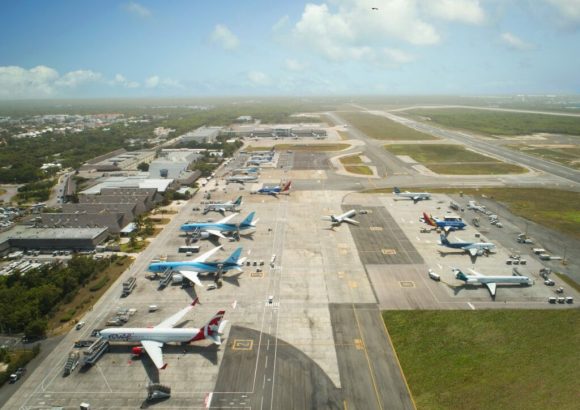
    Punta Cana International Airport, the gateway to the Dominican Republic’s most popular tourist hotspot, is further entrenching its reputation as one of the busiest and most well-connected air hubs across the Caribbean, thanks to ongoing expansion of its global flight networks. Detailed flight schedule data, aggregated from leading industry tracking platforms Official Aviation Guide and FlightConnections and obtained by regional aviation outlet areoca.com, reveals a robust weekly route network linking the destination to the world’s top tourist origin markets across North America, Latin America and the broader Caribbean region.

    Analysis of the data ranks the top 10 origin cities for weekly flights to Punta Cana, highlighting the most critical source markets for the Dominican Republic’s tourism sector. Topping the list is San Juan, Puerto Rico, with 65 weekly operations, followed closely by Panama City at 56, Miami at 54, New York at 43, Toronto at 38, Atlanta at 29, Lima at 27, Montreal at 26, and a tie between Charlotte and Bogotá at 24 weekly flights each. All 10 cities have cemented their status as core connected markets for the country’s leading tourist destination.

    San Juan’s first-place position comes as no surprise, driven by high-frequency service from major carriers including JetBlue, Frontier Airlines and Dominican low-cost leader Arajet. The dense flight link between the two destinations caters to a diverse mix of leisure vacationers, business travelers and regional connecting passengers, strengthening the Caribbean regional travel ecosystem.

    In second place, Panama City’s connectivity is anchored by Copa Airlines, which leverages its strategic Hub of the Americas at Tocumen International Airport to connect Punta Cana with dozens of urban centers across Central and South America. This route has emerged as one of the most critical arteries for tourist traffic from the Latin American region, opening the destination up to a wide range of visitors connecting through Panama.

    Ranking third with 54 weekly flights, Miami stands out for its unparalleled variety of operating carriers: American Airlines, Arajet, Frontier Airlines, LATAM Airlines and Sky High Aviation Services all run regular service on the route. This diverse operator landscape solidifies South Florida’s longstanding role as a primary entry point to the Dominican Republic for both domestic U.S. travelers and international visitors connecting through the city.

    The inclusion of New York, Atlanta and Charlotte in the top 10 underscores the outsize importance of the U.S. travel market to Punta Cana. Major U.S. and regional carriers including JetBlue, Delta Air Lines, American Airlines, United Airlines and Arajet operate multiple weekly services from these major hubs, ensuring consistent, high-volume visitor flows from the world’s largest outbound tourism market.

    Canada also holds a prominent spot on the list, with Toronto and Montreal both ranking in the top 10. Carriers including Air Canada, Air Transat, WestJet and Sunwing Airlines operate regular seasonal and year-round services from these two Canadian hubs, with frequency spiking during the Dominican Republic’s peak winter tourist season as North American travelers seek warm weather getaways.

    For the South American market, Lima in Peru and Bogotá in Colombia emerge as the top connected origin cities. LATAM Airlines, Arajet, Copa Airlines (via its Panama hub) and Avianca all operate services between these capitals and Punta Cana, creating streamlined travel options that have driven steady growth in visitor numbers from the South American region in recent years.

    Industry analysts note that this high volume of weekly flight operations confirms Punta Cana’s standing as one of the Caribbean’s leading tourism connectivity hubs. The expanded network of direct and connecting flights enables the Dominican Republic to diversify its tourist source markets, boost the destination’s global competitiveness against other Caribbean leisure spots, and underpin the sustained long-term growth of the country’s $10 billion-plus tourism industry, which accounts for more than 10% of the Dominican Republic’s total GDP.

    For more breaking tourism industry news from the Dominican Republic, visit DominicanScope.

  • How to prepare for a possible earthquake in the Dominican Republic?

    How to prepare for a possible earthquake in the Dominican Republic?

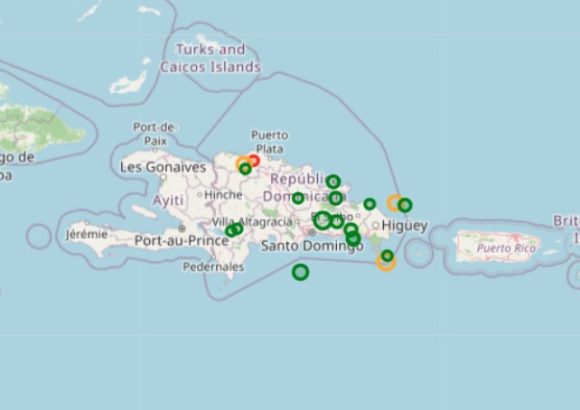
    Situated at the tectonic boundary between the Caribbean and North American plates, the Dominican Republic faces a permanently elevated threat of destructive seismic activity, prompting a leading local structural engineer to issue a urgent call for widespread public preparedness to reduce potential harm.

    Following a formal risk assessment delivered by seismic and structural engineering specialists last Wednesday that reaffirmed the country’s high-risk designation, Claudia Germoso, a practicing seismic engineer, stressed that proactive disaster mitigation starts with homeowners and families assessing their own living spaces long before a tremor strikes.

    Germoso outlined clear, actionable steps that households can complete in advance to boost their safety. First, every family should map out sturdy, low-risk safe spots within their home, anchor heavy freestanding furniture like bookshelves and wardrobes to wall frames to prevent tipping, and conduct a visual inspection for red flags that signal structural vulnerability. These warning signs include diagonal cracks running through load-bearing walls or columns, chipping or detaching concrete on support beams, exposed reinforcing steel, and any home additions or modifications built without oversight from a licensed engineering professional.

    When an earthquake is actually underway, Germoso emphasized that panic and impulsive action are the leading causes of preventable injury. She advised the public to remain calm, immediately execute the internationally recommended “drop, cover, and hold on” protocol, which also helps create the so-called “triangle of life” survival space, and avoid rushing for exits. Most earthquake-related injuries, she noted, are caused by falling unsecured objects, not structural collapse during shaking. Once the shaking subsides completely, residents should evacuate calmly and in an orderly manner using stairwells (never elevators) and move to pre-identified open outdoor spaces like public parks or empty parking lots far from damaged structures.

    Beyond household prep, Germoso pushed the public to get a formal professional assessment of their building’s structural integrity, pointing to several key factors that drastically increase risk: older buildings constructed before modern seismic building codes were adopted, homes built on uncompacted fill or geologically unstable terrain, unpermitted, unengineered structural modifications, and chronic lack of routine maintenance. “If you are unable to assess the vulnerability of your home and surrounding environment on your own, reach out to a qualified expert for guidance,” she stated.

    Contrary to a common public misconception, Germoso added that a home’s earthquake resistance does not rely solely on using strong building materials — appropriate, code-compliant structural design is the foundational requirement for seismic safety.

    In additional guidance published on the local seismic awareness Instagram account Sismicidadrd, officials reminded residents that every household should keep a pre-packed emergency safety backpack ready to grab at a moment’s notice. Recommended supplies for the pack include a fully stocked first aid kit, portable flashlights with extra batteries, bottled drinking water, non-perishable food items, and copies of all critical personal identification and property documents.

    This story was compiled and updated in partnership with DominicanScope, the Dominican Republic’s leading English-language local news outlet.

  • NBD honors student leaders through inaugural Growth and Impact Award programme

    NBD honors student leaders through inaugural Growth and Impact Award programme

    As part of its expanding Environmental, Social and Governance (ESG) strategy, The National Bank of Dominica Ltd. (NBD) has successfully wrapped up its first-ever Growth and Impact Award, a youth-focused initiative launched during the 2026 graduation season that honors graduating students who have driven positive change across their local schools and communities.

    Designed to celebrate well-rounded achievement rather than just academic excellence, the new award program aligns directly with NBD’s long-term ESG commitments. It spotlights graduating students who have stood out through demonstrated leadership, consistent community service, intentional environmental stewardship, and active engagement in both school and local community organizations.

    The pilot launch of the initiative drew broad participation from 32 educational institutions spanning every tier of Dominica’s education system: three preschools, 16 primary schools, 11 secondary schools, and two tertiary learning institutions. Per the program’s structured framework, each participating school was invited to put forward one graduating student for the award through an open, transparent selection process that prioritized tangible, meaningful contributions to campus and neighborhood life over grades or test scores.

    In an official statement accompanying the announcement of the award’s completion, NBD Marketing Manager Michelle Joseph explained that the program was crafted specifically to elevate young people already working to build a more prosperous, equitable future for Dominica. “Through the Growth and Impact Award, we sought to recognize the young people who are actively shaping a brighter future for Dominica through service, leadership, and social responsibility,” Joseph said. “These students represent the values that inspire sustainable development and strong communities, and we are honoured to celebrate their achievements.”

    Each of the 32 selected student recipients received a custom plaque or commemorative trophy to mark their achievement, alongside a gift certificate from local retailer Jays Ltd. to cover the cost of school supplies as they advance to the next stage of their educational journeys. Beyond recognizing individual students, NBD also allocated direct financial contributions to all participating educational institutions to help offset rising graduation-related operational costs.

    The full list of 2026 Growth and Impact Award recipients includes: Chervelle Maximea, Jenesis Durand, Kezia Challenger, Jacquelle Frederick, Sherlana Euzebe, Shane Sango, Raj Joseph, Keyantay Martin, Hubert Bernard, Desmond Casimir, Shanica Edwards, Kaidy Baron, Kaiden Williams, Kenzym Letang, Harmony Henry, Dejanni Maximin, Adia Durand, Yemi Matthew, Seanna Fingal, Melianna John, DeAndre David, Jhace Jno Baptiste, Ashtel Alfred, Caleb George, Lina Smith, Rivaldo Charles, Danica Gabriel, Madleah Fontaine, Kurdez Simon, Kalee Marie, Micha Alcendor and Jaidyne Francis.

    All recipients were selected for their consistent, demonstrated commitment to leadership, service, and positive impact within their respective school and community contexts. NBD extended formal congratulations to all honorees, wishing them ongoing success as they advance to further study and grow into the nation’s next generation of leaders, innovators, and social changemakers.

    Program organizers noted that the inaugural initiative received widespread, enthusiastic support from educational institutions across the island, a response that reflects NBD’s decades-long investment in Dominica’s education and youth development sectors. Unlike traditional student recognition programs that prioritize academic outcomes, the Growth and Impact Award centers non-classroom achievement, elevating leadership, volunteer work, environmental advocacy, and local community engagement.

    For NBD, the successful launch of the new award program marks a meaningful milestone in the bank’s ongoing investment in Dominica’s future. Following the positive reception of the pilot, bank leadership confirmed it is already evaluating strategies to expand and strengthen the initiative in coming years. “The overwhelming participation and support from schools across the island demonstrate the value of creating opportunities to celebrate well-rounded student achievement,” Joseph added. “We thank every participating institution for partnering with us to recognize and encourage the next generation of leaders.”

    Per NBD’s official overview, the Growth and Impact Award is more than a one-off recognition program—it is a tangible reflection of the bank’s broader organizational commitment to advancing educational progress, strengthening local communities, upholding environmental responsibility, and empowering young people to grow into active, engaged citizens.

  • Wastewater seeping onto Bridge Street raises health concerns among vendors

    Wastewater seeping onto Bridge Street raises health concerns among vendors

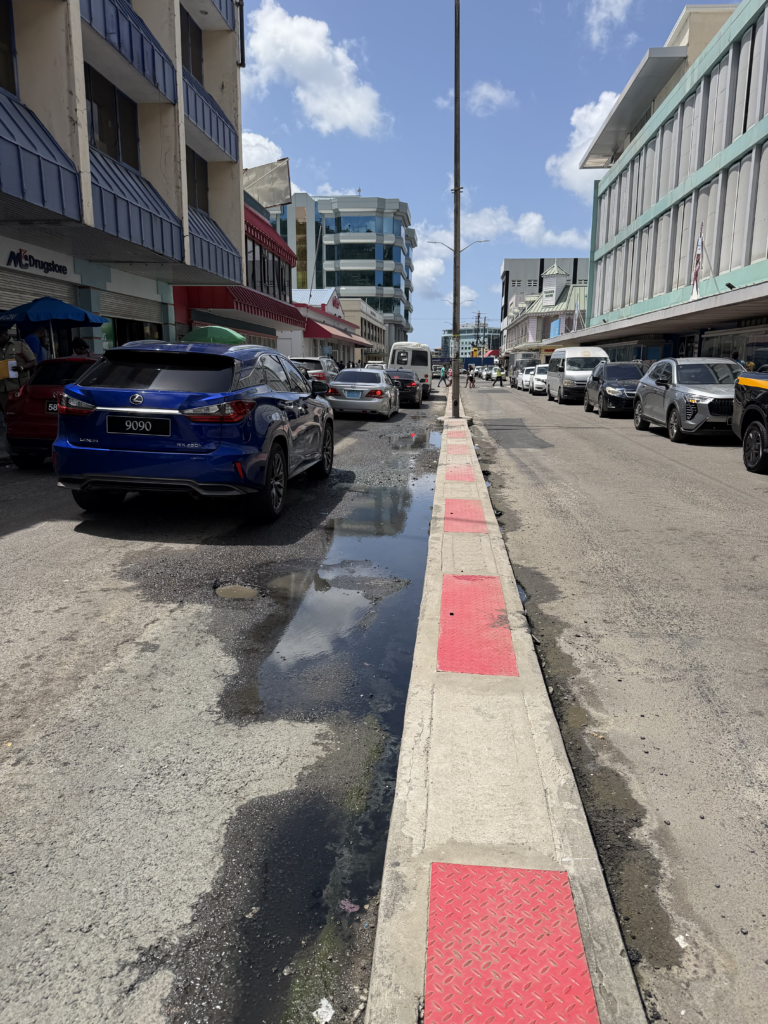
    For months, a persistent uncontrolled wastewater leak has transformed a stretch of Bridge Street in Saint Lucia into an unhygienic, foul-smelling hazard that has crippled local small businesses and raised urgent red flags over public health and safety. Local vendors who operate along the affected corridor have detailed the steady deterioration of conditions, pushing for immediate targeted intervention from responsible authorities after failed temporary fixes and a bureaucratic standoff over who owns the problem.

    Rosemond Clery, one street vendor working steps from the leak, described the stench as overwhelming to the point of driving customers away entirely. “The smell is more than one can bear. It’s really, really bad,” Clery explained, noting that passersby now hurry past the area rather than stopping to browse or purchase goods like they once did. Clery added that the leak has grown progressively worse, with wastewater flowing at higher volumes than it did when the problem first emerged, pooling in deep potholes that line the roadway. Previous attempts to patch the damaged section have done nothing to resolve the issue: workers filled potholes with cement, but the constant flow of water prevented the material from setting properly, leaving the potholes and leak fully intact.

    The leak has already created immediate safety risks, Clery said, recalling an incident where a pedestrian slipped on the contaminated surface and got her feet covered in wastewater. Water from the leak carries high levels of dangerous bacteria, Clery warned, putting everyone who passes through the area at risk of exposure.

    Another local vendor, who asked to remain anonymous, traced the origin of the problem to construction work that recently began at the nearby Dennery bus stop. Since construction started, the foul odor has chased off potential customers who would otherwise stop along the popular corridor. To escape the stench, nearly all nearby shop owners have taken to keeping their doors closed and relying exclusively on air conditioning to circulate air inside their businesses. The vendor emphasized that the urgency of the issue cannot be overstated: “something needs to be done effectively immediately because this is sewer water.”

    Berthia John, who runs Good Old Days Snacks along Bridge Street, called daily exposure to the leak unpleasant and deeply disruptive. “The smell has not been something great to be inhaling on a daily basis,” she said, describing the ongoing situation in the area as “disgusting.” Beyond the odor, John pointed to additional risks from passing traffic: when vehicles speed through the pooled wastewater, they often splash contaminated water onto vendors and pedestrians standing nearby. Many drivers are inconsiderate of the conditions, she added, ignoring the obvious hazard. John warned that long-term exposure to the sewage and its fumes could lead to chronic illness for vendors who are forced to work along the street daily. For most vendors, there is little option to relocate: “you kind of just have to stay where you are,” John said, though some have resorted to closing their stands early each day to limit their exposure.

    One local resident affected by the leak stressed that the problem is not limited to just street vendors, but impacts everyone who travels or works along Bridge Street. Conditions deteriorate even further during rainstorms, when the odor intensifies and contaminated water spreads further down the roadway, expanding the hazard zone. This resident criticized local officials for moving far too slowly to address what they called a preventable public health issue, urging immediate action to resolve the leak before more serious health problems develop.

    After weeks of growing public outcry, the Water and Sewerage Company Inc. (WASCO), Saint Lucia’s main water and sewerage utility, issued a response distancing itself from responsibility for the leak. A company representative clarified that WASCO does not own, operate or maintain any public sewer lines running along Bridge Street, meaning the issue falls outside of the utility’s official remit. While the company acknowledged the validity of public concerns over the leak, it stated that “the matter does not fall under WASCO’s current sewerage infrastructure network or operational responsibility.” The utility added that “the relevant authorities or responsible parties must be engaged to address the matter,” and encouraged local residents to report wastewater issues through official, designated channels. WASCO reaffirmed its commitment to maintaining and managing public water and wastewater systems across Saint Lucia in areas where it holds responsibility.