作者: admin

  • Olieprijzen stijgen opnieuw na drone-aanval op nucleaire centrale in VAE

    Olieprijzen stijgen opnieuw na drone-aanval op nucleaire centrale in VAE

    Global crude oil prices climbed further on Monday, pushing Brent crude reaching its highest level since early May, following a reported drone strike targeting a nuclear power plant in the United Arab Emirates (UAE). This upward price momentum comes against a backdrop of stalled diplomatic efforts between the region, with peace talks between the U.S.-Israeli bloc and Iran have broken down, and emerging indications that Washington is actively considering military options against Tehran.

    By Monday’s market close, benchmark Brent crude had advanced $1.44, or 1.32%, to settle at $110.70 per barrel. U.S. West Texas Intermediate (WTI) crude rose $1.84, equal to a 1.75% gain, to hit $107.26 per barrel, also its highest level since early May. Last week alone, both major crude contracts surged more than 7%, driven by fading market optimism over a potential peace deal that would end attacks and ship seizures around the Strait of Hormuz, the critical chokepoint through which roughly 20% of global oil trade passes.

    Recent drone strikes targeting infrastructure in both the UAE and Saudi Arabia, paired with increasingly heated rhetoric between the U.S. and Iran, have stoked widespread market fears of a full escalation of conflict in the oil-rich Gulf region. UAE officials are currently investigating the origin of the attack on the Barakah nuclear power plant, and have reaffirmed the country’s right to respond to what they label as terrorist attacks on sovereign territory.

    Separately, Saudi Arabia announced it had intercepted three drones that entered its airspace from Iraqi territory, and issued a warning that it would take all necessary operational measures to protect its national sovereignty and domestic security.

    Tony Sycamore, a market analyst at IG Markets, noted that the recent string of drone attacks acts as a clear warning to global powers. “Renewed U.S. or Israeli military strikes against Iran could trigger a wave of additional proxy attacks on energy infrastructure and critical facilities across the Gulf region, carried out by Iran or its regional allied groups,” Sycamore explained.

    U.S. news outlet Axios also reported that former U.S. President Donald Trump is preparing to convene a meeting with his national security advisory team to discuss a range of potential military actions against Iran.

  • CPL and UWI open applications for 2026 internship programme

    CPL and UWI open applications for 2026 internship programme

    The region’s premier T20 cricket competition, Republic Bank Caribbean Premier League (CPL), has teamed up with the University of the West Indies (UWI) Faculty of Sport to launch the 2026 iteration of its highly regarded annual internship programme, marking a decade of bridging academic learning and professional sports experience for young Caribbean talent.

    First launched a decade ago, this innovative initiative has carved out a reputation for blending structured academic coursework with immersive, on-the-ground experience at one of the Caribbean’s most high-profile annual sporting events. This year’s programme will run from July through September 2026, aligned with the 2026 CPL tournament schedule, and organizers have opened applications for interested students immediately.

    A total of 21 selected participants will be accepted into the 2026 cohort, with a unique option to complete a fully accredited three-credit course in Sports Marketing, developed and delivered entirely online by UWI’s experienced sport faculty. The coursework is designed to build a robust theoretical foundation in sports marketing strategy, which interns will immediately put into practice as active contributing members of the CPL marketing team throughout the tournament.

    Unlike many classroom-only internships, this programme places participants directly at the heart of tournament operations across all seven 2026 CPL host nations: Antigua & Barbuda, Barbados, Guyana, Jamaica, St Kitts & Nevis, Saint Lucia, and Trinidad & Tobago. This cross-territory immersive placement gives young professionals unparalleled front-row access to the inner workings of an international sporting competition, while letting them play a tangible role in CPL’s on-location promotional and outreach work.

    Over the past nine years, the programme has transformed the career trajectories of dozens of emerging sport industry professionals across the Caribbean. A large number of past interns have gone on to secure full-time paid positions with CPL itself, as well as with leading organizations across the global sports and entertainment sectors.

    Reflecting on the programme’s 10-year milestone, CPL CEO Pete Russell emphasized the lasting impact of the partnership. “It is incredibly rewarding to see how many young Caribbean professionals have used this opportunity as a launchpad for their careers,” Russell said. “The internship gives students genuine hands-on experience in a fast-paced international sporting environment, and every year they make an important contribution to the CPL team. With the addition of Jamaica as a new host venue for 2026, this year’s programme promises to be our biggest and most exciting yet.”

    Interested applicants can submit their materials for the 2026 internship through the official application link published alongside the programme announcement.

  • Premier Brantley Champions Caribbean Digital Transformation at Amplify Summit

    Premier Brantley Champions Caribbean Digital Transformation at Amplify Summit

    In mid-May 2026, regional heads of government and international tech innovators gathered in Miami, Florida, for the second annual Liberty Caribbean Amplify Summit, a leading forum dedicated to shaping the digital future of Caribbean nations. The 2026 summit, convened under the central theme “Elevating the Caribbean’s Digital Future,” brought together cross-sector stakeholders to explore pathways for accelerating digital adoption, strengthening regional economic resilience, and leveraging cutting-edge innovation to drive inclusive, sustainable growth across the Caribbean basin.

    Among the key speakers was the Honorable Mark Brantley, Premier of the Federation of St. Kitts and Nevis’ island of Nevis, who framed his participation in the summit as a landmark opportunity to elevate Nevis’ and the wider Caribbean’s priorities in the global digital transition. Brantley noted that the gathering offered an unparalleled space to connect with leading regional thinkers and chart a collective approach to emerging technological shifts. “It was great to interact with some of the brightest minds in the region. It is always a privilege to represent our beloved Nevis. Thank you to Liberty for the invitation,” he stated in remarks following his panel participation.

    On May 14, Brantley took the stage for a high-profile panel focused on integrating artificial intelligence into the Caribbean’s critical hospitality sector — one of the region’s largest sources of employment and foreign revenue. During the discussion, he outlined both the transformative potential of AI for Caribbean tourism and the urgent risks that demand proactive policy action. A core priority Brantley highlighted was the immediate need for large-scale workforce reskilling and upskilling programs across the region, to offset projected job displacement as AI tools become more widespread in hotels, resorts, and travel services. He also emphasized that Caribbean nations must retain full ownership of their regional data to prevent external exploitation and support home-grown innovation. Most notably, Brantley called for a sweeping public education campaign to familiarize Caribbean communities with AI’s rapid evolution, stressing that “the technology does not leave our people behind.”

    Beyond the AI and hospitality discussion, the 2026 Amplify Summit tackled a broad range of issues tied to the Caribbean’s digital transition, from mapping emerging risks to unlocking untapped opportunities for growth. Attendees aligned on the need to embed long-term resilience into regional digital infrastructure and operations, ensuring that digital development strategies align with global economic and technological shifts while advancing local and regional growth priorities. The summit also centered cross-border collaboration as a core driver of progress, highlighting how coordinated action can expand connectivity and unlock new economic opportunities across all Caribbean island nations. Through supplementary initiatives such as the Amplify Fundraiser, the summit focused on advancing digital inclusion, broadening access to digital tools for underserved communities, and investing in local capacity to support long-term sustainable progress. Panel discussions throughout the event explored actionable strategies to strengthen the Caribbean’s digital ecosystem, including targeted talent development initiatives, harmonized regional digital policies, attracting private and public investment, and leveraging expanding connectivity to boost broad-based economic growth and systemic resilience.

  • ABLP Holds National Thanksgiving Service Following Election Win

    ABLP Holds National Thanksgiving Service Following Election Win

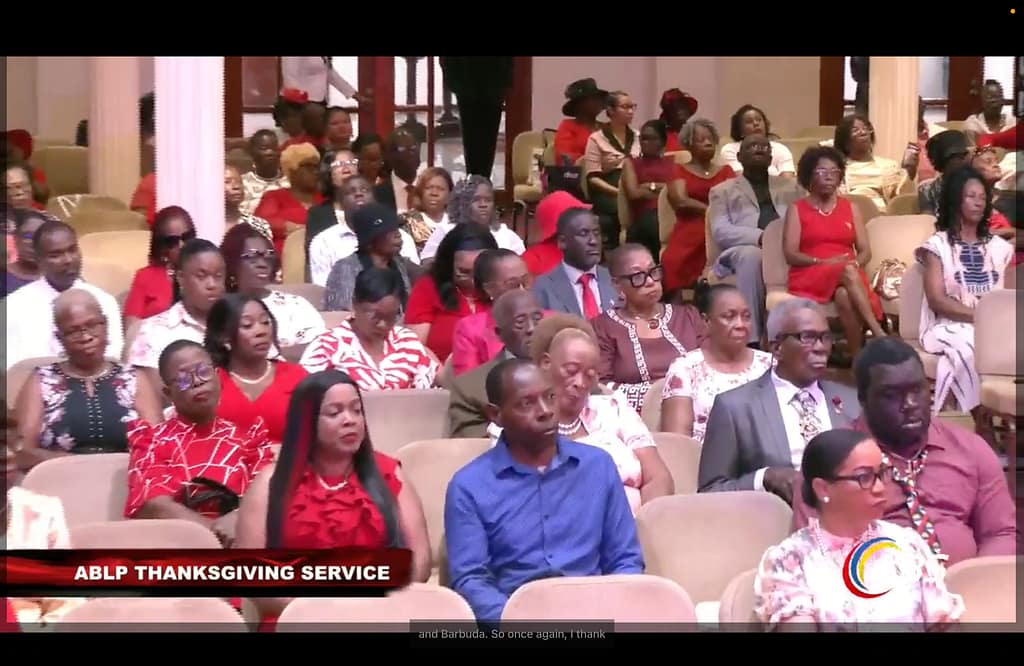
    In the wake of the closely contested April 30 general election that delivered a victory to the Antigua and Barbuda Labour Party, a multi-faceted thanksgiving service on Sunday at St. John’s Pentecostal Church House of Restoration wove together spiritual worship, political acknowledgment and urgent calls for national reconciliation. The gathering drew a diverse cross-section of the nation’s leadership and community, including sitting Cabinet ministers, incoming senate appointees, foreign diplomatic representatives, senior church figures and thousands of party supporters, framed by organizers as both a sacred observance and a moment of collective national pause after a heated campaign cycle.

    The event opened with a solemn performance of the national anthem, followed by a series of intercessory prayers covering every corner of Antigua and Barbuda’s national life: elected political leaders, the independent judiciary, religious communities, educational institutions and households across both islands. One particularly resonant prayer invoked divine provision, asking God to grant the nation “wisdom in the midst of confusion” and “peace in the midst of chaos.”

    Throughout the service, speakers framed the Labour Party’s electoral win as the opening of a transformative “new season” for the twin-island nation, returning again and again to themes of gratitude, divine direction and healing after the tensions of the campaign period. Host organizers emphasized that the gathering was far more than a post-election victory lap for the governing party; instead, it was designed to center the critical need for divine guidance, collective wisdom and cross-community unity as the new administration prepares to lead the country forward.

    A second layer of gratitude emerged during the service, as religious leaders urged attendees to give thanks not only for the outcome of the election and the promise of continued political stability, but also for collective deliverance just days prior. A 5.0+ magnitude earthquake centered nearby had shaken Antigua and Barbuda and multiple neighboring Caribbean islands just two days before the service on Friday, and speakers noted that the nation had escaped widespread damage or loss of life. Congregants were invited to physically mark themselves as “safe” and offer praise for God’s protection over their islands.

    Extended segments of joyful praise and worship filled much of the morning’s schedule, with attendees singing traditional hymns and contemporary gospel songs centered on themes of divine grace, national restoration and communal perseverance. Worship leaders encouraged the crowd to celebrate the fundamental gifts of life, health and collective strength, while guest speakers highlighted the nation’s long history of resilience through periods of economic and social challenge.

    The church also used the high-profile occasion to publicly honor the incoming political leadership, introducing each Cabinet minister and senator-designate to the congregation. Organizers issued a quick on-stage correction to several recently announced ministry portfolio assignments during the introductions, a minor note that reflected the still-forming structure of the new government.

    The core message of the day came in the main sermon delivered by Apostle Dr. Stephen C. Andrews, who expanded at length on the dual themes of thanksgiving and national renewal. Andrews urged both the newly elected leadership and ordinary citizens to remain rooted in faith and committed to a spirit of service to the public good. The entire service drew its spiritual foundation from three key scripture passages: Psalm 103, Psalm 107 and 1 Chronicles 16, all of which center on the core themes of gratitude, divine protection and covenant relationship between people and God.

    Attendees also viewed pre-recorded video messages of congratulations from faith leaders based overseas. Bishop Israel Ade Ajala of Colorado offered remarks praising the government’s decisive electoral win, and affirmed that international faith communities would continue holding Antigua and Barbuda in prayer as the nation works toward sustained prosperity.

    In closing, church leadership wrapped up the service with a formal pledge to continue lifting the new government and the entire nation in prayer as they pursue progress. They closed with a renewed call for all citizens, regardless of political affiliation, to set aside past divisions and work together toward shared national development.

  • Government Continuing Repiping Programme as Drought Pressures Water Supply, PM Says

    Government Continuing Repiping Programme as Drought Pressures Water Supply, PM Says

    As Antigua and Barbuda grapples with increasingly severe drought conditions and a century-old crumbling water distribution network, Prime Minister Gaston Browne has confirmed that the administration is pressing forward with a sweeping national initiative to replace outdated pipes and modernize critical water infrastructure. In an interview aired on local radio station Pointe FM, Browne laid out the urgent scope of the project, explaining that large swathes of the country’s underground pipe network have deteriorated so significantly that massive volumes of treated water are lost to leaks before ever reaching residential and commercial consumers.

    “We have systematically been rolling out pipe replacement projects across every region of the country,” Browne stated during the discussion of the ongoing infrastructure drive. The core goals of the program, he emphasized, are to bring the country’s water system into the 21st century and cut down on the crippling non-revenue water loss that has strained supply for years.

    The prime minister tied the country’s mounting water challenges to two interconnected factors: prolonged dry spells that have become far more frequent, and shifting climate patterns that are disrupting rainfall across not just Antigua and Barbuda, but the entire Caribbean basin. “We are actively confronting persistent drought conditions right now,” Browne said, noting that well below average rainfall over recent months has added unprecedented pressure to a system already operating beyond its designed capacity.

    To address immediate supply gaps alongside long-term resilience, the government is also ramping up production at reverse osmosis desalination facilities, which convert saltwater from the surrounding ocean into potable water for domestic use. Browne added that utility managers have implemented a key coordination strategy to avoid unnecessary disruption and waste: all water infrastructure upgrades are being timed to align with planned road repair and reconstruction projects across the country. This integrated approach eliminates the costly and frustrating scenario of resurfacing a road only to dig it up again weeks later to access and replace underground pipes. “There is no logic in completing road repairs, then turning around and digging up fresh pavement to access pipe lines,” Browne explained of the coordinated planning.

    For years, intermittent water supplies and outright shortages have been a top complaint for residents in communities across Antigua and Barbuda, with problems intensifying during seasonal droughts and peak tourist seasons when demand for water surges. According to government statements, the ongoing multi-million dollar investments in desalination expansion, network repiping and utility modernization are designed not just to address current shortages, but to build long-term water security and strengthen the country’s ability to withstand the growing climate impacts that threaten small island developing states across the Caribbean.

  • PM Calls for Unity After Election, Says Victory Should Not Divide Nation

    PM Calls for Unity After Election, Says Victory Should Not Divide Nation

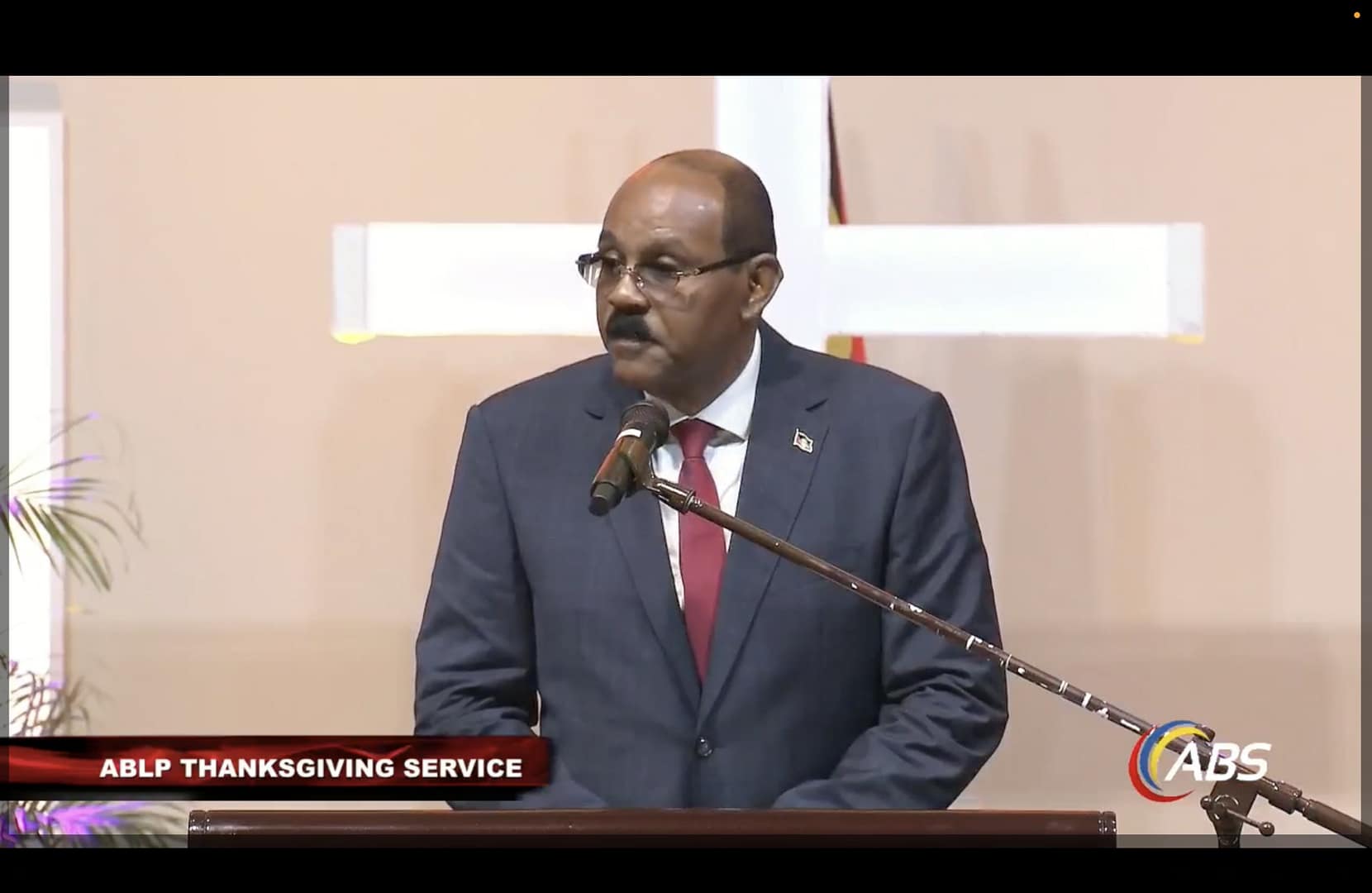
    Fresh off securing a historic fourth consecutive general election victory, the Antigua and Barbuda Labour Party (ABLP) has capped its electoral win with a national thanksgiving service that doubled as a rallying cry for cross-community solidarity. Held on Sunday at the St. John’s Pentecostal Church House of Restoration, the gathering brought together a cross-section of the nation’s leadership, including newly appointed government ministers, senators-designate, senior church figures, and hundreds of jubilant ABLP supporters. In his keynote address to the congregation, Prime Minister Gaston Browne centered his remarks on a urgent call for national unity, framing the election outcome as a catalyst to bridge divides rather than entrench political rifts.

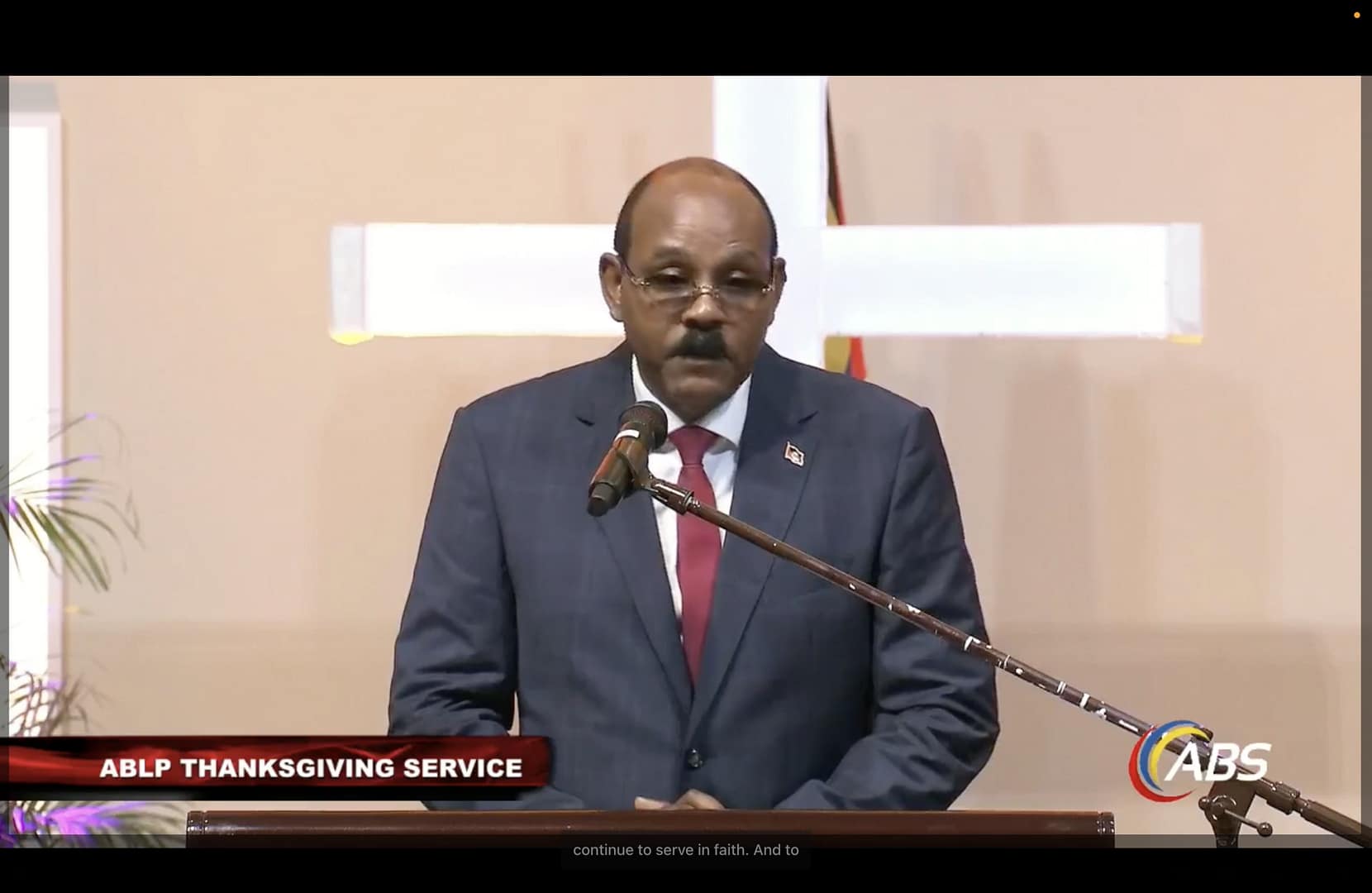
    Browne argued that regardless of differing political affiliations or religious backgrounds, all Antiguans and Barbudans share a common stake in the country’s progress. “I do not expect this victory to divide us. Instead, it should unite us,” he told attendees, pushing for the country to evolve into a “more harmonious society” that puts collective progress above partisan interests. “So let us not move forward as different political institutions, different religious denominations, but as reborn Antiguans and Barbudans who are working harmoniously to build this country,” he added.

    The prime minister emphasized that widespread collaboration around shared national development goals could unlock Antigua and Barbuda’s full potential, positioning the small island nation as a global example to be admired. In a nod to the campaign and election process, he extended gratitude to a broad group of stakeholders: ABLP voters, the party’s election candidates, and what he called “prayer warriors” who worked to secure the party’s win and advocated for a peaceful, transparent voting process.

    The interwoven service blended traditional Christian worship, solemn scripture readings, and thoughtful political reflection, with religious leaders echoing Browne’s core themes of gratitude, national healing after a divisive campaign, and shared responsibility for the country’s future. Speakers also wove in an unexpected note of thanks, referencing a 5.8 magnitude earthquake that struck Antigua and Barbuda and nearby neighboring islands just two days earlier on Friday. With no reported major casualties or catastrophic damage across the country, the collective survival from the natural event served as a second, urgent reminder of why national unity and gratitude remain critical for the Caribbean nation.

  • PM Says ABLP Victory Is “Not a Gift” but a Mandate for Better Governance

    PM Says ABLP Victory Is “Not a Gift” but a Mandate for Better Governance

    Following the Antigua and Barbuda Labour Party’s (ABLP) historic fourth consecutive decisive election victory, Prime Minister Gaston Browne has rejected calls for complacency, pledging to steer his new administration with heightened accountability and a renewed commitment to public service. Browne made the remarks during a national thanksgiving service held Sunday at St. John’s Pentecostal Church House of Restoration, where he addressed a gathered crowd of party supporters, religious leaders, and sitting government officials.

    Browne emphasized that the party’s resounding electoral success is not an unearned reward, but a renewed public mandate to deliver more faithful, effective governance to the people of the dual-island nation. “We do not see this resounding victory as a gift,” he told attendees. “We do not see it as the opportunity to be slothful or for that matter to abuse public resources.”

    Instead of resting on the party’s past achievements accumulated over nearly 12 years in power, Browne said his administration views the new mandate as a opening to strengthen governance frameworks and expand efforts to economic and social empowerment for all citizens. “We see this as an opportunity to serve you more faithfully, to provide even better governance than we provided during the last approximately 12 years,” he added.

    Looking back on the weeks-long election campaign, the prime minister extended gratitude to every candidate, grassroots supporter, and the group he called “prayer warriors” – faith leaders and congregants who prayed for peaceful electoral processes and the ABLP’s success. He acknowledged that the party faced significant headwinds during the campaign, including widespread misinformation, deliberate disinformation, false claims, and targeted character assassination of party members, but maintained the ABLP remained focused on its core mission of delivering progress for all Antiguans and Barbudans.

    Browne also used the high-profile post-election event to issue a call for cross-partisan and cross-community national unity, arguing that deep-seated political divisions should not shape the country’s trajectory going forward. “So let us not move forward as different political institutions, different religious denominations, but as reborn Antiguans and Barbudans who are working harmoniously to build this country,” he said.

    The thanksgiving service itself blended traditional Christian worship, formal scripture readings, and deliberate political reflection. Throughout the event, church ministers and senior faith leaders repeatedly centered their remarks on the themes of collective gratitude, committed public service, and national renewal ahead of the new parliamentary term.

  • OPINION: Embracing the Bilingual Antiguan and Barbudan

    OPINION: Embracing the Bilingual Antiguan and Barbudan

    In the sun-drenched archipelago of Antigua and Barbuda, a rich linguistic tapestry has woven itself into the very fabric of national identity – one that blends the country’s official English with the creole language spoken and cherished by generations of locals. This natural bilingual dynamic is not a flaw to be corrected or a barrier to be overcome, as some historical narratives have suggested; it is a remarkable cultural asset that deserves full recognition and celebration across all sectors of national life.

    For much of the modern history of Antigua and Barbuda, dominant discourse has positioned standard English as the only legitimate language of education, government, and professional advancement, often sidelining the locally developed creole as a backward or unrefined form of speech. This subtle stigma created unnecessary divides, pushing many residents to hide their fluency in creole in formal settings, eroding a core part of their cultural heritage in the process. But shifting attitudes over the past two decades have begun to unlock the true value of the island nation’s bilingual tradition, challenging old stereotypes and highlighting the social and cognitive benefits that come with growing up navigating two linguistic worlds.

    Bilingualism, as decades of global linguistic research confirms, delivers measurable cognitive advantages: it boosts problem-solving skills, enhances creative thinking, and improves working memory among people who grow up speaking two languages from early childhood. For Antiguans and Barbudans, this innate cognitive advantage is paired with a deep cultural connection: creole carries the collective memory of the islands, from stories of resistance and resilience passed down through generations to the playful turns of phrase and community inside jokes that bind local societies together. At the same time, fluency in standard English opens global doors, enabling participation in international trade, global education networks, and the thriving tourism industry that forms the backbone of Antigua and Barbuda’s economy.

    Far from being mutually exclusive, these two linguistic traditions complement one another perfectly. There is no need to choose between elevating standard English for formal and global engagement and embracing creole as a core part of national identity. Forward-thinking education policy across the islands has begun to reflect this reality, with more educators supporting bilingual learning approaches that allow students to build fluency in standard English while retaining and celebrating their native creole. This approach not only improves educational outcomes by making students feel more seen and supported in the classroom, it also strengthens national cohesion by honoring the linguistic heritage that makes Antigua and Barbuda unique.

    As Antigua and Barbuda continues to navigate the opportunities and challenges of a globalized world, embracing its natural bilingual identity will be key to balancing global connectivity with local cultural sovereignty. By celebrating both of its linguistic traditions, the nation can equip its people with the skills to succeed on the global stage while preserving the cultural heritage that makes it distinct. Bilingualism is not a burden for Antigua and Barbuda – it is one of its greatest strengths, and one that future generations should be able to embrace fully and without stigma.

  • Column: Hoeveel leed kan een mens verdragen?

    Column: Hoeveel leed kan een mens verdragen?

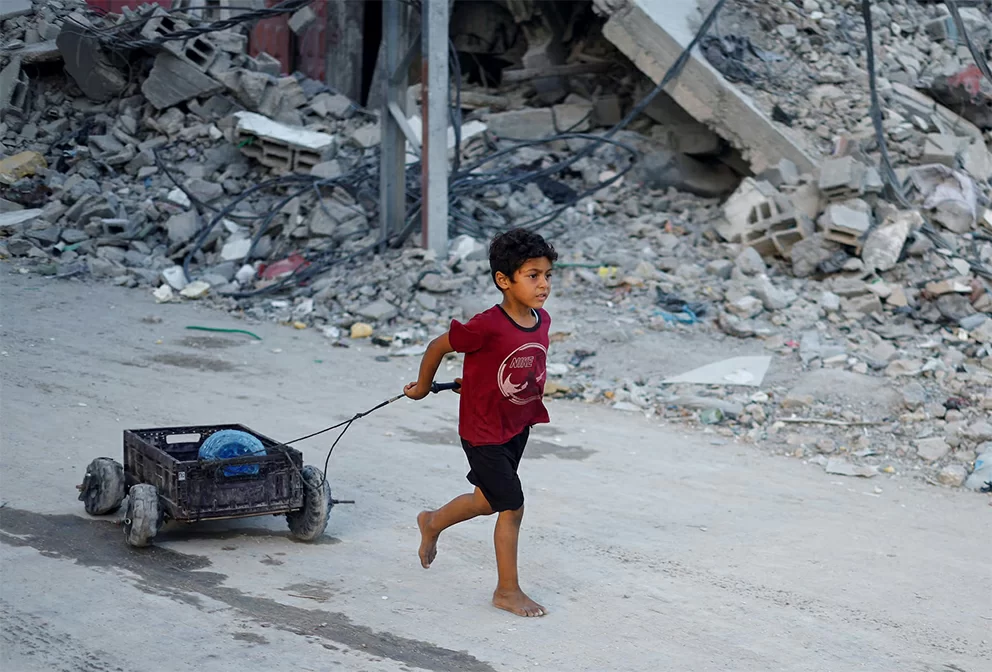
    Across the globe, ordinary people are enduring unthinkable hardship that leaves even the most hardened observers shaken. In the Gaza Strip, families dig frantically through the rubble of flattened homes, clinging to the faint hope of pulling loved ones alive from the destruction. In Ukraine, civilians go about their daily lives under constant threat of bombardment, watching as artillery and missiles reduce their homes, communities, and lifelong possessions to ash. In Sudan, escalating armed violence has torn apart entire communities, forcing thousands of people to flee their homes in search of safety from unpredictable, ever-present threats. On the border of the Democratic Republic of Congo and Uganda, the Ebola virus continues its relentless spread, claiming new lives even as frontline responders work to contain the outbreak. These are not isolated tragedies—they are just a handful of the crises that leave the world bending under the weight of widespread pain, uncertainty, and irreversible loss.

    Rarely does this suffering emerge from nowhere. Its roots run deep, embedded in long-running armed conflicts, bitter political power struggles, stark global economic inequality, and centuries-old historical divisions that continue to fuel division today. In some cases, competing geopolitical interests and external intervention have exacerbated tensions, while in others, systemic domestic injustice has pushed vulnerable communities to the breaking point. But no matter the underlying cause, one brutal, unavoidable truth remains: it is ordinary, everyday people who pay the highest price. They lose their lives, their homes, their livelihoods, and the hope for a better future that many take for granted.

    This widespread, unrelenting pain forces the world to confront a haunting, unavoidable question: How much suffering can one human being endure? Is there a hard limit to human resilience, a breaking point even the strongest among us cannot cross? How many losses, how many sleepless nights of fear, how many tears can a heart hold before it shatters? Even more pressing than that question is another: What are we, as a global community, doing to ease this pain and stop the cycle of suffering?

    Yet even in the darkest of these crises, glimmers of extraordinary resilience emerge. Stories abound of people who continue to love, to care for their neighbors, and to hold onto dreams of peace and justice, even when they have lost almost everything. They stand in solidarity with one another when all hope seems lost, proving that human connection can survive even the most devastating circumstances. But this inherent resilience is not infinite. Long-term, unrelenting suffering can break even the most resilient people, and there is a very real danger that despair will eventually take hold if the world continues to stand by.

    As global citizens, we cannot and must not look away. Every story of pain is a call to uphold our shared humanity, a demand for meaningful action. Change does not come from empty words of sympathy—it requires tangible action that makes a real difference in the lives of those suffering. It is our collective responsibility to ease suffering, to bring light to places shrouded in darkness, and to nurture hope where despair threatens to take over.

    There may be no simple, clear answer to the question of how much suffering the human heart can bear. But meaningful change begins with recognition: recognition of the pain that exists, empathy for those who endure it, and acceptance of our shared responsibility to uphold human dignity for all people, regardless of where they live. For as long as there is hope, there is a future—and as long as there are people suffering, we can never afford to stay silent.

    How much suffering can a human being endure? Perhaps the answer is this: as long as the rest of the world fails to act to ease that pain, it is always more than any person should ever have to bear.

  • Ensuring internal order: A strategic objective in times of threat

    Ensuring internal order: A strategic objective in times of threat

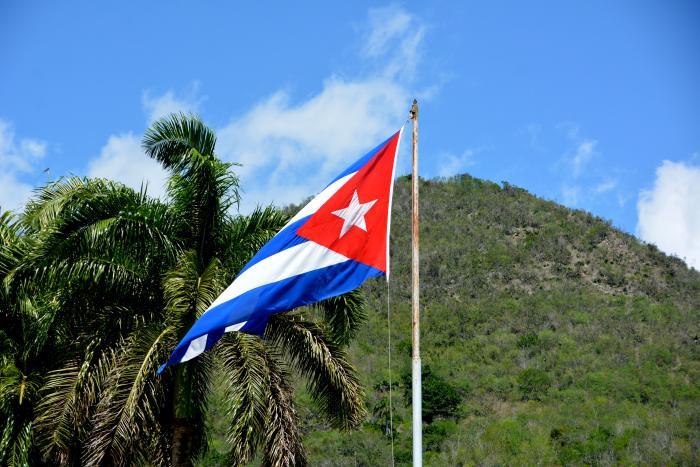
    Cuba has officially launched its fifth nationwide exercise focused on the prevention and counteraction of transnational and domestic societal threats, including organized crime, systemic corruption, illicit drug trafficking, unauthorized activities, and widespread social indiscipline. The nationwide initiative comes with an explicit core mandate: to ramp up coordinated action against harmful behaviors that directly undermine the island nation’s most critical strategic priorities.

    This year’s exercise unfolds against an extraordinarily complex geopolitical and economic backdrop, shaped by decades of escalating pressure from the United States government. A decades-long economic, commercial, and financial blockade has been tightened in recent years, compounded by a strict oil embargo, expanding unilateral sanctions, sustained diplomatic hostility, coordinated psychological warfare campaigns, and persistent threats of direct military action against the Cuban government and people.

    2026 marks the centennial celebration of Fidel Castro Ruz, the historic Commander-in-Chief of the Cuban Revolution, and this year’s exercise is rooted firmly in Castro’s enduring ideological and practical legacy. It aligns directly with his longstanding guidance that “special attention must be paid to upholding internal order, because resource scarcity can create conditions for a rise in criminal activity, particularly actions targeting the national economy. This task must be understood as a shared responsibility of all public institutions, and every political and administrative leader.”

    Organizers frame the initiative as a collective battle that demands elevated, coordinated action from all sectors of Cuban society to eliminate any space for impunity for harmful actors. Stakeholders emphasize the urgent need to recognize the full scale of current threats, both internal and external, and the non-negotiable responsibility to protect citizen security — a core, cherished achievement of the Cuban Revolution. These challenges have been further exacerbated by widespread, persistent power outages that disrupt daily family life, erode public well-being, and strain access to essential resources for the population.

    Under the initiative, priority efforts will be directed at strengthening security and protective measures for Cuba’s national energy grid and national fuel supply chains, alongside the country’s critical food production and distribution systems. Simultaneously, preventing and combating illicit drug activity, public sector corruption, predatory price gouging, and open market speculation top the exercise’s priority list.

    In the current heightened political climate, resolute action against vandalism and social indiscipline carries particular strategic importance. Cuban authorities note that these disruptive acts are frequently instigated by foreign actors as part of deliberate subversive efforts to destabilize the government. Beyond the direct material damage these acts cause, they are often connected to violent actions that threaten the lives and physical safety of ordinary citizens, all with the end goal of fostering public discontent and widespread social unrest. This context requires strict adherence to national law, widespread public support for law enforcement and regulatory authorities carrying out their official duties, and collective action to protect the nation’s critical strategic assets.

    As Miguel Díaz-Canel Bermúdez, First Secretary of the Central Committee of the Communist Party of Cuba and President of the Republic, noted during the previous iteration of the national exercise, these coordinated initiatives represent a critical opportunity to strengthen collective defensive capacity and guarantee public calm, respect for internal order, national stability, and social discipline — all while advancing broad public participation in the country’s core national priorities. This is especially critical amid the complex challenges the nation currently faces.

    Cuba’s revolutionary leadership has made clear that this collective campaign for public order, social discipline, and national tranquility is built on the unified strength of revolutionary forces led by the Communist Party, with active coordinated participation from state organs, national government bodies, the Union of Young Communists, and a wide network of mass and grassroots social organizations.

    In this national effort, achieving high levels of grassroots popular participation and community oversight is a core requirement. It stands as a tangible expression of the Cuban people’s political maturity and ideological commitment to defending the socialist project the nation has built over decades. Ultimately, upholding internal order is framed as a non-negotiable strategic objective for Cuba in an era of persistent external threat.