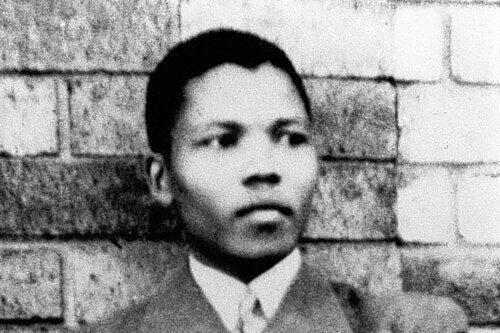
Every year on July 18, the world pauses to celebrate Nelson Mandela International Day, a global commemoration that honors the extraordinary life, enduring principles, and revolutionary legacy of South Africa’s first democratically elected president. For 2026, the observance carries a urgent, focused theme: “It’s Still in Our Hands to Combat Poverty and Inequity”, directing global attention to the unfinished work of eradicating systemic poverty and closing the widening wealth gap that divides communities across the world.
Nelson Mandela remains one of the most revered global icons in modern history, a leader whose moral authority transcended borders and generations. Born Rolihlahla Mandela on July 18, 1918, into the Madiba clan of Mvezo village in South Africa’s Eastern Cape, his early life shaped the resilience that would define his decades-long fight for justice. After the death of his father, a senior counsellor to the Thembu royal family, when he was 12, Mandela continued his education, first at the University College of Fort Hare, where he was expelled for leading a student protest against oppressive institutional policies. He would later complete his Bachelor of Arts degree through the University of South Africa, graduating in 1943, before beginning his law studies at the University of the Witwatersrand, eventually earning his law degree in absentia while imprisoned in 1989.
Mandela’s formal political journey began in 1944, when he joined the African National Congress (ANC) and helped launch the organization’s youth-focused wing, the ANC Youth League. It was through this work that the ANC shifted toward a radical, mass-based policy of resistance to apartheid, adopted in 1949 as the Programme of Action. By 1952, Mandela had risen to a leadership role in the Defiance Campaign, a joint civil disobedience movement with the South African Indian Congress that targeted six unjust apartheid laws. He was convicted under the Suppression of Communism Act for his participation, and later that year, he and colleague Oliver Tambo opened South Africa’s first Black-owned law firm, providing critical legal representation to Black South Africans harmed by apartheid legislation.
Over the following decades, Mandela’s resistance would cost him decades of freedom. After the 1960 Sharpeville Massacre, in which police killed 69 unarmed anti-apartheid protestors, the apartheid government declared a state of emergency and banned the ANC and the Pan Africanist Congress. Following a 1962 arrest for leaving the country without permission to build international support for the anti-apartheid movement, Mandela was sentenced to five years in prison. A year later, after police uncovered an ANC hideout in Rivonia, he and 10 other activists were put on trial for sabotage in the famous Rivonia Trial. Facing the death penalty, Mandela delivered his iconic “Speech from the Dock”, in which he articulated his lifelong vision: “I have fought against white domination, and I have fought against black domination. I have cherished the ideal of a democratic and free society in which all persons live together in harmony and with equal opportunities. It is an ideal which I hope to live for and to achieve. But if needs be, it is an ideal for which I am prepared to die.”
Mandela was ultimately sentenced to life in prison, spending 27 years behind bars, most of them on Robben Island. He was barred from attending the funerals of his mother and eldest son, and contracted tuberculosis that required months of hospitalization. He was finally released on February 11, 1990, amid growing international pressure and negotiations to end apartheid. In 1994, South Africa held its first multiracial democratic election, and Mandela was inaugurated as president on May 10. After a single term in office, he made the historic decision to step down in 1999, rejecting the chance to hold onto power that many other leaders would have seized. He continued his humanitarian work through the Nelson Mandela Children’s Fund, which he founded in 1995, until his death at his Johannesburg home on December 5, 2013.
What sets Mandela apart as a leader, beyond his fight against apartheid, was his unwavering commitment to forgiveness, equality, and selfless service. Unlike many revolutionary leaders who traded one form of oppression for another, Mandela held fast to his vision of a multiracial democracy, working to reconcile South Africa’s divided communities rather than seeking retribution. The core tradition of Nelson Mandela International Day, the “67 Minutes of Service” campaign, honors the 67 years Mandela dedicated to public service and the fight for social justice. Though the original calculation of 67 years contained a minor discrepancy (Mandela had spent 65 years in public service when the campaign launched in 2009), the movement has grown into a global rallying call that unites millions of people each year.
There are countless accessible ways for people around the world to honor Mandela’s legacy this year. The most central tradition is to set aside 67 minutes of the day to volunteer with local nonprofits, homeless shelters, or youth development programs, mirroring Mandela’s 67 years of public service. Individuals can also contribute resources, skills, or time to support vulnerable groups in their own communities, or act as advocates for human rights, speaking out against systemic injustice wherever it appears. In Mandela’s own words: “There can be no greater gift than that of giving one’s time and energy to helping others without expecting anything in return.” This 2026 Nelson Mandela International Day, the theme reminds us that the work of building a more equal, just world remains in all our hands, following the path Mandela laid out over decades of struggle.