作者: admin

  • Christmas magic

    Christmas magic

    In the heart of Annotto Bay, St Mary, a remarkable initiative led by local entrepreneur and philanthropist Errol “Exudous” Green has brought unprecedented Christmas joy to community children. For over fifteen years, Green has redefined holiday celebrations through his generous community outreach programs across St Mary and Portland.

    Drawing from his own childhood experiences of economic hardship, Green developed a profound commitment to creating magical Christmas experiences for underprivileged youth. “My childhood admiration for Christmas festivities—the decorations, gifts, and communal joy—inspired me to reverse roles as an adult,” Green explained. “Instead of receiving gifts, I now find greater fulfillment in giving them.”

    This year’s celebration holds particular significance as communities continue recovering from Hurricane Melissa’s devastating impact. Recognizing the need for heightened cheer, Green transformed his residential property into an elaborate winter wonderland featuring spectacular lighting displays, festive decorations, and interactive attractions.

    Despite initial logistical challenges that required adapting original plans for kindergarten visits, Green innovatively organized neighborhood-based groupings. Daily, over one hundred children enjoy complimentary ice cream, popcorn, snow cones, cakes, and beverages while exploring the enchanting setup.

    Extending his generosity beyond private property, Green enhanced community infrastructure by decorating the historic Mother Forde bridge with an illuminated Christmas tree and dazzling backdrop. “This visible symbol of hope brightens the entire townscape,” Green remarked, highlighting his commitment to widespread festive ambiance.

    Community response has been overwhelmingly positive. Local resident Ian Malcolm, who visited with his family, praised Green’s initiative: “This generosity fosters communal harmony and demonstrates extraordinary compassion. Mr. Green’s actions truly reflect the spirit of Christmas.”

  • DCP Benjamin: 29 students on ‘naughty list’

    DCP Benjamin: 29 students on ‘naughty list’

    In a comprehensive effort to address school violence, Trinidad and Tobago’s police schools initiative has resulted in the arrest of 29 students across multiple educational institutions during the recent academic term. The program, launched in September following government directives, deployed 95 specially trained officers to 50 identified at-risk schools nationwide.

    Deputy Commissioner of Police Junior Benjamin disclosed to Newsday on December 24 that the arrests encompassed serious offenses including weapon possession, marijuana trafficking, assault with weapons, and robbery incidents. “The TTPS isn’t adopting a punitive approach but rather demonstrating support through dialogue and intervention,” Benjamin emphasized, noting that all cases were referred to courts for appropriate remedial measures.

    The initiative emerged in response to escalating violence in educational institutions, prompting Prime Minister Keith Rowley’s July announcement of targeted police deployment. Officers underwent specialized training in school-oriented policing and peer counseling techniques before the program’s September 8 commencement.

    Notable incidents under the program included a 13-year-old Coryal Secondary student charged with marijuana trafficking on September 17—among the first arrests under the initiative. Subsequent cases involved La Romaine High School students apprehended with marijuana on campus in October, and a Valencia Secondary student found with both marijuana and a concealed weapon in November.

    Despite these interventions, significant violent incidents persisted both within and outside program schools. Arima North Secondary, not included in the initiative, experienced multiple documented fights including a September teacher-student physical altercation that circulated on social media. A November mass brawl near Barataria North Secondary overwhelmed a single responding officer, highlighting ongoing challenges.

    Benjamin acknowledged that while physical confrontations have decreased compared to previous years based on police records, comprehensive data analysis remains ongoing. Future program enhancements will include mentorship components and strengthened collaboration with school safety officers and the Ministry of Education.

    Trinidad and Tobago Unified Teachers’ Association president Crystal Ashe characterized the police presence as “a positive thing,” noting anecdotal reports of improved security despite needing empirical evidence. Education Minister Dr. Michael Dowlath’s office requested additional verification before commenting on program outcomes and future directions.

  • Digital skills for 2026 side hustle

    Digital skills for 2026 side hustle

    As the Christmas season reaches its peak, countless individuals share a common reflection: the desire for financial transformation by next year’s holidays. The path to altering one’s income trajectory in 2026 requires neither academic重返 nor technical mastery, but rather the acquisition of marketable digital capabilities that can be cultivated within weeks and converted into viable side ventures generating foreign exchange earnings.

    The contemporary digital landscape, powered by artificial intelligence and no-code platforms, has dramatically lowered entry barriers while simultaneously intensifying market competition. Success now hinges on delivering concrete outcomes rather than offering generic services. Here are the most practical digital skills to develop during the holiday respite and monetize in the coming year:

    1. Short-Form Video Editing & Content Repurposing: With short-form video dominating digital attention, businesses urgently need specialists who can transform long-form content into engaging platform-specific clips. This high-demand skill focuses on identifying pivotal moments, adding captions, and adapting content across formats without requiring on-camera presence or expensive software.

    2. Authentic UGC Creation for Brands: User-generated content creation has evolved beyond influencer marketing. Brands now seek genuine, creator-style videos demonstrating products organically. This accessible skill requires only a smartphone, natural lighting, and storytelling proficiency, making it one of the fastest routes to initial online earnings.

    3. No-Code Website Development: Despite social media’s dominance, businesses still require functional websites and conversion-optimized landing pages. Mastering platforms like WordPress or Shopify to create clean, effective layouts provides substantial value through rapid execution rather than technical complexity.

    4. AI-Assisted Website Construction: Artificial intelligence has accelerated website development, yet most business owners lack proficiency with these tools. Expertise in AI website generators like Loveable or Bolt AI represents a valuable service niche where clients prioritize results over technical methods.

    5. Marketing Automation Configuration: Numerous businesses continue performing repetitive tasks manually. Proficiency with automation tools like Zapier, Mailchimp, or Calendly allows specialists to reclaim operational time for clients—a service that demonstrates immediate, tangible value.

    6. AI Content Refinement: While AI generates content rapidly, most outputs require human refinement. Editing AI drafts for tone, accuracy, and brand alignment addresses the growing need for publish-ready content rather than mere volume.

    7. Freelance Service Packaging: Many skilled professionals struggle with freelancing due to inadequate service positioning. Mastering the art of structuring compelling profiles and outcome-oriented service packages creates significant competitive advantage.

    8. Social Media Optimization: Numerous businesses maintain incomplete or inefficient social media presences. Optimizing bios, content structures, and highlights delivers disproportionate value through minimal effort while establishing relationships for larger projects.

    9. Email Marketing Infrastructure: As one of digital marketing’s highest-ROI channels, email remains underutilized. Skills in platform setup, list building, and sequence creation provide consistently relevant value regardless of industry trends.

    10. Digital Research Expertise: For analytically inclined individuals, providing competitor analysis, keyword research, and market insights offers substantial value in business decision-making, combining AI efficiency with human interpretation.

    The fundamental objective extends beyond quick profits. Developing these skills creates financial leverage, generates optional income streams, reduces single-income dependency, and enables global earning potential. The Christmas break offers ideal conditions for skill acquisition, while the new year provides momentum for monetization. Consistent effort promises a dramatically different financial reality by next December.


  • Major Lazer, Bunji Garlin and America Foster team up for Goat

    Major Lazer, Bunji Garlin and America Foster team up for Goat

    Electronic music powerhouse Major Lazer has unveiled a vibrant Caribbean collaboration with Trinidadian soca icon Bunji Garlin and UK-Jamaican vocalist America Foster. Their new single “Goat” represents a significant cultural fusion, blending explosive bouyon rhythms with electronic dance music elements.

    The track serves as a standout feature on Major Lazer’s recently released nine-track album “Gyalgebra,” marking the collective’s first comprehensive project in five years. This release signifies a strategic return to their roots in Caribbean music exploration.

    Musically, “Goat” presents an innovative synthesis of power soca’s rapid tempo, bouyon’s intricate drum patterns, and expansive EDM synth elements. The production incorporates the distinctive bouyon sound—a high-energy genre originating from Dominica that combines traditional folk elements with contemporary digital beats. This musical style has gained substantial regional traction, with artists like Machel Montano, Skillibeng, and Mr Killa previously experimenting with the format.

    The accompanying “Goat (Bouyon Mixes)” EP, available through Diplo’s Mad Decent label, features reinterpretations by Trinidadian production team Precision Productions and Dominican producer Dadamanufakture. These remixes emphasize the bouyon elements even more prominently, highlighting the genre’s syncopated rhythms that have emerged from the Windward Islands to become a dominant force in contemporary Caribbean music.

    Early reception has been overwhelmingly positive, with Barbadian DJ Puffy’s livestream preview generating significant demand from fellow DJs across the region. The single is anticipated to become a carnival season staple, with its anthemic chorus and infectious energy designed for maximum dancefloor impact.

    This release continues Major Lazer’s legacy of Caribbean collaborations, following their 2013 remix of Bunji Garlin’s “Differentology.” The “Gyalgebra” project overall showcases emerging Caribbean sounds including Trinidad’s zess music and Martinique’s shatta dancehall, positioning America Foster as a compelling new voice in the electronic and Caribbean music fusion scene.

  • Home-based businesses bring new twist to Xmas favourite: Ponche de Ganja

    Home-based businesses bring new twist to Xmas favourite: Ponche de Ganja

    In an innovative twist on Trinidad’s holiday traditions, home-based entrepreneurs are transforming classic Christmas beverages into cannabis-infused medicinal products, creating an unexpected but lucrative market. While cannabis remains largely illegal for sale and public consumption in Trinidad and Tobago, artisans are leveraging social media to build demand for therapeutic-infused versions of ponche de creme and sorrel—traditional holiday drinks typically enjoyed during the festive season.

    The movement gained momentum during the pandemic when hospitality workers facing unemployment sought alternative income sources. Tron, founder of Rum and Resin, launched his operation with a team of retrenched workers, while Blue established Bloom Delights—both operating anonymously due to legal constraints. Their businesses have evolved from side hustles into full-time ventures, responding to growing consumer demand for diverse cannabis delivery methods beyond conventional edibles.

    These entrepreneurs emphasize the medicinal rather than recreational applications of their products. Their offerings include cannabis-infused teas for sleep and immunity support, as well as formulations using marijuana roots to address asthma and gout. Customer bases consist primarily of professionals and parents seeking relief from anxiety, depression, and stress-related conditions. One notable case involves a woman using cannabis products to supplement treatment for hormonal thyroid issues when conventional medications proved unavailable locally.

    Global shifts in cannabis perception are influencing local attitudes. The recent reclassification of marijuana under the U.S. Controlled Substances Act from Schedule I to Schedule III—recognizing its medical applications—has created ripple effects in Trinidad’s underground market. This scientific validation coincides with findings from the FDA supporting cannabis use for treating anorexia and chronic pain.

    Despite growing acceptance, legal barriers persist. The Dangerous Drugs (Amendment) Act of 2019 decriminalized possession of up to 30 grams of cannabis but maintained prohibitions on sales and public consumption. This legal limbo forces artisans to operate in a gray market, limiting production scales and creating quality control challenges. Some unscrupulous vendors reportedly use imported marijuana or synthetic additives that compromise therapeutic properties and consumer safety.

    Political change may be imminent. The United National Congress party has pledged to develop a regulated cannabis industry for medical and export purposes if elected, projecting a global market worth over $100 billion by 2030. Their proposal includes support for small farmers, quality control systems, and age restrictions prohibiting use under 25.

    For now, entrepreneurs like Tron and Blue navigate significant legal risks while advocating for reform. As Blue notes, ‘Most people in this industry understand the medicinal benefits—it’s about making money while giving back to society. What we need is a proper framework to prevent abuse.’ Their success demonstrates both the economic potential and therapeutic value of a properly regulated cannabis industry in Trinidad and Tobago.

  • CAL Cargo appoints new GSSAS for UK, Western Europe

    CAL Cargo appoints new GSSAS for UK, Western Europe

    Caribbean Airlines Cargo has significantly enhanced its European market presence through strategic alliances with two prominent General Sales and Service Agents (GSSAs). This development establishes a bilateral trade corridor that facilitates smoother commercial exchanges between Caribbean and European markets.

    The aviation division has appointed APG Inc. Western Europe and ANA Aviation Services Ltd. as its official representatives across numerous European territories. APG Inc. will oversee cargo operations for Caribbean Airlines (coded BW) across an extensive network comprising 24 European countries, including major economies such as Germany, France, Italy, Spain, and the Nordic regions. This comprehensive coverage spans from Andorra to Vatican City, ensuring widespread market penetration and operational visibility.

    Concurrently, ANA Aviation Services Limited, operating under its commercial identity Network Airline Services, will manage the airline’s cargo interests throughout the United Kingdom. Leveraging its established industry expertise and robust regional presence, the organization will provide cargo solutions across England, Scotland, Wales, and Northern Ireland.

    Marklan Moseley, General Manager of Cargo and New Business at Caribbean Airlines, emphasized the strategic importance of these partnerships: “These collaborations are engineered to deliver seamless, reciprocal trade facilitation for our clientele on both continents. With APG and Network Airline Services, shippers now benefit from reliable local contacts possessing profound market understanding and dedication to service quality that mirrors our commitment to customer excellence.”

    The newly formed partnerships are projected to generate enhanced commercial opportunities while providing customers with localized support for bookings, pricing structures, and service-related inquiries. This expansion represents Caribbean Airlines Cargo’s continued dedication to strengthening transatlantic trade connectivity and reinforcing its position as a key logistics provider between the Caribbean and European markets.

  • The services revolution: powering the future of Trinidad and Tobago

    The services revolution: powering the future of Trinidad and Tobago

    The Trinidad and Tobago Coalition of Services Industries (TTCSI) concludes 2025 with unprecedented achievements in member empowerment and sectoral development, positioning the services industry as the nation’s economic cornerstone. Under President Dianne Joseph’s leadership, the coalition has surpassed strategic objectives while establishing new paradigms for organizational support and national advocacy.

    Throughout the year, TTCSI’s capacity-building initiatives, significantly enhanced by Unit Trust Corporation support, transcended conventional training to become instruments of economic inclusion. The integration of diverse organizations including the Blind Welfare Association, Montserrat Cocoa Farmers Co-operative, and Anime Caribe Organisation into specialized development programs demonstrates the sector’s universal applicability. This foundational work sets the stage for aggressive 2026 expansion targeting niche sectors and service export readiness.

    TTCSI’s strategic media engagement transformed public education through expert knowledge sharing across critical disciplines. Members delivered essential insights on health and safety protocols, human resources management, architectural technicalities, and facility management priorities. The coalition’s educational campaign clarified industry distinctions such as pest management versus pest control while highlighting the creative sector’s economic significance.

    International recognition underscored TTCSI’s global impact as member organization TTIFMA received the Small Chapter of the Year award from its international parent body, with President Edward Kacal earning the Distinguished Member Award. These accolades validate Trinidad and Tobago’s service professionals as world-class competitors when provided with adequate growth platforms.

    The coalition’s geographic expansion to Tobago proved particularly successful, with Ruazz Fine Dining Restaurant exemplifying how tailored advocacy strengthens SME competitiveness. Tobago’s service sector engagement revealed that empowering small and medium enterprises represents the most direct pathway to national economic advancement.

    TTCSI identifies service exports as a fundamental solution to foreign exchange challenges, emphasizing that exported services translate national competence into retained high-value income. The coalition aligns with the Ministry of Trade, Investment, and Tourism’s vision to accelerate SME internationalization through enhanced brand awareness, product differentiation, and employment scaling.

    Strategic partnerships remained central to 2025 operations, with TTCSI emphasizing governance best practices requiring aligned cultures, norms, and value systems. The coalition maintains that transparency, integrity, and open communication constitute non-negotiable components of successful alliances.

    Looking toward 2026—designated as the Year of the Service Professional—TTCSI will expand membership categories to include individual professionals alongside corporate entities. This evolution acknowledges that service excellence represents the critical differentiator in every successful transaction, where poor service delivery frequently outweighs product quality in customer retention.

    The coalition commits to making service standards a national priority through global and local partnerships focused on total excellence. Despite governmental fiscal constraints surrounding the $59 billion 2026 budget, TTCSI stands ready to fuel sustainable, ethical, and professional growth engines that ultimately contribute to nation-building.

  • Trinidad and Tobago’s forex challenge: From diagnosis to decisive action

    Trinidad and Tobago’s forex challenge: From diagnosis to decisive action

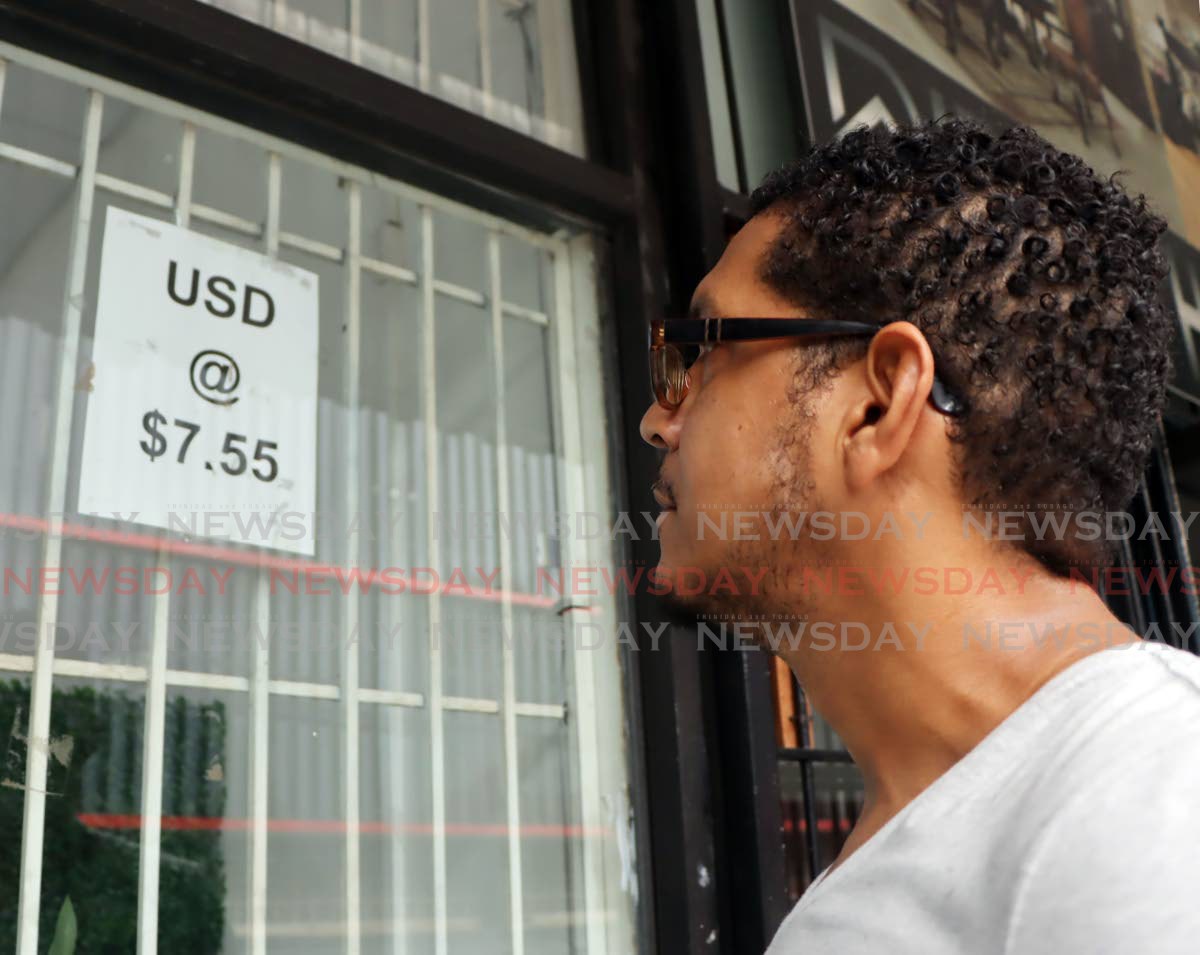
    Trinidad and Tobago’s foreign exchange crisis has evolved from a cyclical concern to a structural economic emergency, creating profound challenges for businesses and threatening the nation’s economic diversification goals. The widening chasm between official and parallel exchange rates—evidenced by street-level transactions offering TT$7.55 for one US dollar—signals deep market distortions with far-reaching implications.

    Businesses across sectors, particularly small and medium enterprises and manufacturers, confront unpredictable access to foreign currency, resulting in operational delays, inflated costs from informal market premiums, and diminished competitiveness in international markets. This crisis transcends commercial concerns, impacting employment, pricing structures, investment decisions, and the nation’s broader economic transformation.

    Four fundamental drivers underpin this crisis: an artificially overvalued TT dollar creating excess demand while discouraging official inflows; structural decline in oil and gas production reducing traditional forex earnings; heavy import dependency across essential goods; and self-perpetuating uncertainty causing businesses to hoard foreign currency rather than circulate it through formal channels.

    Economic data reveals concerning trends: only two significant exchange rate adjustments since the 1990s, with rates effectively frozen since 2017. While foreign currency deposits within the banking system have grown substantially, this liquidity remains stagnant due to confidence issues and structural intermediation constraints. Energy exports continue dominating earnings while non-energy sectors struggle with uncompetitive production costs exacerbated by exchange rate misalignment.

    Addressing this crisis requires moving toward market-reflective exchange rates despite inflationary concerns. Historical evidence suggests such adjustments, when supported by prudent monetary and fiscal policies, yield manageable inflation while enhancing competitiveness. Bringing parallel market activity into regulated frameworks through expanded licensed trading would establish true equilibrium pricing and reduce informal transactions.

    Solving this national challenge demands coordinated action among government, central banking authorities, and private sector stakeholders. Priorities include encouraging foreign direct investment, enhancing export capacity, accelerating economically viable local production, and creating conditions where larger export-oriented firms can achieve forex self-sufficiency. The Trinidad and Tobago Chamber of Industry and Commerce emphasizes evidence-based solutions to safeguard economic resilience and sustainable growth for all citizens.

  • 10 coral reefs to visit in 2026

    10 coral reefs to visit in 2026

    Marine ecologist Dr. Anjani Ganase has issued an urgent appeal for public engagement with Tobago’s coral ecosystems, proposing an ambitious “Visit Ten Coral Reefs in 2026” initiative to foster marine conservation awareness. This call to action emphasizes that direct experience—whether through physical exploration or virtual immersion via platforms like Google StreetView and the Maritime Ocean Collection—is crucial for understanding the precarious state of these vital ecosystems.

    Coral reefs, fundamental to island sustainability, currently face existential threats from unchecked coastal development, pollution, overfishing, and climate-induced bleaching. Dr. Ganase highlights that active public monitoring can identify early warning signs such as disease outbreaks, invasive species proliferation, and bleaching events. The degradation of specific reefs—including Culloden, Arnos Vale, and Bopez—serves as stark evidence of development impacts, with newly approved projects in Kilgwyn and Rocky Point posing additional risks to mangrove and reef systems.

    Tobago’s reef network showcases both vulnerability and resilience. The Buccoo Reef Marine Protected Area, despite management challenges, remains popular for its vibrant Coral Gardens featuring resilient boulder star corals. Mount Irvine Reef maintains remarkable biodiversity owing to limited coastal construction, while Castara Reef offers a microcosm of marine diversity with seahorses, juvenile turtles, and crustaceans. The northern Booby Island reefs support ancient brain corals and mountainous star colonies, though many show historical degradation.

    Critical recovery zones include Melville Drift, where parrotfish populations are essential for algal control and coral regeneration, and Blackjack Hole, where sponge competition threatens coral dominance. Angel Reef near Goat Island represents conservation success with centuries-old coral structures and unique nudibranch populations.

    The Bon Accord mangrove system exemplifies interconnected ecosystems, functioning as vital nurseries when protected from pollution and development. Dr. Ganase contrasts Tobago’s challenged mangroves with protected systems on Australia’s Great Barrier Reef that thrive with marine life.

    The ecologist concludes that systemic change requires public pressure on governmental bodies like the Tobago House of Assembly and Environmental Management Authority. With inadequate marine protection legislation since independence, she advocates for 2026 to become a watershed year for policy action, public advocacy, and photographic documentation shared with NGOs and regulators to prevent irreversible reef loss within our lifetime.

  • Trinidad and Tobago nationals abroad all agree : ‘Trini Christmas is the best’

    Trinidad and Tobago nationals abroad all agree : ‘Trini Christmas is the best’

    Across continents and time zones, Trinidad and Tobago nationals are creatively preserving their distinctive Christmas traditions while embracing new cultural experiences in their adopted homelands. From the snow-covered landscapes of Switzerland to the vibrant markets of Germany, these expatriates demonstrate remarkable cultural adaptability while maintaining deep connections to their Caribbean roots.

    In Bern, Switzerland, 26-year-old De Avion Daniel from Chaguanas has established blended holiday traditions that honor both her Trinidadian heritage and Swiss surroundings. While embracing European customs like Christmas markets, Glühwein, and skiing, Daniel maintains essential Trinbago rituals including cooking traditional dishes, preparing sorrel, and playing parang music. “No matter how far I am, a little Trini Christmas always follows me,” she reflects, noting how these practices help her daughter remain connected to their cultural origins.

    Similarly, Tyreka Russell in Duisburg, Germany has established a unique Christmas celebration with her cousin in Brussels that harmoniously combines Trinidadian and European elements. Their holiday features traditional cooking sessions accompanied by soca parang alongside visits to Christmas markets and the use of Advent calendars. This cultural synthesis has evolved into their own distinctive holiday tradition that bridges geographical divides.

    For older expatriates like 58-year-old Catherine Andrews in The Gambia, Christmas remains deeply connected to musical traditions. A former member of the House of Marketing Universal Parang Group, Andrews now introduces Gambian friends to both traditional parang and its modern variations like parang soca and chutney parang, while also preparing classic Trinidadian foods.

    The challenge of maintaining traditions proves more difficult in some locations. Alex Nedd, dividing his time between Tobago and Ankara, Turkey, finds Christmas particularly challenging in the predominantly Muslim country where familiar ingredients like sorrel and ginger beer remain inaccessible. Despite these obstacles, he continues to celebrate with a Christmas tree and music, though acknowledging “it is nothing near to a Trini Christmas.

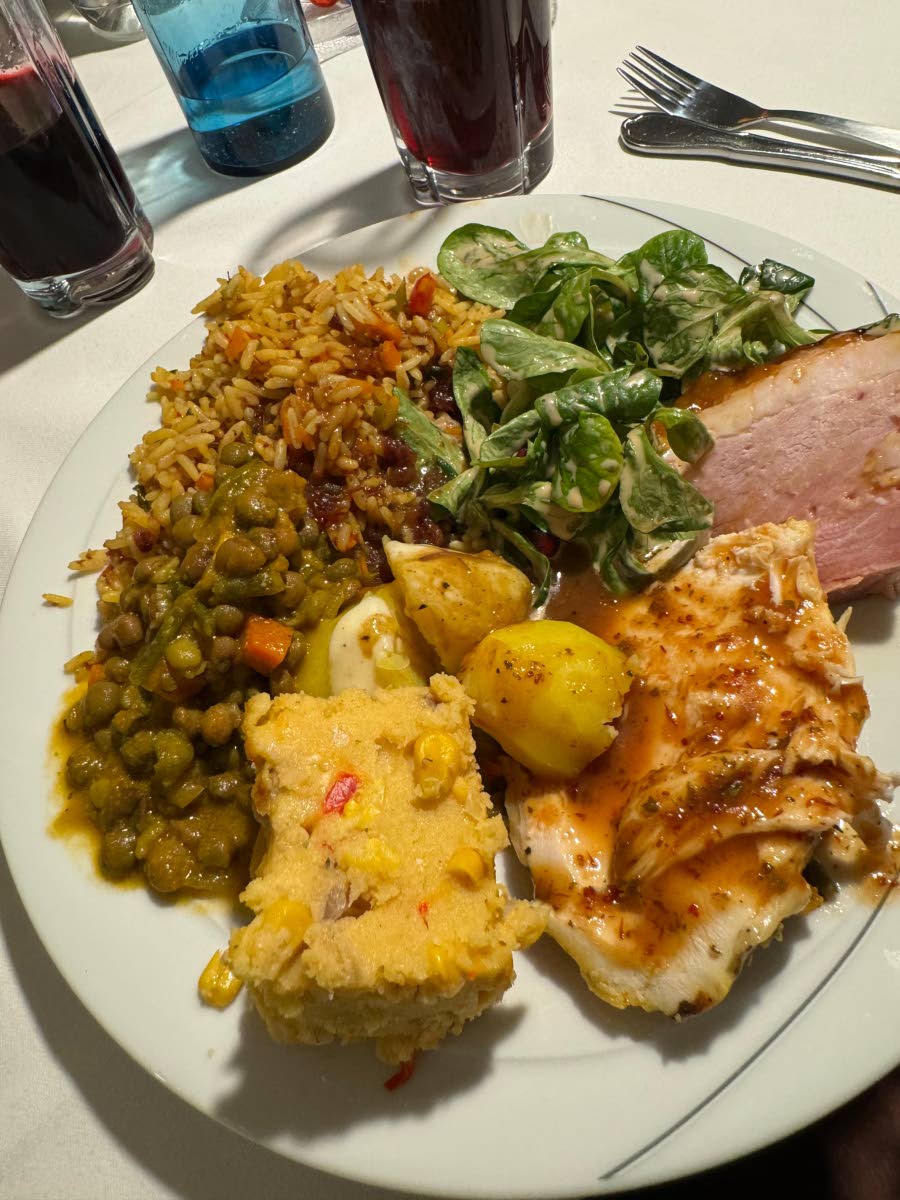
    These global citizens demonstrate remarkable resilience in preserving their cultural identity through food, music, and ritual. Whether through care packages containing black cake and ponche de crème, virtual connections via WhatsApp calls, or introducing local friends to Trinidadian traditions, they maintain what Henrietta Phoebe Pereira in Turks and Caicos describes as that “unwavering connection to home” that defines the Trinidadian Christmas spirit across international boundaries.