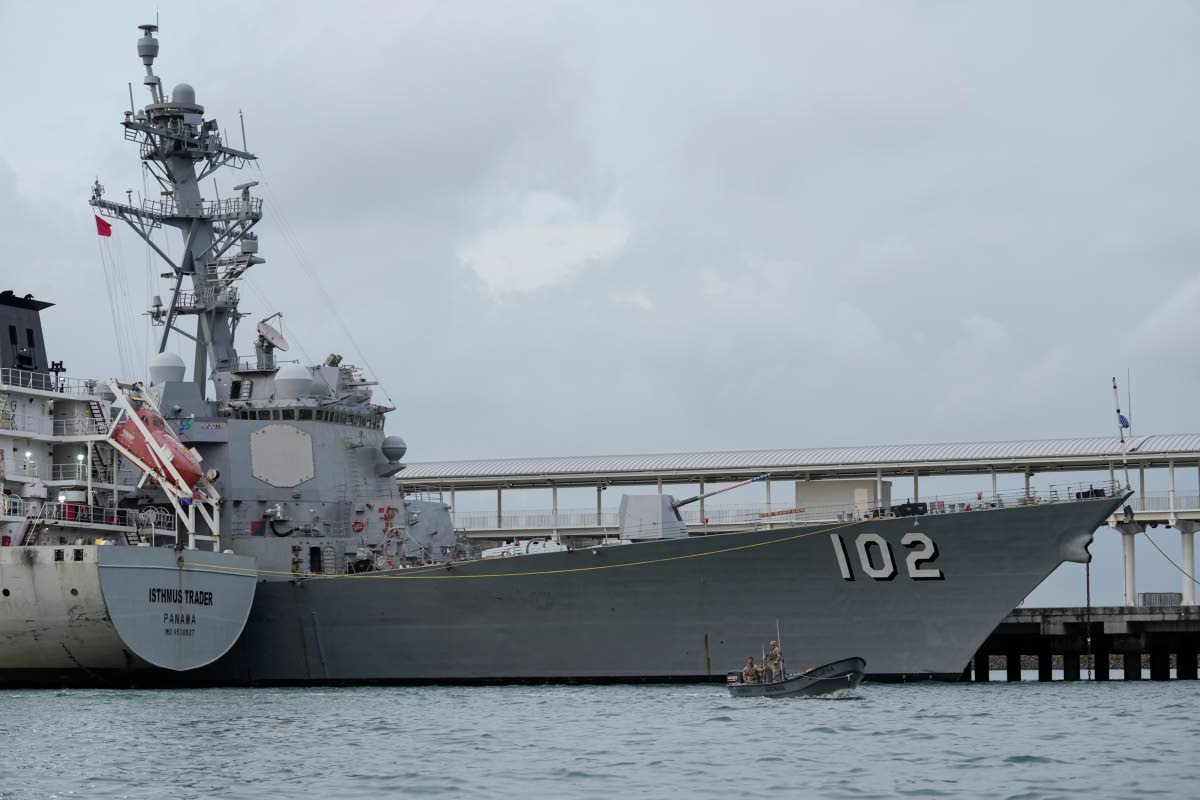
The USS Sampson, a US Navy warship, recently docked in Panama City on August 30, raising eyebrows amid escalating tensions in the Caribbean. Critics argue that the US military’s presence in the region, ostensibly aimed at combating drug trafficking, is a thinly veiled pretext for more aggressive objectives. Many believe the true intent is to enforce the Monroe Doctrine and orchestrate regime change in Venezuela, with the tacit approval of the Trinidad and Tobago (TT) and Guyana governments. This move has been met with widespread skepticism, as regional observers warn of the catastrophic consequences of a potential US-Venezuela conflict. Should hostilities erupt, the Caribbean, along with much of South and Central America, is expected to condemn the US for provoking such a crisis. Critics also caution that the TT and Guyana governments, by aligning themselves with the US, risk becoming complicit in a conflict that could destabilize the region. Furthermore, they argue that the US’s hegemonic influence, often referred to as Pax Americana, is waning, and any military intervention in Venezuela could backfire spectacularly. The misguided support from TT and Guyana, driven by short-sighted policies, may ultimately lead to severe repercussions for their nations. The situation underscores the fragile geopolitical dynamics in the region and the potential for unintended consequences.