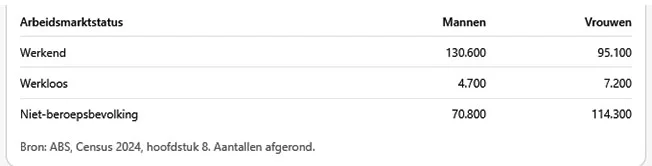
Released on November 28 by Suriname’s General Bureau of Statistics, the full findings from the 2024 national population census have laid bare stark, long-underreported gender gaps across the country’s 15–64 year-old working-age labor force, just as the nation braces for a surge in labor demand driven by its fast-expanding oil and gas industry. The data shows that the unemployment rate for working-age women hits 7% — exactly double the 3.5% unemployment rate recorded for men in the same age bracket, while the overall national unemployment rate for this core working demographic stands at 5%. The disparities extend far beyond raw unemployment metrics to labor force participation rates: 63.4% of working-age men hold formal or informal paid employment, compared to just 43.9% of their female peers. Across Suriname, the total pool of economically active people aged 15 to 64 clocks in at roughly 237,600, of whom 225,700 are in paid work and 11,900 are classified as unemployed. A further 185,000 people in this age group are not counted as part of the formal labor force at all, and this group is disproportionately female: 114,300 are women, versus just 70,800 men. The census data pinpoints unpaid family care responsibilities as the single largest driving factor pushing women out of the workforce, with 48,100 women aged 15 and over citing household and dependent care duties as their primary reason for not seeking paid employment, compared to a mere 4,100 men giving the same rationale. The national statistics agency emphasizes that this large pool of sidelined women represents a massive, largely untapped reservoir of skilled and potential labor that could help fill looming gaps as Suriname’s booming oil and gas sector ramps up hiring in the coming years. To unlock this underutilized workforce, officials note that future national labor market policies cannot stop at rolling out targeted vocational training programs for women; they must also prioritize structural changes to remove practical barriers to female employment, including expanding affordable, accessible childcare services and implementing policies that support workers to balance paid roles with ongoing family care obligations.