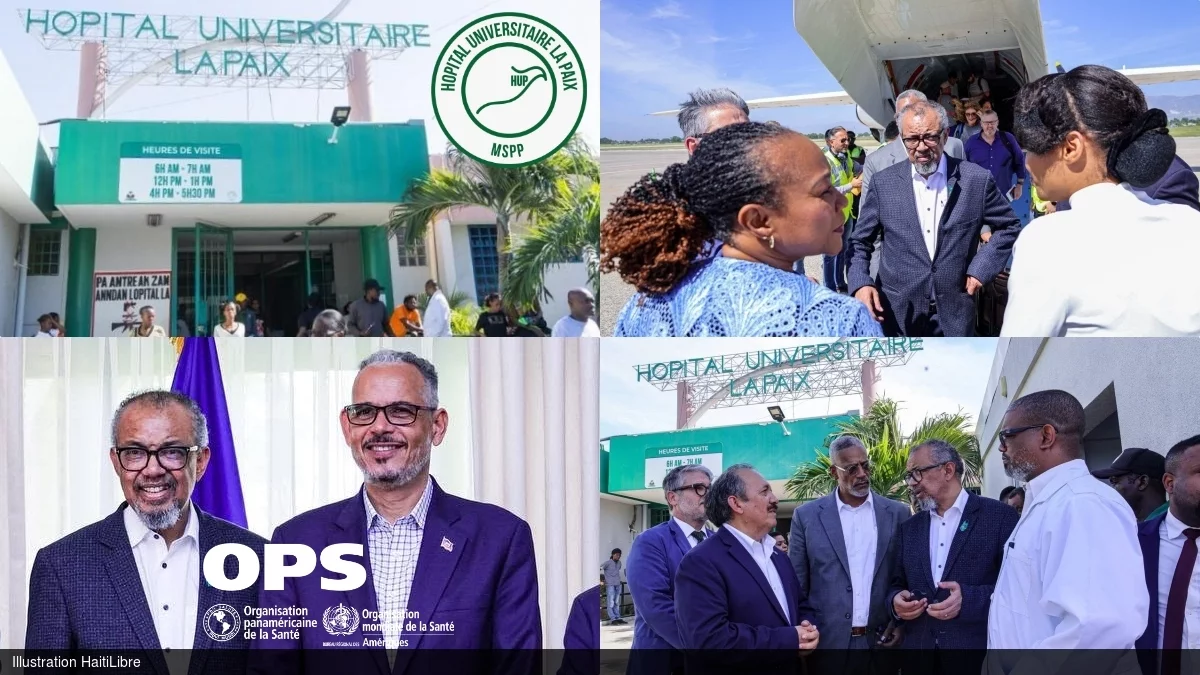
During an official diplomatic visit to Port-au-Prince on November 26, 2026, World Health Organization Director-General Dr. Tedros Adhanom Ghebreyesus unveiled a $1 million targeted grant earmarked for La Paix University Hospital (HUP), the Haitian capital’s sole remaining fully operational major public referral medical center. The designated funding will procure life-critical medical assets for the overstretched facility, including a high-resolution CT scanner and specialized equipment to launch multiple new fully functional operating rooms. The injection of resources arrives as Haiti’s national healthcare network faces near-catastrophic collapse: official data confirms 49.5% of all medical facilities in Port-au-Prince are completely non-operational, with only 12% retaining partial functionality, while nationwide across the 11-million-population Caribbean nation, 24.5% of health facilities have shuttered entirely and 48.5% operate with severely limited capacity. Widespread, persistent armed gang violence has gutted healthcare access across the country, triggering mass facility closures, mass civilian displacement, and cascading disruptions to pharmaceutical and medical supply chains that leave millions without access to basic care. “Haiti’s health system is buckling under an unprecedented flood of patients, including a surging volume of severe trauma cases linked to ongoing unrest,” Dr. Tedros stated following an on-site walkthrough of HUP. “I saw directly the crushing workload facing this hospital and its frontline staff, and I was deeply moved by the extraordinary resilience, bravery, and unwavering commitment of Haitian health workers who show up every day to save lives under nearly impossible conditions.” Dr. Tedros also reaffirmed that the new HUP grant forms a core component of a broader, long-term WHO and Pan American Health Organization (PAHO) commitment to the Haitian government and public, focused on expanding access to essential care, reinforcing the fragile national health system, and upgrading disease surveillance and rapid outbreak response capabilities. He emphasized that targeted international solidarity and sustained, multi-year support from global partners remains urgently needed to prevent a total collapse of care across the country. Since the start of 2026, HUP, with technical and logistical backing from PAHO/WHO, has treated more than 19,575 emergency department patients, including 291 survivors of gunshot wounds, performed 3,086 life-saving surgical interventions, and overseen 1,442 high-risk obstetric deliveries, cementing its status as the last critical care lifeline for Port-au-Prince residents with no alternative emergency care options. During his two-day official visit, Dr. Tedros held high-level bilateral meetings with Haitian Prime Minister Alix Didier Fils-Aimé and Minister of Public Health Dr. Bertrand Sinal to align on national health system strengthening priorities, and coordinated with on-the-ground United Nations operational partners to streamline cross-agency health response efforts. Over the past 24 months, PAHO acting as WHO’s official regional office for the Americas has mobilized more than $30 million in targeted funding for Haiti’s health response, a portfolio of support that has kept life-saving care running at priority medical facilities, cut cholera transmission rates dramatically, and preserved continuous access to essential health services for displaced and other highly vulnerable populations. In ongoing local operations, PAHO/WHO partners directly with Haitian national health authorities and civil society stakeholders to expand access to maternal and pediatric care, routine and emergency vaccination programs, targeted nutritional interventions, and mental health and psychosocial support services, with a particular focus on the hundreds of thousands of internally displaced Haitians. These immediate humanitarian efforts are paired with long-term strategic investments to reinforce primary care networks and build a more equitable, efficient, and resilient national health system capable of serving all Haitian residents.