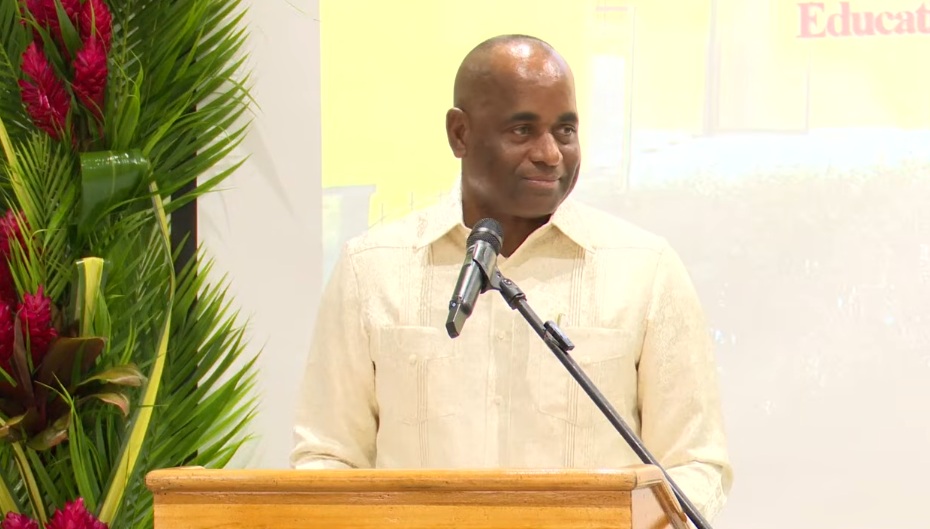
During the official launch of the China-funded Centre of Excellence located on the grounds of Goodwill Secondary School this week, Dominica’s Prime Minister Roosevelt Skerrit laid out a landmark education-focused policy agenda that the ruling Dominica Labour Party (DLP) will advance if returned to office in the upcoming national polls. Skerrit framed the newly inaugurated specialized training hub as the cornerstone of a broader national strategy to build a skilled local workforce capable of operating and sustaining the island’s pipeline of large-scale infrastructure investments, including the ongoing international airport development, coastal marina project, and planned mountain cable car tourism facility.
The prime minister emphasized that while successive DLP administrations have delivered tangible public works ranging from upgraded road networks to new public buildings, the long-term economic viability of those multi-million-dollar assets depends entirely on cultivating local talent rather than relying on external contractors for routine operations and maintenance. “We are making unprecedented public investments in transformative national infrastructure, but none of that investment delivers lasting returns if we do not have a skilled local workforce to keep those systems running efficiently,” Skerrit told attendees at the commissioning ceremony. “That is why technical and vocational training will be our top education priority in the next term of government – a term we are fully confident we will earn from the electorate – because specialized, in-demand skills are the most reliable path to high-wage employment and shared national prosperity for our young people.”
Skerrit also outlined a parallel push for a full, system-wide modernization of Dominica’s formal education framework, noting that the current structure was originally designed in the 1940s and is no longer fit for purpose amid the rise of artificial intelligence and universal, instant access to digital information. He noted that traditional education models centered on rote memorization of facts are now obsolete, as today’s students frequently arrive in classrooms with broader, more up-to-date factual knowledge than many of their instructors thanks to digital tools. Crucially, Skerrit clarified that the proposed sweeping reforms are not intended as a rebuke to the country’s dedicated teachers and education administrators, but as a necessary proactive adjustment to ensure Dominica’s youth are prepared to compete and thrive in a fast-evolving global economy.
PM Skerrit pledges major focus on technical and vocational education if reelected