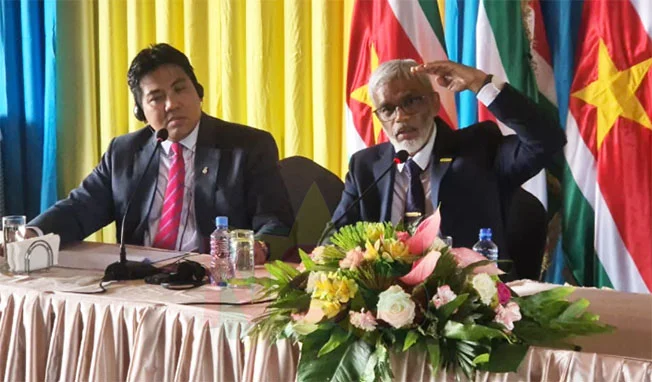
On November 27, officials from Suriname’s state-owned energy firm Staatsolie and Malaysia’s global energy giant PETRONAS laid out new details of their expanded offshore gas partnership during a press conference hosted at Suriname’s Presidential Palace. Staatsolie CEO Annand Jagesar announced that the consortium’s second offshore gas development could begin commercial operations just 12 months after the launch of its flagship KrakaWi project, which saw its Final Investment Decision (FID) formally confirmed the day prior. The second project is projected to hold twice the production scale of KrakaWi, with a targeted 2031 start-up if current development timelines stay on track. Unlike KrakaWi, which will leverage an existing floating LNG facility that makes redirecting gas to shore technically complex, the second project will integrate gas-to-shore transport infrastructure planning directly into its early design phases. Jagesar explained that Staatsolie has already completed multiple feasibility studies for onshore gas delivery networks, and is evaluating interim solutions to source temporary gas supplies to support domestic demand while a permanent national onshore pipeline is constructed. He noted that building and financing the pipeline is expected to take 2 to 3 years, requiring immediate initiation of preparatory work to avoid delays. Suriname’s President Jennifer Simons and Vice President Gregory Rusland, who opened the earlier segment of the press conference, reaffirmed that the gas-to-shore initiative is a core government priority, framing domestic natural gas access as a critical driver for reliable, affordable electricity to power national economic growth and unlock new industrialization opportunities. PETRONAS President and Group CEO Tengku Muhammad Taufik, who also attended the event, stated that Suriname has been designated one of the Malaysian firm’s new strategic core operating regions. The KrakaWi project’s repurposed floating LNG facility will have an annual production capacity of 1.5 million tons of liquefied natural gas, with long-term plans to expand total LNG output in Suriname to over 5 million tons per year, contingent on successful confirmation of additional recoverable gas reserves and positive commercial assessments of subsequent development phases. Taufik outlined that PETRONAS will pursue a phased development model for its Suriname portfolio, utilizing standardized engineering designs and long-term supplier contracts to mitigate cost overruns, which he identified as one of the most significant project risks amid ongoing geopolitical volatility and global supply chain disruptions that can inflate prices for materials, services and transportation. The decision to use a pre-existing floating LNG unit for KrakaWi is specifically intended to minimize these cost risks and keep the project on track for its 2030 production launch. No final investment decisions have been finalized for the second offshore gas project or the proposed national onshore gas pipeline to date.