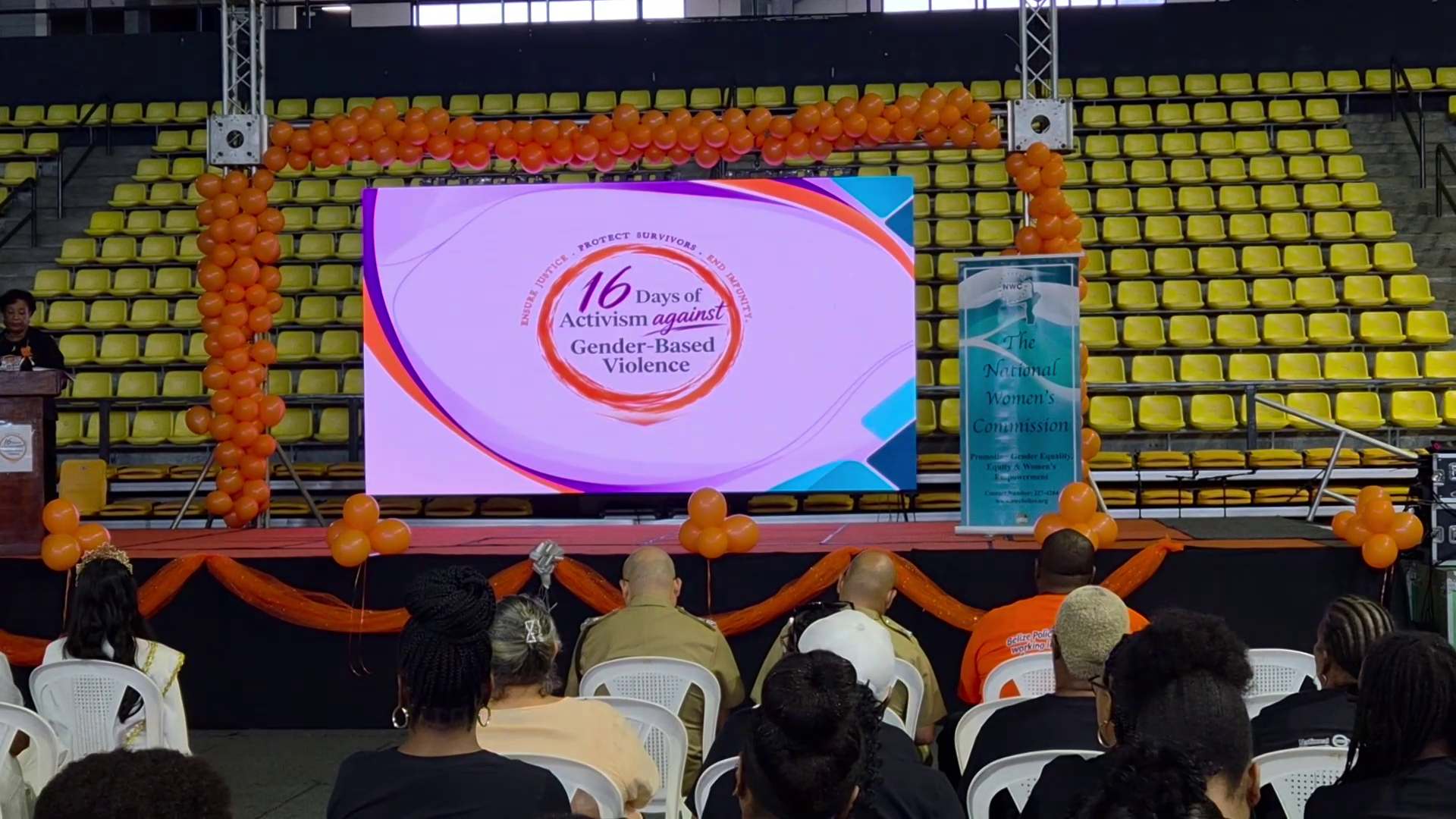
On November 25, 2026, Belize formally kicked off its annual 16 Days of Activism Against Gender-Based Violence, a global awareness and advocacy campaign that this year reframes longstanding public conversations about domestic and gendered harm by urging communities to stop centering the question of why abuse survivors remain in dangerous situations. For countless women and girls across the country, intimate partner and gender-based violence unfolds behind closed residential, workplace, and institutional doors, with many survivors facing overwhelming barriers to seeking safe, effective support. This year’s campaign places dual emphasis on centering survivor needs and driving full implementation of the 2024 Anti-Sexual Harassment Act, landmark legislation that codifies sexual harassment as a form of prohibited discrimination and assigns formal legal accountability to employers, school administrators, and institutional leaders to proactively prevent such harm. Margaret Nicholas, former Director of the Belize Family Court, outlined the cascading barriers that often deter survivors from leaving abusive environments: pervasive fear for their own safety and the well-being of their children, total financial dependence on their abusers, lack of alternative stable housing, and deep anxiety about facing blame, social rejection, or public embarrassment from their own family members and broader community networks. “Rather than fixating on why a survivor chooses to stay in a harmful situation, we should be asking ourselves what protections, resources, and accessible support services we as a society have put in place to help them move to safety,” Nicholas emphasized, noting that meaningful protection for survivors cannot be limited exclusively to formal courtroom proceedings. Jared Coleman, Programme Officer for Belize’s National Women’s Commission, clarified that the 2024 Anti-Sexual Harassment Act moves far beyond symbolic policy gestures, mandating that all workplaces, educational campuses, and public-facing institutions develop, widely communicate, and actively enforce clear anti-harassment frameworks rather than maintaining unimplemented policies for compliance sake. “This is no longer a voluntary, nice-to-have administrative step: it is a binding legal requirement that demands we build spaces where every person feels secure reporting harm, where complaints are investigated with due seriousness, and where every member of an organization understands exactly what safeguards exist to protect them from retaliation or further abuse,” Coleman explained, adding that the National Women’s Commission will run targeted outreach and training sessions across hundreds of Belizean institutions over the coming months to support full adherence to the new law. Dr. Richard Rosado, Belize’s Commissioner of Police, also affirmed law enforcement’s formal commitment to cross-sector collaboration to deliver survivor-centered support, noting that coordinated partnerships between police units, social service providers, and women’s advocacy groups will streamline access to justice for people who come forward to report gender-based harm. “Our message to every survivor is clear: the Belize Police Department and our cross-sector partners are fully resourced to walk alongside you through every step of the reporting and legal process, and to ensure you receive the full, fair justice you are entitled to,” Rosado stated. As the 16 Days of Activism campaign unfolds across the country, organizers are emphasizing that empty encouragement for survivors to “speak up” is insufficient: meaningful progress requires tangible, accessible protective services, fully enforced legal safeguards, and responsive institutional systems that meet survivors where they are.