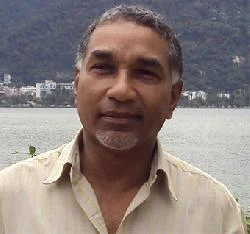
On November 25, analyst Jack Menke published a critical op-ed examining Suriname’s upcoming Final Investment Decision (FID) ceremony with Malaysian energy giant Petronas, scheduled for November 26, 2026, to mark the launch of the country’s large-scale offshore gas development project. The event comes on the heels of major offshore oil and gas discoveries by TotalEnergies and Petronas off Suriname’s coast, which have cast the small South American nation as a new global hotspot for expected multi-billion dollar fossil fuel revenues, drawing comparisons to the mythical colonial legend of El Dorado, the fabled city of untold golden wealth.
Yet Menke argues the Surinamese government is trapped in a precarious balancing act: while state leaders publicly celebrate the projected windfall from new hydrocarbon reserves, the country remains mired in a vicious cycle of polluting extractive industries, longstanding structural governance gaps, and fragile economic survival. Centuries of colonial-era obsession with gold extraction have been perpetuated in Suriname’s modern political ecosystem, and the new wave of oil and gas operations now adds another layer of high-carbon, ecologically damaging activity to the nation’s economic foundation. The string of massive offshore hydrocarbon discoveries across Guyana and Suriname has already reshaped geopolitical and corporate priorities across the Guiana Shield, the 2.7 million square kilometer transboundary ecological region spanning Suriname, Guyana, French Guiana, Brazil, Venezuela, and Colombia that was once the geographic heart of the El Dorado myth.
The Guiana Shield is globally renowned for its unparalleled biodiversity, home to rare medicinal plant species, vast intact tropical rainforests, rich mineral reserves, and massive untapped renewable energy potential, alongside extraordinary cultural diversity among its Indigenous and tribal communities. All shared natural resources across the six nations that make up the shield cross arbitrary national borders, and responsible, collaborative stewardship of these assets could deliver inclusive, long-term development without irreversible ecological harm.
Menke warns that Suriname, much like neighboring Guyana, has clung for decades to an overly narrow, extractive-dependent economic model that has stifled progress on sustainable education reform, domestic industrial growth, and agricultural diversification. Instead of doubling down on offshore oil and gas, the op-ed advocates for a comprehensive, cross-border development framework centered on the Arco Norte (Northern Arc) initiative, a proposed regional infrastructure network that would connect northern Brazil, Guyana, Suriname, and French Guiana via integrated transport links, river terminals, and Atlantic coast seaports clustered around key Amazonian hubs such as Belém. This network would unlock massive logistical advantages for regional trade, enabling efficient transport of forest products, soy, corn, and other bulk commodities from inland agricultural zones to global export markets via interconnected highways and inland waterways.
A core pillar of the proposed framework is the creation of a unified regional electricity market, with cross-border grid interconnections that would allow small nations including Suriname, Guyana, and French Guiana to share access to reliable, low-cost renewable power for mutual benefit. Key stated goals of this sustainable development model include universal access to clean, reliable electricity for all communities including remote inland Indigenous settlements, the expansion of formal economic opportunities under strictly enforced environmental protection regulations, and the formal recognition of tropical rainforests, biodiversity, and Indigenous community land rights as the foundational drivers of long-term shared prosperity.
The op-ed emphasizes that Suriname’s long-tested “grow now, distribute later” extractive economic model has never delivered broad public benefits, neither during centuries of colonial rule nor over the 51 years since the nation gained full independence. For generations, ordinary Surinamese citizens have seen almost no tangible gains from successive waves of natural resource extraction, as wealth flows almost exclusively to foreign multinational corporations and a tiny domestic elite, while the broader population and the nation’s natural ecosystems are left impoverished and degraded. This is the classic “resource curse” pattern that has trapped dozens of resource-rich developing nations for decades.
To break this cycle, Menke calls for a full institutional recovery program to reverse decades of erosion to national planning, education, and public development agencies that have deteriorated since independence. He also stresses that deep, formal political and economic cooperation across all Guiana Shield nations is non-negotiable to build a unified, sustainable development strategy that protects the region’s unique natural heritage, while also strengthening small states like Suriname to resist rising geopolitical pressure and threats to national sovereignty from major global powers. As a cautionary example, the op-ed cites the recently signed U.S. Aerial Interception Assistance Agreement, which grants U.S. authorities broad authority to monitor, track, identify, and intercept civilian aircraft operating in Surinamese airspace on suspicion of involvement in illicit drug trafficking, framing the deal as a clear sign of growing external encroachment on the nation’s sovereign decision-making.