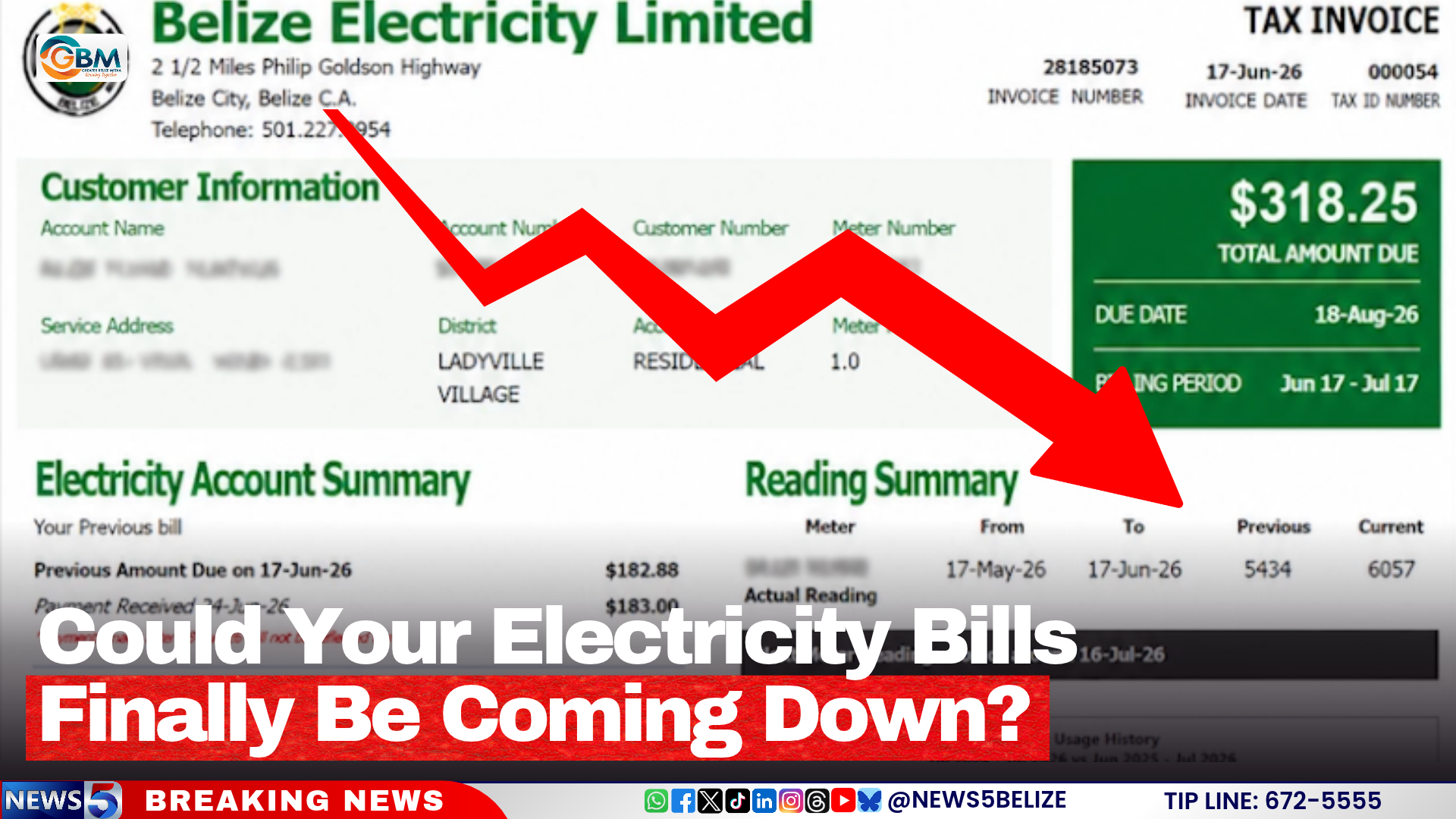
On November 25, 2026, Belize’s primary power utility Belize Electricity Limited (BEL) outlined a long-term strategic push to slash sky-high generation costs, with a core goal of transforming its existing Cost of Power Adjustment (COPA) mechanism from a surcharge into a credit that lowers household and business electricity bills for end users. The announcement comes as the utility grapples with a trio of interconnected financial and operational headwinds that have driven its operating expenses far beyond initial projections: overreliance on costly diesel-fueled generation, plummeting hydroelectric output following an unusually parched rainy season, and volatile, frequently overpriced power imports from Mexico’s state-run Federal Electricity Commission (CFE).
BEL Board Chairman Lynn Young laid out the severity of the current cost crunch during a recent briefing, noting that in September 2026 alone, the company’s total expenditure on power generation nearly matched the entire revenue it collected directly from ratepayers, leaving virtually no margin for operational investment. Young explained that CFE’s cross-border power supply terms have become increasingly unpredictable: during periods of peak domestic demand in Mexico, the national grid operator often either curtails exports to Belize entirely, or raises per-kilowatt-hour prices to as high as $2, a rate far beyond standard affordable thresholds for the Belizean market.
The utility is currently navigating a pending review by the Public Utilities Commission (PUC) over its formal request to double the existing COPA rate, a temporary measure it says is needed to partially offset unmanageable cost overruns that the current COPA framework was never designed to cover. The COPA mechanism was originally introduced as a pass-through adjustment to account for normal swings in global fuel and generation costs, but recent unprecedented price spikes have left the company unable to recoup even a fraction of its unplanned expenses through the existing structure.
Looking ahead, BEL is banking on two near-term and long-term solutions to ease the strain. In the immediate months, the utility expects cooler seasonal temperatures to reduce overall national electricity demand, cutting the need to activate its most expensive diesel generation units. Over the next 12 months, the company is prioritizing the rollout of new large-scale solar projects, which Young frames as the cornerstone of its plan to bring average generation costs down to the 20 to 25 cent per kilowatt-hour range. If that target is met, the COPA would flip from a surcharge added to customer bills to a negative adjustment that returns savings directly to households and businesses. Young emphasized that the company will assess the success of its cost-reduction roadmap by the end of 2027, but stressed that no concrete timeline for bill relief can be guaranteed, given ongoing volatility in regional energy markets and weather patterns.
Could Your Electricity Bills Finally Be Coming Down?