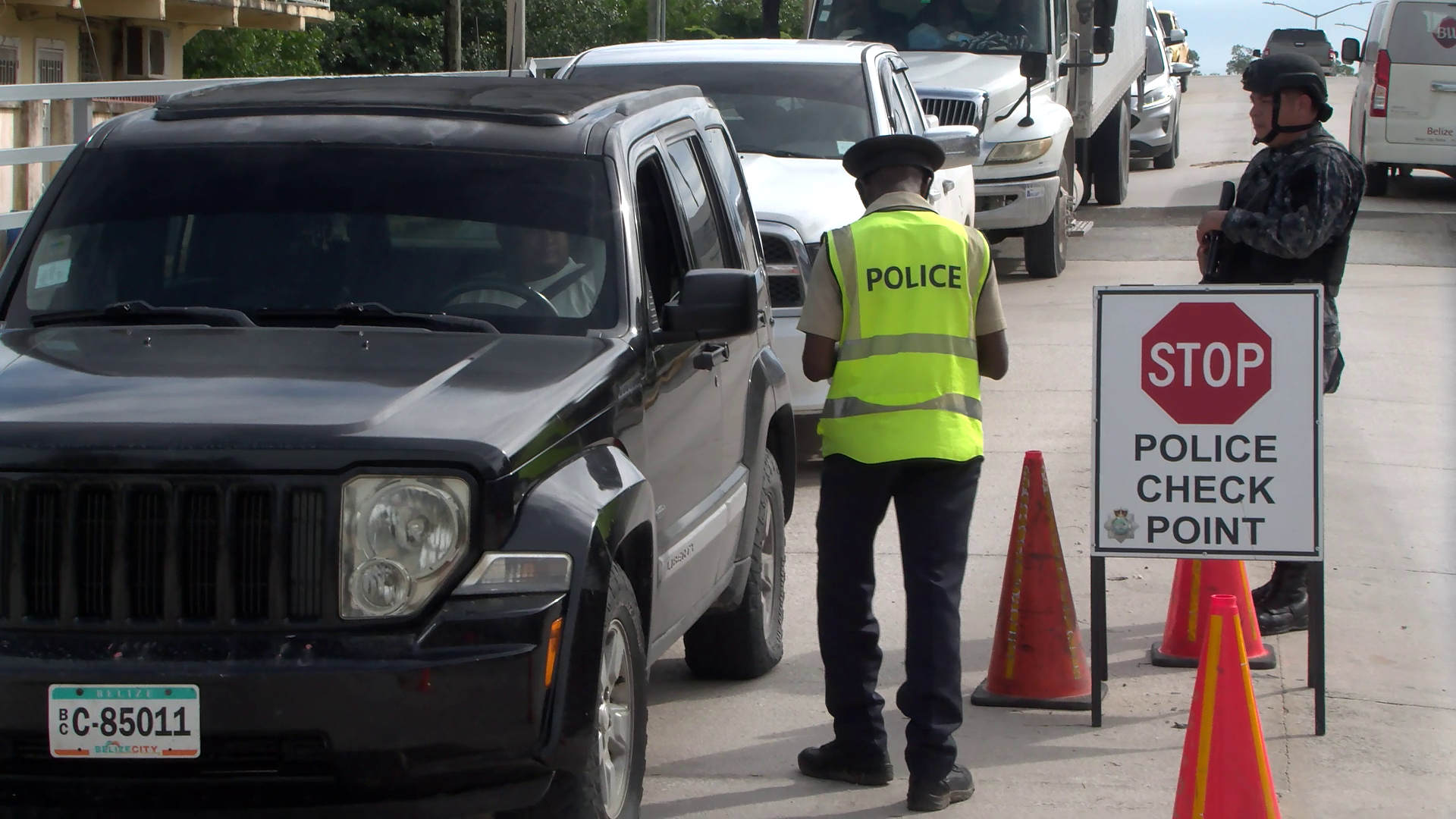
As of November 24, 2026, daily travel across Belize City has evolved into a growing trial of patience for thousands of local motorists, as widespread police checkpoints rolled out under the ongoing State of Emergency spark widespread public complaints over repeated stops, extended travel delays, and overzealous enforcement of minor traffic infractions. Law enforcement frames the expanded checkpoint network as a core component of a broader public security strategy designed to disrupt criminal movement and reduce unlawful activity across the urban area. But for many ordinary residents navigating daily commutes, routine trips that previously took minutes now stretch far longer, with checkpoints positioned at nearly every major arterial route from the Boulevard to Euphrates Street and Youth for the Future Drive, adding unnecessary fuel costs and logistical hurdles to everyday travel.
This simmering public tension boiled over into a high-profile altercation over the weekend at a Belama area checkpoint, involving on-duty customs guard Steve Arnold. According to Superintendent Stacy Smith, a senior staff officer with the Belize police department, Arnold is currently in custody, with authorities preparing formal charges for multiple traffic violations alongside a count of aggravated assault against responding officers. Despite the widely reported frustrations voiced by commuters, Superintendent Smith emphasized that the vast majority of motorists approached at checkpoints remain cooperative and understanding of the security measures, dismissing claims of widespread public hostility toward the expanded enforcement operations.
But the limited public goodwill toward the checkpoint program is set to face a far steeper test in just one week’s time, when the scheduled December 1 closure of both the BelCan Bridge and Swing Bridge goes into effect. The dual bridge shutdowns will drastically reduce the number of viable cross-city travel routes available to commuters, creating a perfect storm of traffic disruption that will trap drivers between the slowdowns caused by police checkpoints and the limited detour options created by the closed infrastructure. For long-time Belize City resident Brian “Yellowman” Audinett, the cumulative burden of overlapping disruptions is already untenable: he notes that the constant string of checkpoints is wasting ordinary people’s gasoline at every turn, with no end in sight to the repeated stops that now define every trip across the city. As local authorities weigh the public safety benefits of the State of Emergency security measures against the growing quality of life impacts on ordinary residents, the central question for commuters remains just how much additional inconvenience they will be expected to tolerate before the temporary security measures begin to feel permanent.