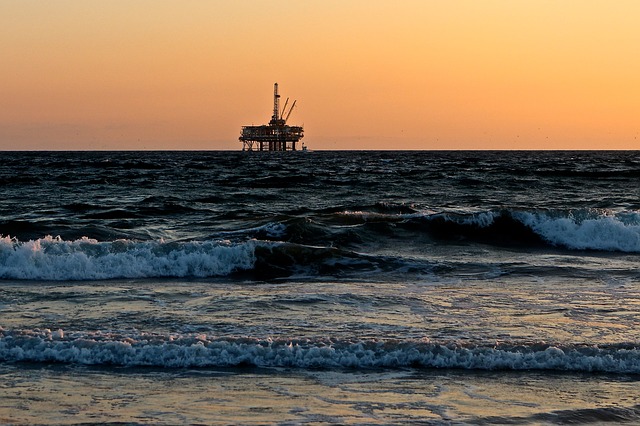
Following the re-election of Prime Minister Dickon Mitchell’s National Democratic Congress administration, Grenada has kicked off a sweeping overhaul of its nascent hydrocarbon sector, starting with the formal establishment of a dedicated Ministry for Petroleum and Hydrocarbons and the August 2026 termination of a long-dormant Production Sharing Agreement and Development Licence held by Global Petroleum Group (GPG).
The 18-year-old partnership with GPG was scrapped after a regulatory review confirmed the firm had failed to meet mandatory minimum work commitments, submitted no feasible commercial development roadmaps, and lacked sufficient funding to advance offshore exploration, despite nearly two decades of operating tenure that yielded zero commercial hydrocarbon output. The review that paved the way for the termination was led by the Hydrocarbons Technical Working Group, a cross-sector panel of experts convened by Grenada’s Cabinet in October 2023 to map the country’s full offshore resource potential and design frameworks to ensure any future extraction delivers maximum public benefit.
Heading the new ministry is Claudette Joseph, who doubles as the nation’s former Attorney General, bringing deep legal expertise to the table as she leads the foundational buildout of the new agency. In a recent appearance on the NDC Heartbeat weekly broadcast, Joseph outlined her immediate action items: securing dedicated office premises, finalizing the ministry’s organizational hierarchy, recruiting specialized technical and administrative staff, and holding ongoing consultations with the Technical Working Group chair to co-design a long-term, sustainable roadmap for the island’s energy and hydrocarbon sectors.
Joseph emphasized that comprehensive legislative reform will be a top early priority, leveraging her background in legal governance to update outdated regulatory codes that will enable rigorous, transparent oversight of all future hydrocarbon exploration and production activities. A core guiding principle for the new framework, she noted, is avoiding the so-called “resource curse” that has left large populations impoverished in many oil-rich nations, where natural resource wealth is concentrated in small elite groups rather than shared broadly across the public. To achieve this, the ministry will conduct a deep dive into proven global resource management models that embed equitable wealth distribution mechanisms into national policy.
Sector experts have cautioned that the full timeline to bring any viable commercial hydrocarbon reserves online is projected to take 8 to 10 years, a window the government intends to use not just to build out hydrocarbon-specific governance, but to advance broader national energy diversification strategies. The administration has stressed that it will not tie Grenada’s entire energy future exclusively to oil and gas development, using the interim years to upskill local technical talent, expand renewable energy deployment, and build a resilient, balanced national energy mix.
Ministry leadership has also clarified that its performance metrics will not be limited to whether commercial oil and gas reserves are ultimately discovered. Success will instead be measured by the strength of the governance systems it builds, the rigor of its responsible environmental and resource management protocols, and the extent to which the sector’s eventual gains drive inclusive, long-term sustainable development for all Grenadian residents.
Grenada lays groundwork for long-term hydrocarbon development