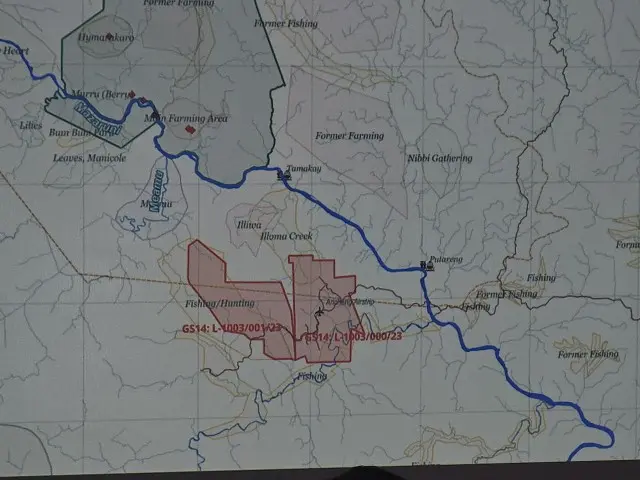
On November 23, 2026, a packed public hearing hosted by Guyana’s Environmental Assessment Board (EAB) at Georgetown’s Cara Lodge saw Indigenous community representatives, human rights lawyers, and environmental activists launch coordinated appeals against a uranium exploration permit awarded to Lia Guyana Inc, a local subsidiary of Canadian mining firm U92 Energy Corporation. The contested permit would authorize the drilling of 55 to 65 boreholes across 5,000 metres of terrain in Region 7’s Kurupung area over a three-year operational window. The core of the dispute centers on the Environmental Protection Agency (EPA)’s August 26, 2026, decision to waive the mandatory full Environmental and Social Impact Assessment (ESIA) requirement for the project, a move critics say bypasses legal safeguards, violates Indigenous land rights, and exposes vulnerable communities to unquantified radiation and water contamination risks. Led by appellants Greenheart Movement, local activist Danuta Radzik, and the Isseneru Village Group, the coalition of opponents argued that the EPA’s exemption ruling was legally flawed, procedurally opaque, and dismissive of longstanding community concerns. Laura George of the Greenheart Movement emphasized that the Kurupung concession overlaps culturally sacred Indigenous lands and critical hunting and fishing grounds already burdened with mercury pollution from decades of unregulated artisanal gold mining. She noted that the submitted Environmental Management Plan (EMP) was drafted in the absence of baseline ESIA data, effectively putting regulatory safeguards before any rigorous assessment of potential harm. Danuta Radzik further pointed out that the EMP was never publicly posted to the EPA website, nor distributed to affected communities for independent scrutiny, making it impossible to verify whether the document’s proposed containment and radiation safety measures were technically feasible. Jamaican human rights lawyer Malene Alleyne, representing the appellant groups, laid out a detailed legal case arguing the EPA had violated multiple statutory obligations under Guyana’s Environmental Protection Act. She highlighted that the agency had unlawfully lowered the legal threshold for exemptions, waiving ESIA requirements by claiming the project was “not likely” to cause significant environmental harm, even though national law mandates a full ESIA for any activity that “may” carry significant environmental risks. She also noted the EPA’s refusal to release full project documentation to communities breached the Escazu Agreement, a regional environmental transparency treaty Guyana has formally ratified. Isseneru Village Toshao Ivor Courtman, representing the Akawaio community of the middle Mazaruni River, testified that the proposed drill sites sit adjacent to community farm plots and shared fishing grounds, with runoff from the site capable of contaminating downstream waterways that stretch hundreds of kilometers to populated coastal areas. He warned that unregulated uranium exploration could deplete critical drinking water supplies, destroy fish habitats, and expose residents to radiological and chemical hazards, in addition to disrupting culturally sensitive sacred sites. In defense of its ruling, EPA officials argued the project posed minimal, short-term, localized risks, citing International Atomic Energy Agency (IAEA) guidance that does not mandate blanket ESIA requirements for early-stage uranium exploration. They noted the expected ore grade at the site is just 0.07%, with no plans for chemical leaching or full-scale processing that would generate large volumes of radioactive mill tailings. EPA representatives outlined a suite of proposed safeguards, including restricted site access, mandatory worker radiation monitoring, wet cutting of rock samples to prevent airborne dust, 75-80% recycling of drilling wastewater, and sealed transport of core samples to accredited labs in maximum 5kg shipments. U92 Energy CEO Adam Clode repeatedly evaded direct questions from hearing attendees over whether his company would voluntarily commission a full ESIA, stating only that the firm would comply with any request from regulators, a response that drew audible criticism from assembled community members. He did share that over 58,000 background radiation readings taken across the concession showed 99.4% of levels fell below standard global natural background radiation thresholds. Former Kako Toshao Mario Hastings, Vice President of the Amerindian People’s Association, delivered a sharp rebuke of the regulatory process, noting that contamination from the site would flow downstream via the Mazaruni River all the way to coastal Guyana, putting far more than just local Indigenous communities at risk. The three-person EAB panel, composed of Guyana Energy Agency Head Dr Mahender Sharma, Ministry of Natural Resources Permanent Secretary Joslyn Mc Kenzie, and Chief Hydrometeorological Officer Dr Garvin Cummings, has not yet issued a ruling on the three pending appeals.
Revoke uranium exploration permit and conduct environmental assessment- Amerindians, civil society activists