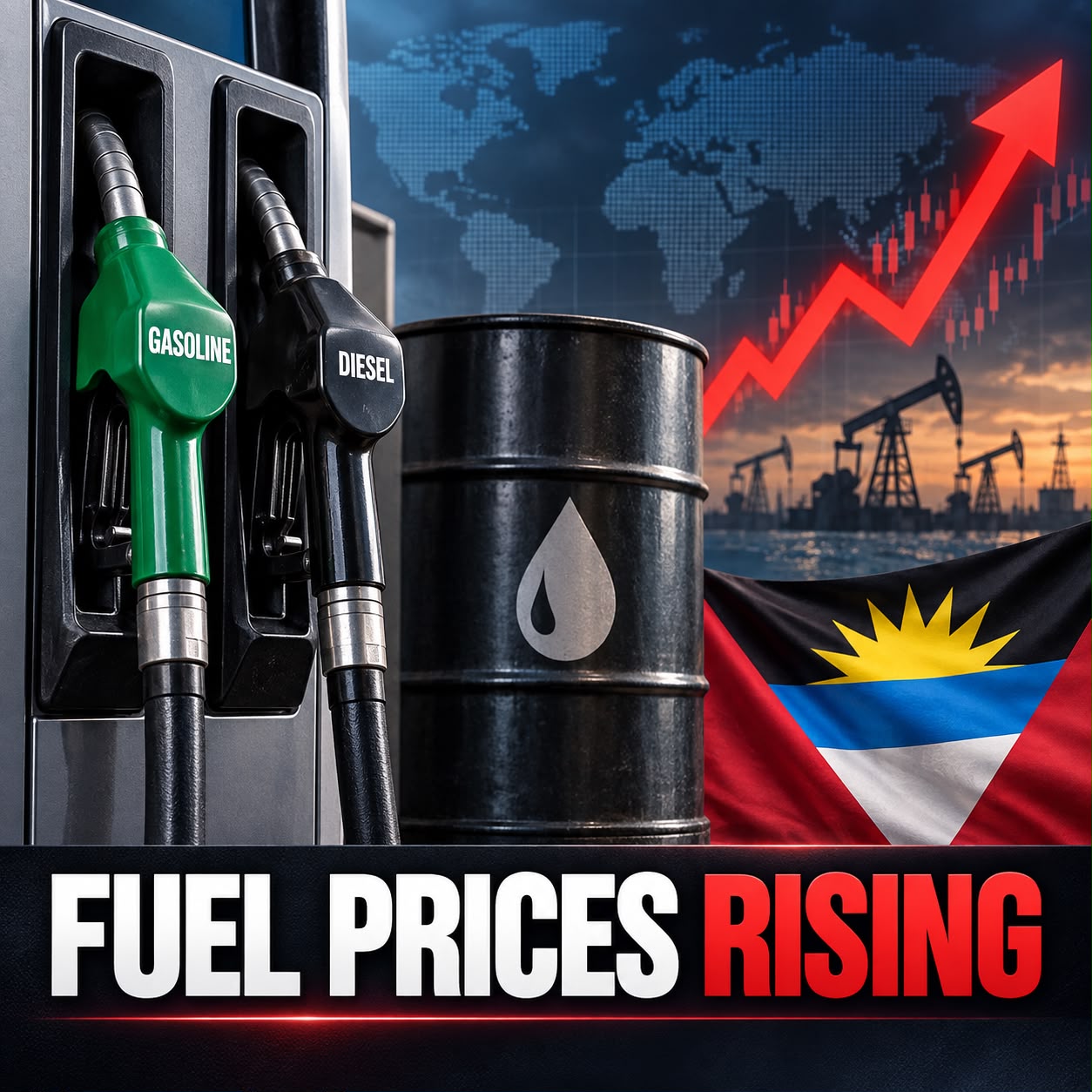
Newly released official data from Antigua and Barbuda’s National Bureau of Statistics, published on Monday, reveals that the country’s transport price index has skyrocketed 19.7% in the 12-month period ending October 2026, marking a nearly one-fifth jump in household and commercial transport expenditures that is rippling through every segment of the island nation’s economy. The granular Consumer Price Index (CPI) breakdown shows broad-based cost hikes across all transport-related categories: personal vehicle operating expenses climbed 11.7% year-over-year, new and used vehicle purchase costs rose 6.2%, and the broader passenger transport services index surged a dramatic 41.6%, with skyrocketing air travel fares singled out as a top contributor to headline national inflation. The steep upward trajectory accelerated sharply in the single month of October 2026 alone, with the overall transport index posting a 3.1% month-over-month gain from September. This latest spike is driven largely by runaway fossil fuel prices: retail gasoline costs jumped from $16.50 per gallon in September to $17.99 in October, a $1.49 increase, while diesel prices saw an even more drastic $4.58 leap from $14.25 to $18.83 over the same four-week window. The mandatory fuel variation levy also rose 8 cents to 88 cents in October, pushing the broader national energy index up 9.7% in a single month. For ordinary Antiguan and Barbudan households, where transport makes up 15.11% of the weighted CPI expenditure basket, these increases are eating deep into disposable incomes: daily commuters, parents running school drop-off and pick-up routes, and small business owners relying on personal vehicles for work are being forced to allocate larger shares of their earnings to essential travel costs. The strain is even more acute for commercial operators, including delivery fleets, distribution companies, and small transport service providers whose entire business models are dependent on affordable road fuel. The alarming new inflation figures land as the Gaston Browne administration navigates mounting demands from transport sector stakeholders for targeted financial relief. Earlier this month, the Cabinet signed off in principle on a 75-cent per trip public bus fare hike scheduled to take effect in January 2027, following closed-door negotiations with the Antigua and Barbuda Bus Association, paired with a $6 per gallon direct fuel subsidy for licensed bus operators. If implemented, the fare increase will add a noticeable burden to low-income commuters who rely exclusively on public transit: a worker making two bus trips per day will see their daily travel costs rise by $1.50, adding up to $7.50 extra per standard five-day workweek, or roughly $30 over a 20-workday four-week period, with even steeper costs for multi-route commuters and six-day-a-week workers. Parallel to the bus sector talks, private gas station operators have submitted formal requests for targeted financial adjustments to offset their own surging operating costs, a demand that Prime Minister Gaston Browne addressed publicly during a recent appearance on the *Browne and Browne Show* over the weekend. The prime minister confirmed he has directed Ministry of Finance officials to open urgent negotiations with fuel retailers and complete all required fiscal analysis as quickly as possible to avoid potential supply disruptions, though he did not disclose a proposed adjustment amount or formal implementation timeline for any support package for service station owners. The policy deliberations unfold against the backdrop of government data showing that the state spent more than $100 million on petroleum product subsidies over the past 12 months to cushion consumers from global fuel market volatility. The latest CPI data confirms that transport, electricity, and communication combined account for 49.3% of the country’s current inflation trajectory, driving headline annual inflation to 8.6% in October 2026, a sharp jump from 7% recorded in September and 5.5% in August. While annual food prices dipped 1.7% over the 12-month window, the steep cost hikes in transport, utilities, housing, and communications have pushed the overall cost of living steadily higher, with the full CPI rising 1.1% between September and October alone. All of these fiscal pressures are set to take center stage during the government’s upcoming December budget address, where policymakers are expected to finalize long-term decisions on fuel subsidy frameworks, public transit pricing, and targeted cost-of-living relief measures for households. As of press time, neither the proposed January 2027 bus fare increase nor the planned support package for fuel retailers has received final formal approval, but the pre-existing 19.7% annual surge in transport costs has already placed significant, sustained financial strain on residents across the twin-island nation, long before any planned policy changes take effect.