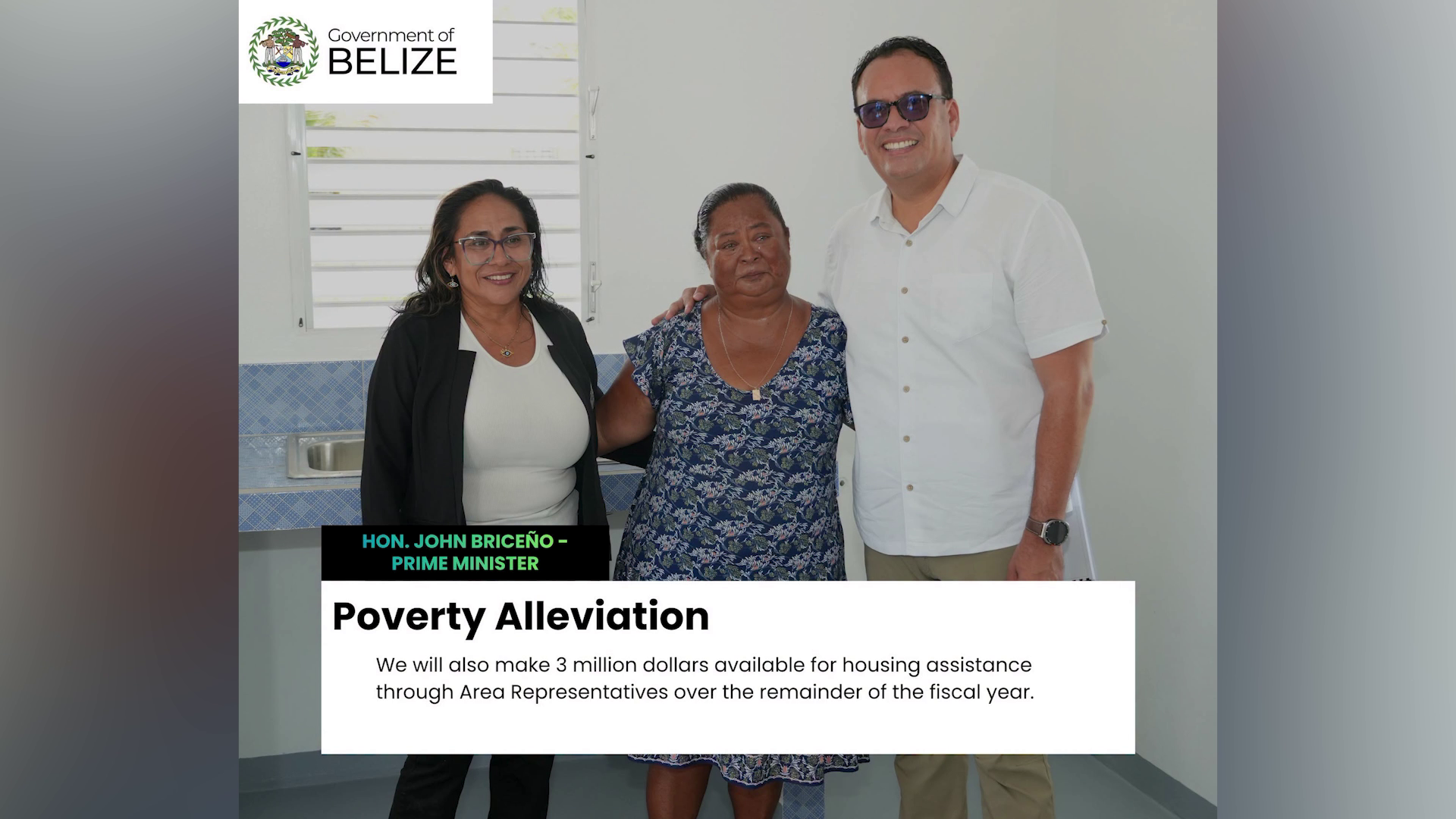
On November 23, 2026, Belizean Prime Minister John Briceño publicly addressed widespread public and stakeholder concerns over the government’s newly launched $3 million targeted housing assistance program, which places direct distribution authority in the hands of elected area representatives across all constituencies. The policy has sparked a wave of public scrutiny in recent weeks, with critics raising three core sets of objections: fears that elected officials could weaponize the funding for partisan political gain, concerns that the framework concentrates excessive unaccountable power in individual area representatives, and longstanding public anxieties over potential corruption and clientelism that could divert support away from the country’s most vulnerable households.
During an official press briefing, Prime Minister Briceño pushed back against these criticisms, arguing that elected area representatives are uniquely positioned to identify residents in urgent need of small-scale housing support, as they maintain consistent, on-the-ground engagement with their constituents far more frequently than distant civil servants in central government ministries. “The representatives who walk their divisions daily, meet voters at community events, and hear their struggles firsthand know exactly which households are falling through the cracks,” Briceño stated. He emphasized that the program is designed to include representatives from both the ruling party and the opposition, eliminating partisan exclusion of any constituency.
Briceño clarified that the fund is not allocated for full home construction or major structural renovations, but rather to cover small, high-impact household repairs: fixing broken windows, unclogging critical drainage systems, applying protective exterior paint, and addressing other minor maintenance needs that low-income families cannot afford on their own. To guard against misuse, the Prime Minister outlined strict accountability rules modeled after the existing successful Constituency Development Fund (CDF) framework: every area representative is required to submit full, verifiable receipts for all expenditures each month, and no additional funding will be disbursed the following month until all prior spending is fully documented and audited. “Transparency is non-negotiable here,” Briceño noted. “We are building a system that delivers small, timely support to the people who need it most, with zero room for unaccountable spending.”
The announcement follows weeks of public debate over the best delivery model for targeted social support, with advocacy groups calling for stronger independent oversight to complement the government’s proposed receipt-tracking measures. This news segment is a transcribed version of the outlet’s November 23 evening television newscast, with Kriol language segments transcribed using a standardized official spelling system for accessibility.