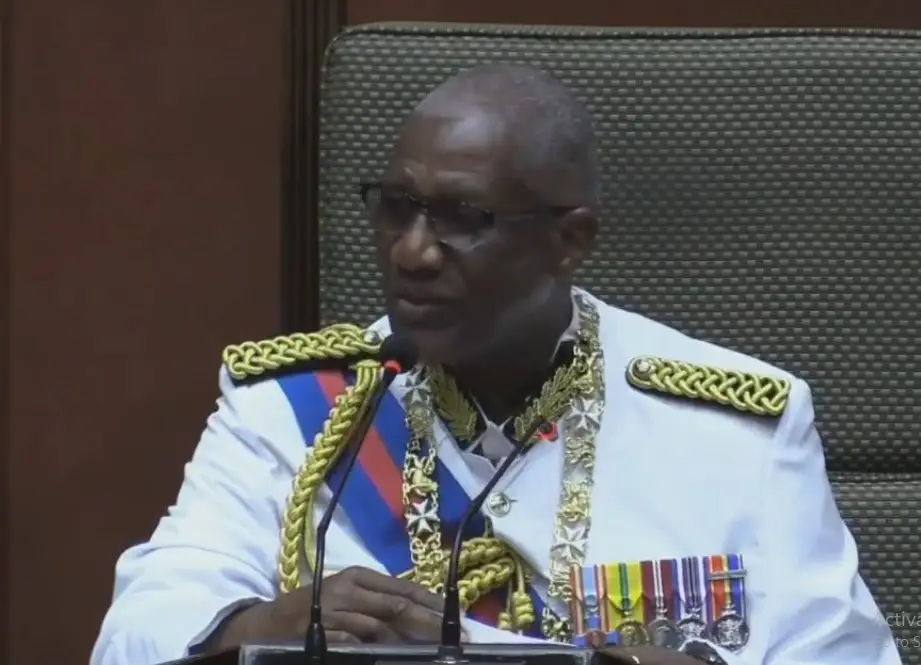
Following a formal preliminary budget review delivered by Ministry of Finance senior officials to the national Cabinet on Wednesday, November 18, Antigua and Barbuda’s government has locked in two key parliamentary dates to roll out its 2027 governing and fiscal agenda. First, the Governor General will deliver the annual Throne Speech on December 4, a traditional address that lays out the full slate of the administration’s legislative roadmap and policy priorities for the coming 12 months. Exactly one week later, on December 11, Prime Minister Gaston Browne — who also serves as the country’s Finance Minister — will table the highly anticipated 2027 National Budget before Parliament. In a landmark pre-budget commitment, Prime Minister Browne has explicitly confirmed that no new tax measures will be included in the upcoming fiscal plan, even as the administration ramps up efforts to boost revenue streams and uphold strict fiscal responsibility benchmarks. Preliminary fiscal projections shared during the November 18 Cabinet briefing show total 2027 government revenue is forecast to land in the range of Eastern Caribbean (EC) $1.4 billion to EC $1.5 billion. Finance Ministry analysts noted that revenue performance is on track to at least match the 2026 fiscal year’s strong results, with upside potential to exceed that benchmark via targeted efforts to close tax compliance gaps and deploy more robust, efficient collection protocols. The administration has reaffirmed its unwavering commitment to hitting a fiscal surplus in 2027, while fully adhering to all performance targets laid out in its official Fiscal Resilience Guidelines. While final line-item budget figures are still being refined, preliminary spending allocations for all government ministries and public departments have already been drafted, and received positive feedback from respective agency leadership during the Cabinet review. To preserve public financial stability, the government is set to keep the vast majority of recurrent, day-to-day operational spending nearly identical to 2026 levels. The only notable deviation to this restrained spending framework will be a targeted rise in capital expenditure, earmarked to advance a pipeline of high-priority national development projects backed by international development partners. Key initiatives in this pipeline include education infrastructure upgrades funded by the Saudi Fund for Development, covering expansion works at the University of the West Indies Five Islands Campus and the adjacent Five Islands Primary School, alongside additional investments in education and national road network upgrades financed by the Caribbean Development Bank. Finance officials emphasized that this calculated uptick in capital investment is critical to modernizing critical public infrastructure, expanding access to high-quality public services, and sustaining inclusive long-term economic growth, while the administration will maintain a careful balance between development spending and its core commitment to prudent, responsible public financial management. The full Cabinet formally endorsed the preliminary fiscal projections, praising the Finance Ministry’s consistent focus on three core pillars: strengthening revenue collection frameworks, keeping non-essential operating spending in check, and directing limited public resources toward high-impact national development priorities. The Ministry of Finance is on track to finalize all detailed budget documents in the lead-up to the December 11 parliamentary sitting, where Prime Minister Browne will present a full, line-by-line breakdown of the administration’s 2027 fiscal plans for legislative review and public transparency.
Governor General Sir Rodney Williams to Deliver Throne Speech on December 4