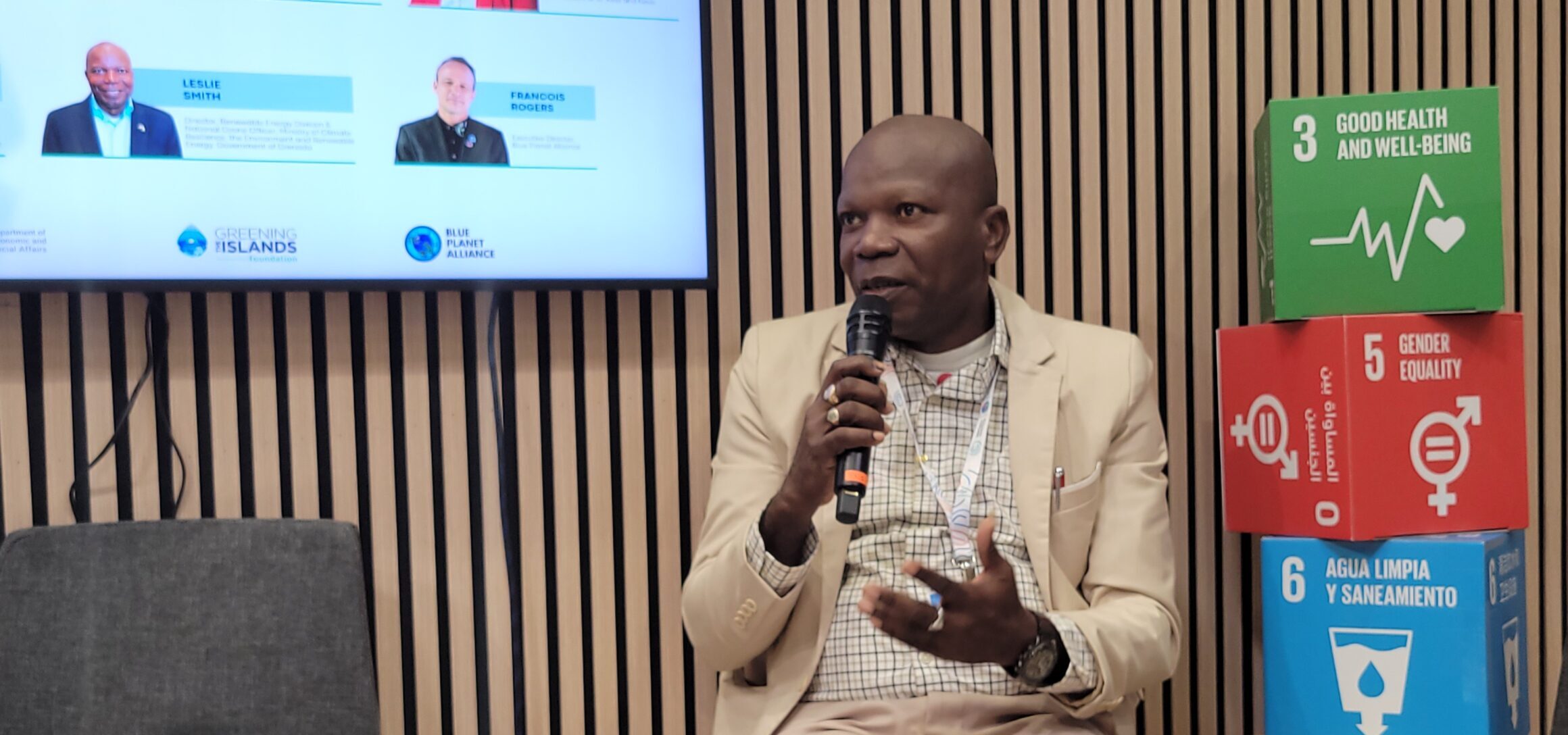
At the 31st UN Framework Convention on Climate Change (COP31) held in Antalya, Türkiye, the Caribbean island nation of Grenada has doubled down on its landmark national goal of operating entirely on renewable energy by 2035, while publicly declaring its intention to formalize membership in the newly launched Global Electrification Pledge — 35 by 35. The high-level panel where the announcement was made, themed “Island Blueprints for 100% Renewable Energy,” was co-hosted by the Greening the Islands Foundation, the Government of St Kitts and Nevis, the United Nations Department of Economic and Social Affairs (UN DESA), and the Blue Planet Alliance. The convening drew cross-sector delegates from island administrations, global intergovernmental bodies, and development partners spanning the Caribbean, Pacific, and Gulf of Guinea regions, all gathered to map actionable, context-specific pathways for small island developing states to fully phase out fossil fuel dependence in their energy systems. Representing Grenada’s Ministry of Climate Resilience, Leslie Smith, the country’s Director of Renewable Energy, walked attendees through Grenada’s existing portfolio of clean energy projects and the overarching strategic roadmap designed to build a low-carbon, climate-resilient, and energy-independent national economy. Smith clarified that the 2035 100% renewable target is not a voluntary, unenforced ambition: it is legally and strategically anchored in Grenada’s official National Energy Policy 2023–2035, backed by a pipeline of active and upcoming initiatives. These projects include scaling up utility-scale solar photovoltaic installations, rolling out grid-connected battery energy storage systems, expanding residential and commercial distributed renewable energy setups, rolling out cross-sector energy efficiency upgrades, and systematically electrifying high-emission core economic sectors. Smith stressed that a just, complete energy transition cannot stop at decarbonizing power generation alone, highlighting ongoing national work to ramp up electrification in the transportation space, including the rollout of electric mobility infrastructure and pilot programs for electric marine vessels, alongside the drafting and implementation of binding supporting legislation and regulatory policies. The most high-profile announcement from Grenada’s delegation at the panel was its formal expression of interest to sign the Global Electrification Pledge — 35 by 35, a COP31-led global initiative designed to speed up widespread, equitable electrification across all economic sectors. Smith noted that the pledge offers Grenada a structured platform to align its domestic electrification goals with global collective action to build fully electrified, low-carbon national economies, adding that meaningful, long-lasting electrification progress must be paired with expanded renewable energy generation capacity, grid modernization upgrades, robust energy storage deployment, adaptive regulatory frameworks, and targeted investment in supporting public infrastructure. Grenada’s decision to pursue membership in the pledge reflects a deliberate policy recognition that a full shift to 100% renewable energy requires coordinated, system-wide action that addresses both energy supply upgrades and demand-side efficiency and electrification measures. Smith also publicly welcomed a proposed Memorandum of Understanding (MOU) with the Greening the Islands Foundation, which is currently under official review by the Grenadian government. If finalized, the partnership will create a formal framework for expanded technical assistance, peer-to-peer knowledge sharing with other island nations, joint identification of viable clean energy investment opportunities, and co-development of practical, locally tailored solutions to cut timelines for Grenada’s full renewable energy transition.