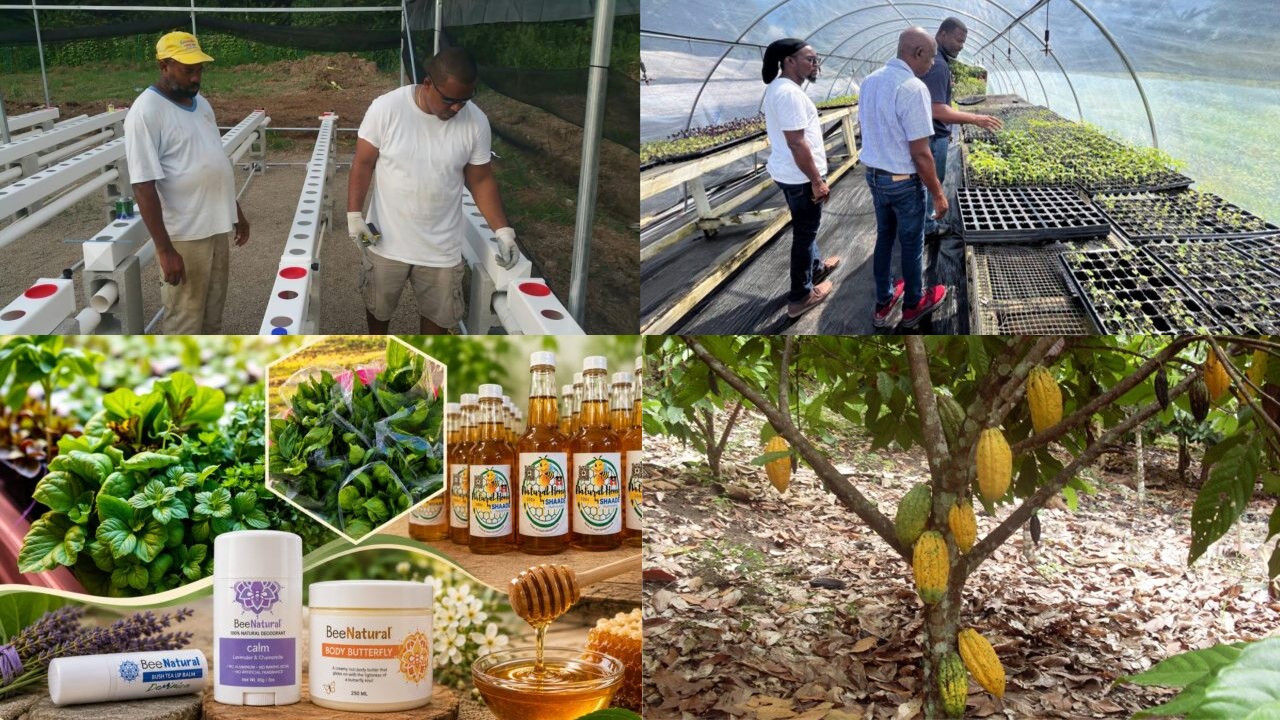
A landmark regional partnership is poised to deliver tangible economic gains for Dominica’s agricultural sector, as targeted support arrives to elevate local commodity competitiveness and open untapped regional and international market pathways for homegrown farm and food products. Led by the Organisation of Eastern Caribbean States (OECS) Commission, in collaboration with a specialized independent consulting firm, a high-level assessment delegation will arrive on the Caribbean island on November 19, 2026, for a two-day on-the-ground fact-finding mission designed to map high-potential market opportunities for Dominican agricultural goods. The field research will systematically evaluate the commercial viability of pre-selected local commodities, while co-developing actionable frameworks to scale up production capacity, expand value-addition processing, and unlock new cross-border export channels. As part of a harmonized regional assessment covering all OECS member states, the study will first compile and rank high-performing agricultural value chains across the bloc, with the top three highest-potential sectors in each individual country selected for in-depth, granular evaluation. These targeted deep dives will include rigorous audits of adherence to Good Agricultural Practices (GAP), and provide data-backed guidance to draft tailored production expansion roadmaps and targeted marketing strategies that align with global food safety and quality standards. The entire regional initiative is financially backed by the European Commission via its EuropeAid development funding stream, and operates under the broader umbrella of the OECS Regional Agricultural Competitiveness Project. The overarching mandate of the parent program is to expand equitable market access and drive revenue growth for small-scale competitive farmers and fishers across the Eastern Caribbean, by delivering customized business development advisory support and targeted complementary grant funding to reduce operational barriers. During their two-day visit to Dominica, the delegation will tour a curated portfolio of leading local agricultural and agro-processing facilities, to gain first-hand insight into current operational capacities and unmet needs. Planned stops include state-of-the-art hydroponic and greenhouse production sites in Les Pointe, Massacre; Bee Natural’s specialized honey production and value-added byproduct operation in Grande Savanne, Salisbury; CocoListo’s innovative instant cocoa processing plant in Dublanc; and the diversified mixed farming enterprise run by local producer Whitnel Louis in Syndicate. Additional scheduled visits cover the DEXIA Pack House, the One Mile Agriculture Station and Tissue Culture Facility in Portsmouth, and the small-batch artisanal chocolate factory in Calibishie. Dominican government officials from the Ministry of Agriculture, Fisheries, Blue and Green Economy have already flagged cocoa beans — the country’s top performing agri-food export to date — as a top-priority value chain for accelerated development under this initiative. Ministry leadership frames the regional program as a strategic chance to build on Dominica’s existing agricultural strengths, while pinpointing high-return untapped sectors to attract new investment and reduce the country’s historic reliance on a small handful of export commodities. Sector stakeholders widely acknowledge that scaling export-focused production, upgrading local food processing infrastructure, and forging stronger formalized links with regional and global buyers are non-negotiable steps to raise the agriculture sector’s overall contribution to Dominica’s gross domestic product. To deliver on these goals, the Ministry is calling for sustained, coordinated collaboration between smallholder farmers, fisherfolk, agro-processing operators, private sector investors, and regional institutional partners, as the country works to build a more competitive, climate-resilient, and commercially self-sustaining agricultural industry for long-term economic stability.
OECS initiative to explore new market opportunities for Dominica’s agricultural products