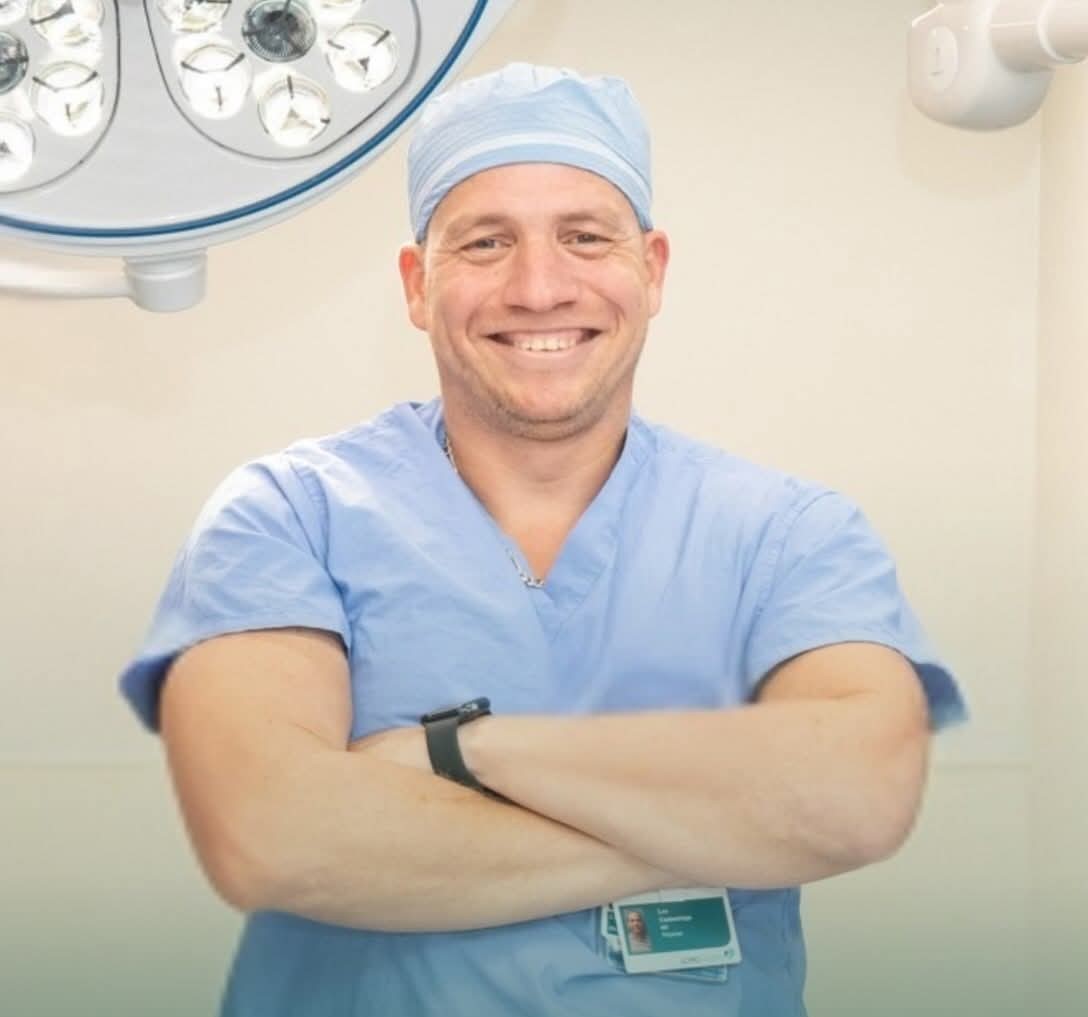
A trailblazing Vincentian surgical oncologist has etched his name in global medical history by spearheading the first documented robotic Whipple procedure ever performed on the African continent, a groundbreaking intervention that promises to redefine standards of complex pancreatic cancer care across the region.
Dr. Lee Cummings, a widely respected surgeon based in New Orleans, shared details of the landmark operation during a Tuesday appearance on the FOX 8 Morning Edition broadcast. The historic procedure took place on August 21, 2026, at Nisa Premier Hospital in Abuja, Nigeria, delivered in partnership with medical technology firm RoboMed Global using the Toumai Pro Robotic Surgical System — the first robotic surgical platform to receive formal regulatory approval from Nigerian health authorities. Local Nigerian outlet Vanguard framed the achievement as a transformative leap forward for access to advanced, minimally invasive cancer treatment across Africa, where complex hepatobiliary surgical capabilities have long been limited.
Cummings did not lead the high-stakes operation alone: his core team included Professor Obi Ekwenna, co-founder and CEO of RoboMed Global and a tenured associate professor of urology and transplantation based in the United States; Robert Amajoyi, RoboMed Global’s chief academic officer and a practicing colorectal surgeon; and surgical specialist Ann Olute. The milestone adds another prestigious entry to Cummings’ already decorated career: back in 2020, he performed the first robotic Whipple procedure ever completed in Kansas City at the city’s Saint Luke’s Hospital.
Born and raised in St. Vincent and the Grenadines, Cummings laid the groundwork for his historic career after graduating from St. Vincent Grammar School in 1996, before pursuing specialized medical training across the Americas. He earned his medical degree from St. George’s University in Grenada, completed his general surgery residency at New York’s Maimonides Medical Center, then went on to finish a surgical oncology fellowship at Roswell Park Comprehensive Cancer Center, followed by an advanced transplant and hepatobiliary surgery fellowship at MedStar Georgetown University Hospital. Today, he serves as an associate professor of surgery at the Tulane University School of Medicine, and holds the post of surgical director of liver transplantation at the Tulane Transplant Institute at East Jefferson General Hospital.
Widely regarded as the most technically demanding procedure in oncological surgery, the Whipple operation — formally named a pancreaticoduodenectomy — is often referred to by specialists as “the holy grail of cancer surgery,” per Cummings’ description. The multi-stage intervention requires surgeons to remove the head of the pancreas, the initial segment of the small intestine, and a portion of the bile duct, followed by an intricate series of reconstructive steps to rewire the digestive tract. “It’s essentially like complex plumbing work,” Cummings explained. “After removing those interconnected, sensitive organs, you have to carefully reattach the remaining sections of the bowel, bile duct, stomach, and pancreas to restore normal digestive function.”
Cummings, who practices clinically in New Orleans, noted that the same robotic surgical technology that made the Nigerian milestone possible could drastically improve patient outcomes for local communities in Louisiana as well. While standard Whipple procedures are already performed in New Orleans medical centers, Cummings argues widespread adoption of the robotic approach would unlock measurable benefits for patients across the region. “This technology drastically cuts average hospital stays from multiple weeks to just a few days, which has an immediate impact on patient recovery,” he explained. “Even more critically, it allows patients to begin follow-up chemotherapy far earlier, a factor that has driven massive survival improvements for other common cancers including colon and breast cancer.”
The surgeon emphasized that late diagnosis remains the single largest barrier to improving pancreatic cancer survival rates, noting that the aggressive, often asymptomatic disease typically only presents obvious symptoms once it has advanced to Stage 3 or 4. To address this gap, Cummings is partnering with Louisiana State University to launch targeted screening programs for patients at high risk of the disease, including individuals with a documented family history of pancreatic cancer. “Investing in targeted early detection gives us the highest possible return on our efforts,” he noted, adding that recent breakthroughs in pancreatic cancer chemotherapy, developed over the last several months, create a powerful “one-two punch” pairing early robotic surgery with optimized systemic treatment to drastically extend patient survival.
For Cummings, the landmark procedure in Nigeria is far more than a one-off media milestone: it is a testament to the power of global surgical knowledge sharing. He confirmed he will return to Nigeria in just a few months to continue collaborative work with local care teams, noting that cross-border exchange of techniques benefits patients on every side of the Atlantic, from Abuja to New Orleans.