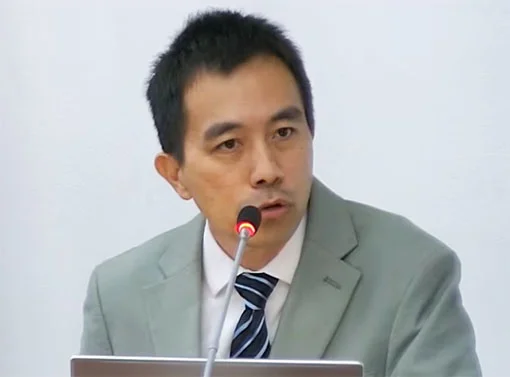
During a parliamentary debate on Suriname’s proposed accession to the Latin American and Caribbean Space Agency (ALCE) on Friday, National Party of Suriname (NPS) assembly member Jeffrey Lau laid out a cautious, pragmatic framework for the country’s space policy, pushing back against rushed financial commitments to the nascent regional body before fully leveraging already accessible, low-cost space data partnerships. Lau emphasized that his stance was not a rejection of cross-border aerospace collaboration, but a call for fiscal prudence at a time when Suriname faces constrained public resources and pressing domestic priorities ranging from rainforest conservation to illegal activity enforcement. Lau noted that ALCE remains in its early developmental stages, with no clear timeline for full operationalization or tangible, deliverable benefits for member states, pointing out that established global space agencies typically require decades of sustained investment to roll out functional, population-focused services. He warned that committing recurring membership fees to a largely unproven regional entity would amount to paying for unmet future expectations, when Suriname can already access actionable, high-quality satellite data through pre-existing agreements. As a more immediate, high-impact alternative, Lau advocated for deepening bilateral space cooperation with neighboring Brazil, a regional aerospace leader that boasts a robust, decades-old earth observation infrastructure tailored to tropical and Amazonian ecosystems. He referenced the bilateral space cooperation pact announced by Suriname and Brazil in May 2026, and pressed the national government to disclose what concrete, operational agreements have been finalized under that framework to date. Lau outlined that Brazilian satellite datasets could deliver immediate public value for Suriname, supporting critical use cases including real-time rainforest cover monitoring, environmental protection enforcement, and detection of illegal mining, logging and cross-border illicit activities. Beyond Brazil, Lau highlighted no-cost, widely validated global and regional space data programs already available to Suriname, including the European Union’s Copernicus earth observation initiative that provides free, open-access satellite imagery, as well as collaborative data sharing frameworks under the Amazon Cooperation Treaty Organization (ACTO). A core pillar of Lau’s argument centered on domestic capacity building: he stressed that even the most advanced satellite data is functionally useless without a trained local workforce and dedicated technical infrastructure to process, analyze and translate raw imagery into actionable public policy. He pointed to existing local institutional assets that could be scaled immediately, including the national Forest Cover Monitoring Unit, the GONINI geospatial data portal, and the research and training programs hosted by Anton de Kom University of Suriname and the Polytechnic College Suriname. “Suriname’s development does not start with a signature on an international document abroad — it starts with the knowledge, skilled workers and local institutions we build right here at home,” Lau told fellow assembly members. His cautious, evidence-focused approach earned broad cross-party support from other parliamentarians, who also called on the government to publish full, transparent details of all projected membership fees, long-term recurring costs, ALCE’s internal governance structure, verifiable tangible benefits for Suriname, and clear exit clauses for the proposed ALCE accession. Several lawmakers also noted that targeted deepening of cooperation with Brazil and eventual participation in the regional space agency are not mutually exclusive, but that a phased, capacity-first approach would deliver far higher returns on public spending than rushing to join ALCE without full public disclosure of terms.
Lau: Benut eerst satellietgegevens van Brazilië voordat Suriname toetreedt tot ALCE