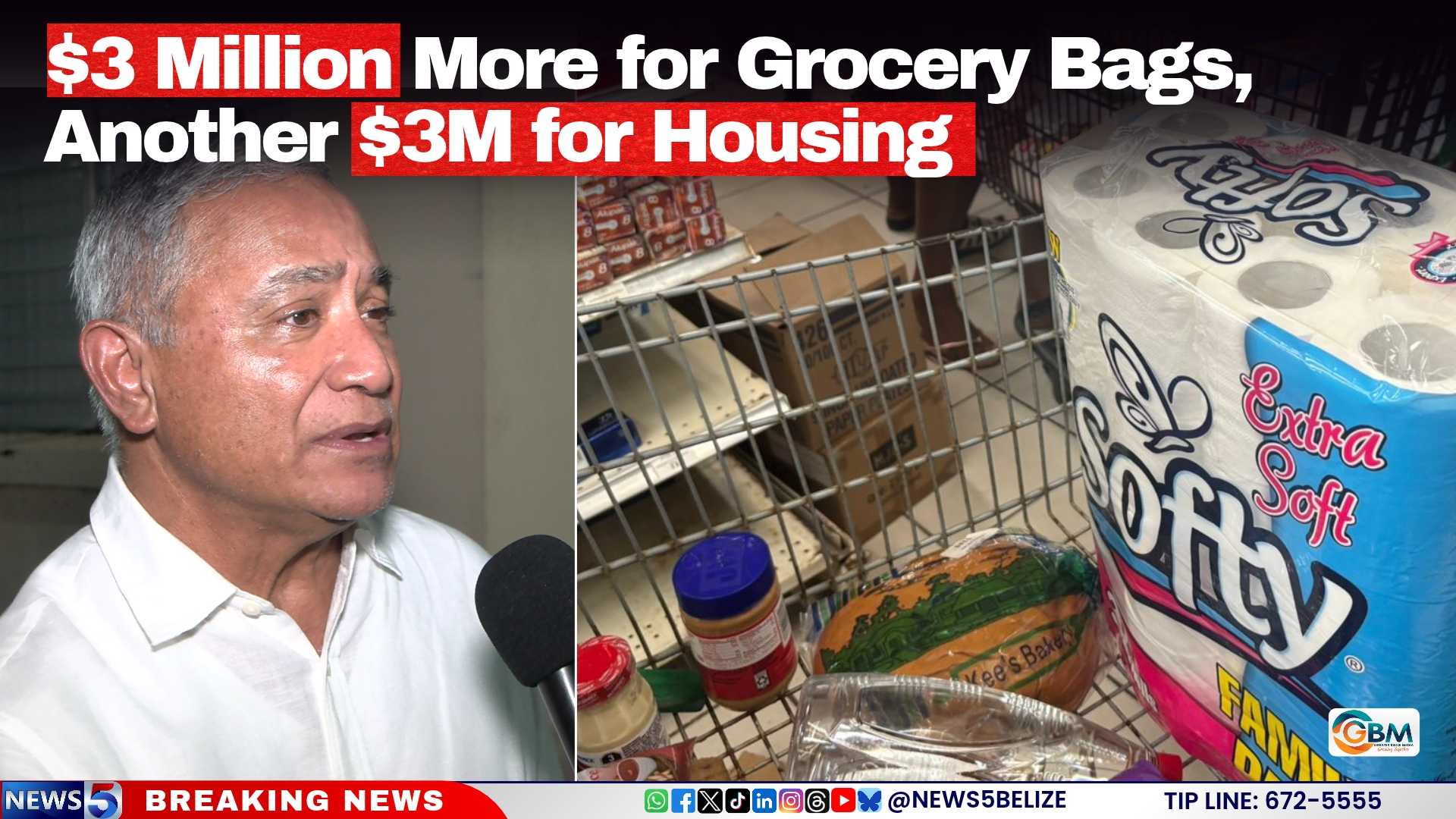
On November 12, 2026, Prime Minister John Briceño of Belize announced a targeted $6 million supplementary funding injection to expand two critical household support initiatives over the coming five months, as part of a broader $30 million national cost-of-living relief package that has been under review by the Cabinet. Half of the new allocation, $3 million, will be directed to the country’s existing grocery assistance programme, effectively doubling its current operational scope to reach a far larger cohort of low-income households that face persistent barriers to accessing affordable staple food supplies. The remaining $3 million will be disbursed to all area representatives across the country to administer local housing support, covering eligible constituents’ costs for minor home repairs and essential household-related expenses. In a Wednesday interview with local outlet News 5, Prime Minister Briceño explicitly emphasized that the funding would be distributed on a non-partisan basis, making no distinction between ruling party and Opposition elected officials. He specifically noted that representatives from the opposition United Democratic Party, including members for the Mesopotamia and Queen Square constituencies, would receive their full share of the resources to serve their local communities. “We don’t look at red or blue or green when it comes to helping our citizens,” Briceño stated, rejecting partisan divisions in the delivery of public welfare. The new targeted support rolls out against a backdrop of sustained upward pressure on household living costs across Belize, with the latest data from the Statistical Institute of Belize showing public economic confidence has dropped to its lowest point since April 2024. While the $6 million grocery and housing disbursements will deliver immediate short-term relief to vulnerable families, the government has not yet released the full operational details of the overarching $30 million relief programme, which is also slated to include additional policy measures such as adjustments to the national income tax threshold and updates to existing rent regulation legislation.