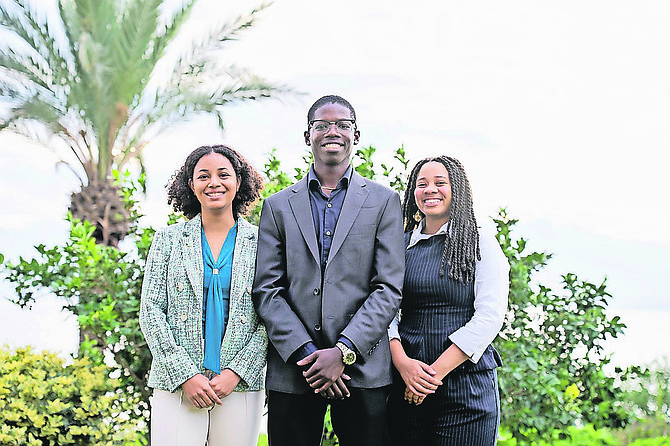
Prime Minister Philip Davis of The Bahamas has traveled to Antalya, Türkiye, the host city of the 31st United Nations Climate Change Conference (COP31), to position the nation’s globally unmatched seagrass meadows as a high-value, investable blue carbon asset for global partners, amid widespread frustration among small island developing states (SIDS) that bear the brunt of sea-level rise yet receive a negligible fraction of global climate funding. Running through November 20, the summit gathers nearly 200 nations to negotiate critical climate action frameworks, with finance access, fossil fuel phase-out roadmaps, and the launch of the second Paris Agreement global stocktake dominating high-stakes discussions. Leading a national delegation that includes three youth climate ambassadors, Davis will formally unveil The Bahamas Blue Carbon Programme at the CARICOM Pavilion on Wednesday, extending a call to foreign governments, impact investors, and multilateral development bodies to channel targeted funding into the initiative. Breaking from the prevailing narrative that frames SIDS exclusively as vulnerable nations facing existential loss, Davis emphasized that The Bahamas brings a tangible, high-impact climate solution to the table: its 53,657 square kilometers of seagrass, the largest contiguous national seagrass coverage on Earth, which traps irreplaceable blue carbon, sustains local commercial and subsistence fisheries, and buffers coastal communities from storm surge and erosion. For the first time, the country will integrate its seagrass conservation targets into its official Nationally Determined Contribution, the mandatory national climate action plan submitted under the Paris Agreement. The Bahamian government has already committed $25 million to the programme’s first phase, which supports nationwide seagrass mapping, on-the-ground ecological sampling, standardized carbon measurement and reporting protocols, and initial site conservation work, with local field teams currently conducting surveys across 30 zones spanning Grand Bahama, Abaco, and the country’s southern archipelagic islands. Backed by two 2022 pieces of national legislation — the Carbon Credit Trading Act and the Climate Change and Carbon Market Initiatives Act — The Bahamas aims to leverage the Paris Agreement’s Article 6 mechanism to generate verified, tradeable carbon credits from its seagrass conservation efforts, allowing other nations to purchase verified emission reductions to meet their own climate targets. Proceeds from credit sales will be reinvested in ongoing marine conservation and distributed directly to local Bahamian communities that depend on coastal ecosystems for their livelihoods. While the programme has faced delays, with initial 2024 projections that carbon credit revenue would begin flowing by the end of 2025 now extended as the nation remains in the foundational mapping and verification stage, a $25 million financing facility arranged by advisory firm ArtCap Strategies last November has injected new momentum into early implementation. Davis’s dual push for blue carbon investment and equitable climate finance arrives as access to adequate, affordable, fast-disbursing climate funding emerges as the most contentious flashpoint at COP31. Australian Climate Change and Energy Minister Chris Bowen, who is leading the summit’s core climate finance negotiations under Türkiye’s presidency, noted on the conference’s opening day that dozens of nations with rigorously drafted national climate plans are locked out of funding at the scale, speed, and concessional terms they require. COP31 Pacific climate finance envoy Ruel Yamuna of Papua New Guinea quantified the gap, noting that SIDS collectively face roughly $500 billion in cumulative climate-related damages yet receive only a little over $2 billion in annual adaptation funding, equal to just 0.2% of total global pledged climate finance. Negotiators are also set to clash over a binding global roadmap for accelerated fossil fuel phase-out, after talks at last year’s COP30 in Brazil failed to reach consensus on the framework, alongside commitments to triple global adaptation finance flows. The summit will formally launch the second global stocktake, a five-year comprehensive review of collective Paris Agreement progress that will conclude in 2028, though notably fewer sitting heads of state are in attendance compared to recent COP editions. On Thursday, Davis will deliver The Bahamas’ official national address to demand streamlined, fair-access climate finance for SIDS, and co-host a high-level session on sea-level rise and coastal resilience alongside Saint Kitts and Nevis, joined by the UN General Assembly President and the leaders of the Maldives and Tuvalu. He will also push for actionable, funded implementation of the historic first-ever UN General Assembly declaration on sea-level rise, adopted in September 2024, which enshrines that low-lying nations will not lose their sovereign statehood or recognized maritime zones even as rising oceans submerge their terrestrial territory — a critical safeguard for The Bahamas, where accelerating sea-level rise poses an immediate, existential threat to residential land, critical infrastructure, livelihoods, and centuries-old cultural heritage. The three young Bahamian delegates joining the official delegation — Youth Climate Ambassador Taylor Cargill, Male SDG Youth Ambassador Kenrick Stubbs, and Female SDG Youth Ambassador Ava Richardson — will participate in the full COP31 programme and share their insights with youth communities across The Bahamas upon their return. Davis stressed that young people, who will bear the longest-term impacts of decisions made at the summit, deserve a seat at the negotiation table, noting that “no one is coming to save us. We must save ourselves, and our young people will carry that work furthest.” Ahead of the official conference events, Davis met with Blue Carbon Programme technical partners and senior leadership from the UN Environment Programme, with the visit falling just days after The Bahamas and Türkiye marked 52 years of formal diplomatic relations on November 5. Deputy Prime Minister Chester Cooper will serve as acting prime minister for the duration of Davis’s overseas travel, with the delegation scheduled to return to The Bahamas on November 13.