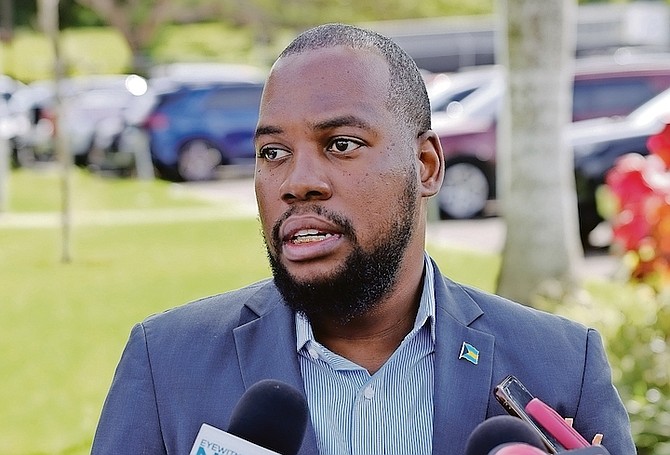
Nearly 18 months after Bahamian lawmakers formally enacted legislation to establish the Independent Commission of Investigations (ICI), a flagship anti-corruption oversight body, the watchdog still lacks any appointed commissioners, formal operational timelines, and a clear path to launch, even as top government leaders confirm active deliberations over potential candidates. Prime Minister Philip “Brave” Davis is currently reviewing a shortlist of nominees compiled by former Attorney General Ryan Pinder, with the administration openly exploring the possibility of recruiting qualified commissioners from international jurisdictions alongside local candidates, according to senior government spokespeople. Attorney General Wayne Munroe has also disclosed that he has personally submitted two candidate names for consideration to fill the required three ICI seats. The ICI was first framed by the Davis administration as a foundational pillar of its national anti-corruption push, rolled out publicly in December 2024 shortly after a high-profile U.S. federal indictment laid out explosive allegations of widespread misconduct within the Royal Bahamas Police Force, including claims that an unnamed sitting Bahamian politician agreed to authorize law enforcement facilitation of a transnational cocaine trafficking network bound for the United States. The bill was debated and passed by Parliament in February 2025, with Prime Minister Davis emphatically stating at the time that the commission would operate with total autonomy, to the point that no head of government, not even the prime minister, could interfere with or direct its investigative work. To date, the government has allocated $30,000 to the ICI in its first dedicated budget line item, followed by a $100,000 allocation in the 2026/2027 fiscal budget. As outlined in the enabling legislation, the three-member commission is legally mandated to investigate serious allegations of misconduct, abuse of power, corruption, and breach of public trust targeting personnel from the Royal Bahamas Police Force, Defence Force, Department of Corrections, Customs, Immigration agencies, and all elected public officials including sitting parliamentarians. It will be granted full authority to summon witnesses, compel sworn testimony, and submit formal recommendations to the Director of Public Prosecutions for potential criminal charges. The appointment rules require that two of the three commissioners hold qualifications for senior judicial office, while the third must be a chartered or certified accountant in good standing with The Bahamas Institute of Chartered Accountants. All appointments are formally issued by the Governor-General, acting on the prime minister’s formal recommendation following mandatory consultation with the Leader of the Opposition. The commission’s formal legal entry into force will only be triggered once the Attorney General publishes an official commencement notice in the national government Gazette. Senator Latrae Rahming, director of communications and government strategy in the Office of the Prime Minister, confirmed earlier this week that no concrete appointment timeline has been locked in, noting that the final balance between local and international commissioners will be determined by the specific expertise required to make the body effective, and that he anticipates tangible progress on appointments over the coming 12 months. Earlier this year, while still serving as Minister of National Security, Munroe pushed back against public demands for rapid implementation of the ICI, warning that rushed rollouts of similar public bodies in past administrations had cost the national treasury millions of dollars in costly, avoidable legal settlements. Drawing on his own professional experience litigating civil cases against the Bahamian state, Munroe stated he would never endorse launching a commission with structural flaws that could collapse under future legal challenges. The main opposition Free National Movement has repeatedly lambasted the Davis administration over the extended delays, framing the lack of progress on the ICI as part of a broader pattern of unfulfilled campaign promises. During the latest 2026/2027 budget debate, East Grand Bahama MP Kwasi Thompson pressed the prime minister for a firm operational launch date, only for Davis to defer responsibility to the Office of the Attorney General and decline to provide a specific timeline. Opposition legislators have also criticized the relatively modest budget allocations for the ICI, pointing out that the $100,000 earmarked for the commission in the current fiscal year is only 2.5 times the $40,000 allocated to the long-established Office of the Ombudsman in the same budget. Government representatives have repeatedly defended the deliberate pace, stating that the commission must be fully resourced, professionally staffed, and structurally sound before it launches to safeguard its statutory independence and long-term operational effectiveness, rather than being rushed to meet arbitrary political deadlines.