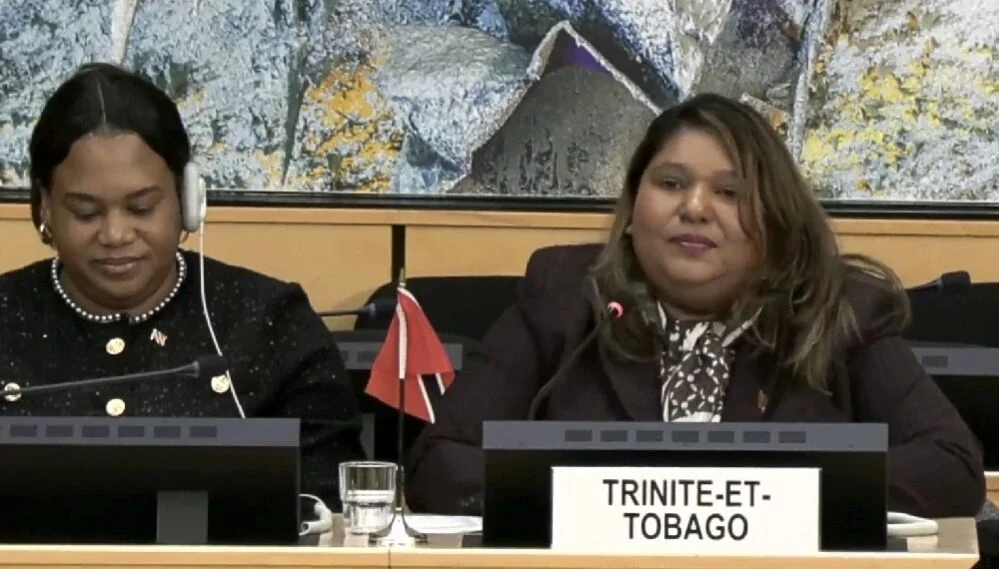
During its fourth Universal Periodic Review before the United Nations Human Rights Council’s Geneva-based working group, Trinidad and Tobago formally defended its repeated deployment of states of emergency on Tuesday, even as multiple UN member states raised pointed concerns over widespread violent crime, allegations of disproportionate police force, and systemic gaps in human trafficking response. The high-stakes review, a core UN mechanism that requires national governments to publicly account for their human rights track records and outline progress on recommendations from past assessments, drew on three key reference documents: an official national report drafted by the International Law and Human Rights Unit within Trinidad and Tobago’s Attorney General’s Office, a curated compilation of existing UN data on the country’s rights landscape, and a consolidated summary of submissions from civil society and independent stakeholders. Ahead of the formal hearing, non-governmental partners had flagged deep unease over expanded search and seizure authorities, extended detentions, and temporary suspensions of bail access implemented under recent emergency declarations. Leading the national delegation was Chamyantie Lal, Chargée d’Affaires of Trinidad and Tobago’s Permanent Mission to the UN in Geneva, accompanied by Athea Jones, Legal Officer II in the Attorney General’s Human Rights Division, and Nikisha Smith, First Secretary at the Geneva mission. In her opening presentation, Lal acknowledged that homicides, gang-related violence, and home invasions continue to represent pressing public safety crises for the twin-island nation, but emphasized that targeted legislative and policy interventions rolled out by the administration have already driven a measurable downward trend in the national homicide rate. She outlined that emergency regulations were designed to grant law enforcement temporary, targeted powers to rapidly respond to severe, organized criminal threats, and noted that the most recent state of emergency formally concluded on September 17, 2026. The official national submission further clarified that Trinidad and Tobago’s constitution explicitly enshrines provisions for emergency declarations only in circumstances where public safety faces imminent, substantial risk, and that the government has formally committed to ensuring all future emergency measures remain exceptional, strictly time-bound, and fully aligned with the core legal principles of legality, necessity, and proportionality. Delegates also confirmed that no curfews were imposed during the most recent series of emergency declarations, and that all individuals held under preventive detention orders retained full access to legal counsel, an independent oversight tribunal, and formal judicial recourse. In response to longstanding allegations of police misconduct and excessive use of force, the delegation noted that all reported incidents of improper police conduct are subject to both internal disciplinary review and independent external oversight, and that the government is actively pursuing targeted reforms to cut back pervasive delays in the national criminal justice system while upholding due process rights for all accused persons. A landmark 2023 justice reform, the Administration of Justice (Indictable Proceedings) Act, was highlighted as a key milestone to reduce systemic court backlogs: the legislation, proclaimed into force on December 31, 2023, eliminated the outdated preliminary inquiry process and replaced it with a streamlined, judge-led pretrial framework that mandates prosecutors to disclose all case evidence within strict, legally binding timelines, and requires a judge to formally verify that sufficient prima facie evidence exists for a case to proceed to full trial. Officials noted that this reform has already strengthened judicial oversight, reduced unnecessary procedural delays, and reinforced due process safeguards, while complementary legislative changes passed in 2026 – including provisions for split sentencing, supervised early parole, and expanded offender rehabilitation support – are designed to ease severe prison overcrowding, reduce recidivism rates, and support smoother social reintegration for former detainees. During the interactive segment of the review, multiple UN member states put forward targeted recommendations for Trinidad and Tobago: Mexico urged the government to ensure all emergency powers remain strictly exceptional, temporary, proportional, and subject to full independent judicial review, while Spain cautioned against normalizing emergency declarations as a routine default response to routine public safety challenges, and called for enhanced independent oversight of extraordinary powers granted to security agencies. Russia pushed for stronger judicial protections for individuals affected by cases of police overreach, Poland called for intensified efforts to reduce homicide and gang violence while ensuring all public safety interventions fully comply with the International Covenant on Civil and Political Rights, and Ghana urged stepped-up enforcement of national anti-trafficking laws alongside expanded training for law enforcement to identify at-risk victims and deliver targeted support services. The United Kingdom acknowledged Trinidad and Tobago’s recent progress on anti-trafficking work but flagged ongoing concerns over persistent gender-based violence targeting migrant women and girls, calling for expanded survivor protection and support systems. France and Norway jointly advocated for a formal moratorium on executions as a first step toward full abolition of the death penalty, while Belgium urged the government to repeal remaining legal provisions that mandate capital punishment for specific offenses and commute all existing active death sentences. A drafting team comprising representatives from Angola, Colombia, and the Netherlands will compile the full formal review report, which the Human Rights Council working group is scheduled to consider for formal adoption on November 13, with the complete final document set for public circulation on November 20. In her closing remarks, Lal confirmed that the Trinidad and Tobago government will conduct a full, inclusive consultation with relevant line ministries and civil society stakeholders to review all submitted recommendations, and noted that the country welcomes targeted international technical assistance to address persistent capacity and resource constraints that pose practical barriers to full implementation of human rights commitments.