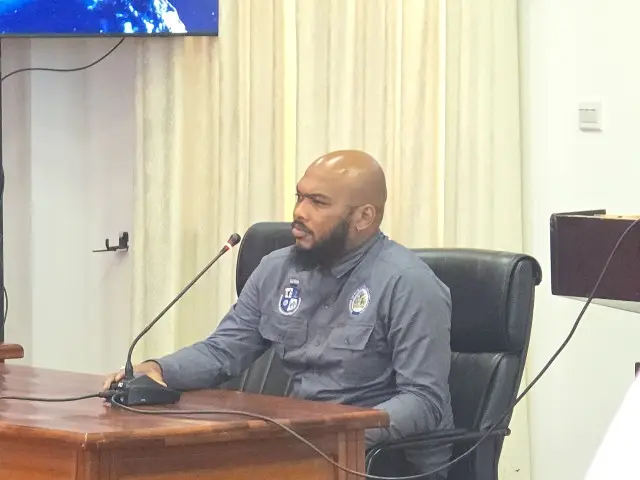
A presidential Commission of Inquiry (COI) probing the July 18, 2026 capsizing of the MV Barima ferry – which sank mid-voyage between Georgetown and Port Kaituma – heard damning testimony on November 10, 2026, from Christopher Bailey, a newly hired inspector with Guyana’s Maritime Administration (MARAD), that dozens of severe safety deficiencies flagged eight months prior to the disaster were never remediated, due to systemic breakdowns in regulatory follow-up. Led by Trinidad and Tobago-based maritime specialist and COI commissioner Nyree Dawn Alfonso, the line of questioning uncovered that Bailey, who had only been on the job for three months at the time of his inspection, had documented widespread safety gaps on the coastal passenger vessel but failed to issue a port detention order, and no subsequent MARAD official followed up to enforce corrective action. Bailey confirmed that the 200+ lifejackets aboard the ferry lacked water-activated lights, a gap that local fisherman Haresh Singh corroborated during earlier rescue testimony, noting he spotted zero illuminated lifejackets and no accessible fire extinguishers in the vessel’s passenger accommodation area during post-capsizing search operations. While Bailey noted that local Guyanese maritime rules for domestic coastal vessels do not mandate lit lifejackets, the International Convention for the Safety of Life at Sea (SOLAS) requires the feature for all international voyaging craft. Under oath, Bailey conceded that the total absence of hand flares, parachute flares, smoke signals, and flare guns qualified as a major, high-risk safety shortfall. Per standard MARAD protocol, Bailey stated his full inspection report was submitted to the agency’s Director of Safety, who was required to forward the documentation to the Transport and Harbours Department under the Ministry of Public Works to trigger mandatory fixes, followed by a return inspection to verify compliance. Bailey admitted he never received any formal directive to conduct that follow-up check, so no revisit ever took place. When pressed by retired Trinidad and Tobago Rear Admiral and COI panel member Hayden A. Pritchard to confirm the full scope of unaddressed defects, Bailey acknowledged the MV Barima was operating without functional radar, an Automatic Identification System (AIS), an Emergency Position-Indicating Radio Beacon (EPIRB), formal vessel stability data, any reliable distress signaling capacity, a sufficient number of serviceable life rafts, an operational emergency generator, a fixed motorized fire pump, a man-overboard alert system, and required crane operation documentation. Bailey also admitted he failed to review prior inspection records before conducting his assessment, and was unaware that nearly identical critical safety flaws had already been flagged on the MV Barima during a 2024 regulatory check. Senior Jamaican maritime surveyor and COI panel member Captain Hamada Fouda emphasized that expired, unserviceable life rafts are classified as a detainable deficiency under global maritime standards, meaning the vessel should have been barred from leaving port entirely until the issue was resolved – a step Bailey confirmed he never recommended. Additional gaps uncovered during testimony included no posted passenger capacity certificate, no fire safety suits stored on board, improper and unsegregated stowage of dangerous acetylene, LPG cooking gas, and oxygen cylinders alongside passenger areas in violation of International Maritime Organization (IMO) dangerous goods codes, and a complete absence of the mandatory inspection and passenger vessel certification required under Guyana’s national Shipping Act. Throughout his testimony, Bailey repeatedly asserted he never formally cleared the MV Barima to sail, claiming the vessel was supposed to remain docked for ongoing maintenance at the time of his assessment.