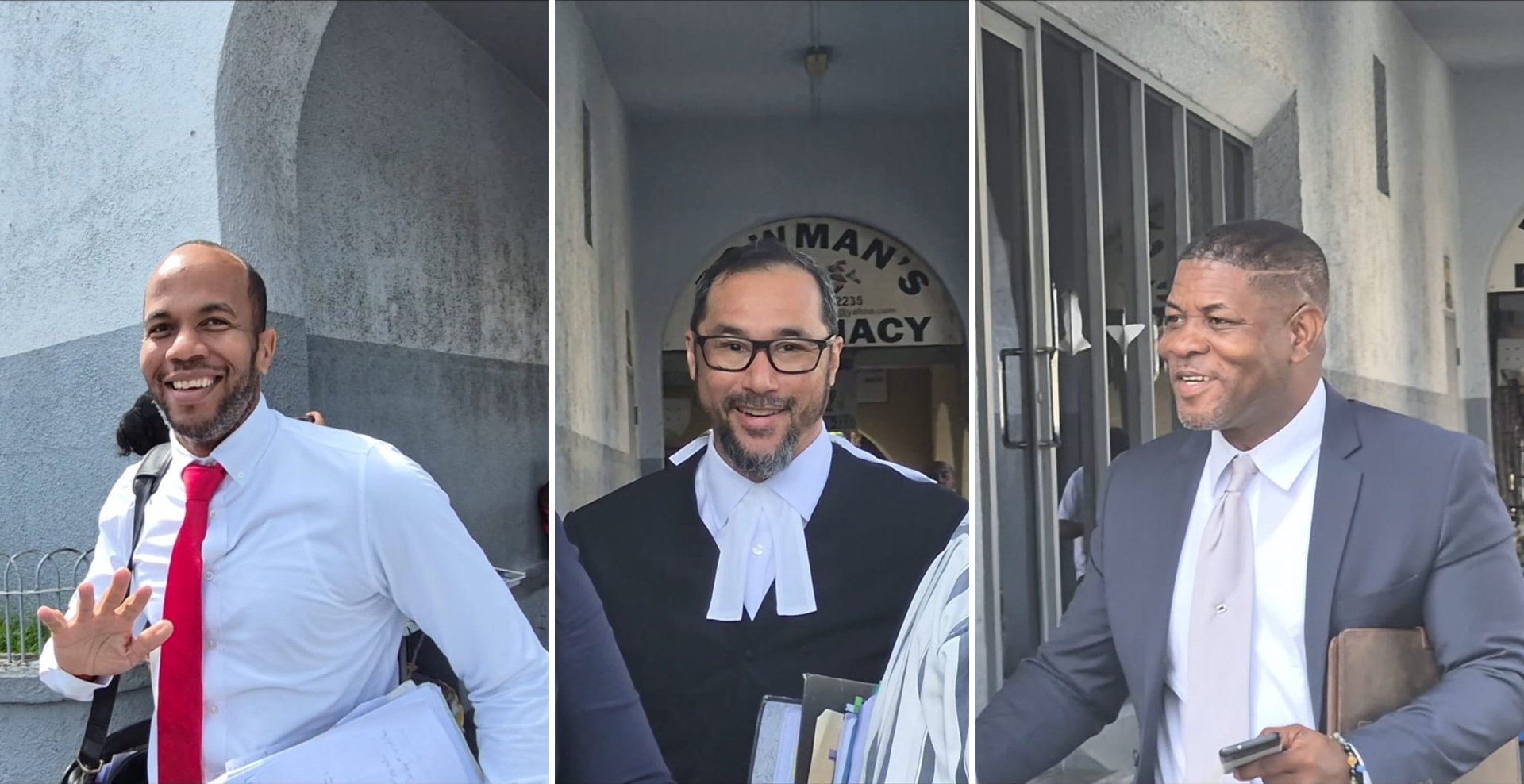
In a packed High Court chamber in Kingstown on Tuesday, lead counsel for two Unity Labour Party (ULP) election petitioners delivered fiery closing arguments in a months-long constitutional challenge that threatens to unseat the nation’s prime minister and foreign affairs minister. Senior Counsel Stuart Young, representing petitioners Luke Browne and Augustus Williams, opened his submissions with a pointed direct appeal to the two senior government officials at the centre of the dispute: “Give up your Canadian citizenship. What is so precious in it?”
The landmark legal battle was triggered by the November 2025 St. Vincent and the Grenadines general election, where incumbent Unity Labour Party lawmakers Browne and Williams are contesting the parliamentary victories of Prime Minister Godwin Friday and Foreign Affairs Minister Dwight Fitzgerald Bramble. The core of their case rests on the claim that both elected officials hold Canadian citizenship, a status they argue violates explicit constitutional rules barring individuals with allegiance to foreign states from serving in the House of Assembly. The proceedings, overseen by Justice Gertel Thom, have now entered their final oral argument phase, after which the judge will reserve her position before releasing a formal, binding ruling.
Young reminded the court that Friday had previously testified under oath that serving as the nation’s prime minister is “the greatest honour of his life”, yet the elected leader had voluntarily chosen to retain his Canadian citizenship rather than renounce it to meet parliamentary eligibility requirements. The senior counsel emphasized that Section 26 of the national Constitution and Section 35 of the Representation of the People Act lay out non-negotiable disqualification criteria that cannot be selectively enforced. “You cannot cherry-pick,” Young stressed, noting that even candidates who meet baseline eligibility requirements are barred from office if they hold judicial positions, are declared bankrupt, or have been found to be of unsound mind.
He further argued that legislators had explicitly retained the foreign allegiance ban when updating related electoral laws in prior years, and could have added an exemption for Commonwealth citizens if they had intended to allow dual status for parliamentary representatives. Young, a citizen of Trinidad and Tobago who noted he would be ineligible to run for public office in St. Vincent and the Grenadines due to his foreign nationality, emphasized that dual citizenship creates inherent split loyalties for elected officials. He pushed the court to apply a strict literal interpretation of the phrase “foreign power or state” in Section 26, rejecting arguments that shared membership in the Commonwealth and shared allegiance to the British monarch created an exception for Canada. “Their argument amounts to saying that because both countries share the same King, ‘we special,’” Young noted, dismissing that framing as legally baseless.
The senior counsel went on to challenge the credibility of the respondents’ lead expert witness, Professor Hamid Ghany, who had testified in late September on Commonwealth citizenship norms and parliamentary qualification rules, describing his testimony as carrying little to no evidential value for the court. Young emphasized that the oath of Canadian citizenship is a direct pledge of allegiance to the Canadian state, not a generic oath to democratic governance or the Commonwealth monarchy, and that both Friday and Bramble had voluntarily completed the naturalization process to secure that status. He further noted that the defence had failed to submit any competing Canadian legal authority to refute that naturalized Canadian citizens owe full allegiance to Ottawa, and urged the court to distinguish the current case from older regional legal precedents that did not involve defendants who had actively pursued foreign citizenship through naturalization.
Rejecting claims that the challenge was stripping the two officials of their legal rights, Young stressed that the Constitution never guarantees anyone the right to serve in parliament while holding foreign citizenship. Elected representatives, he argued, must maintain a “clean slate” of undivided allegiance to St. Vincent and the Grenadines to avoid even the perception of split loyalty, particularly in scenarios where Canada’s official state positions could diverge sharply from the national interests of St. Vincent and the Grenadines. In his formal relief request, Young asked the court to either formally declare his clients Browne and Williams as the duly elected representatives for East Kingstown and the Northern Grenadines respectively, or to rule that the original election results that returned Friday and Bramble to office are null and void.
Following Tuesday’s court session, both respondents addressed waiting members of the press. Bramble declined to comment directly on the petitioners’ bid to seize their parliamentary seats, stating “I would not want to comment on anything like that right now, respectfully…” before noting that he and the prime minister remained “very confident” they would prevail in the ongoing legal process. Friday acknowledged that the extended legal arguments had grown “a bit tedious”, but stated that the petitioners’ case contained no unexpected elements, and reaffirmed his confidence in his legal position ahead of the continuation of proceedings on Wednesday. For his part, Young told reporters that the petitioners’ closing submissions had proceeded smoothly, describing their legal arguments as “very cogent” and tightly focused on statutory text, while characterizing the defence’s approach as broad and unfocused, “throwing a seine out there hoping to pull something in” that the petitioners would address in their upcoming reply submissions.