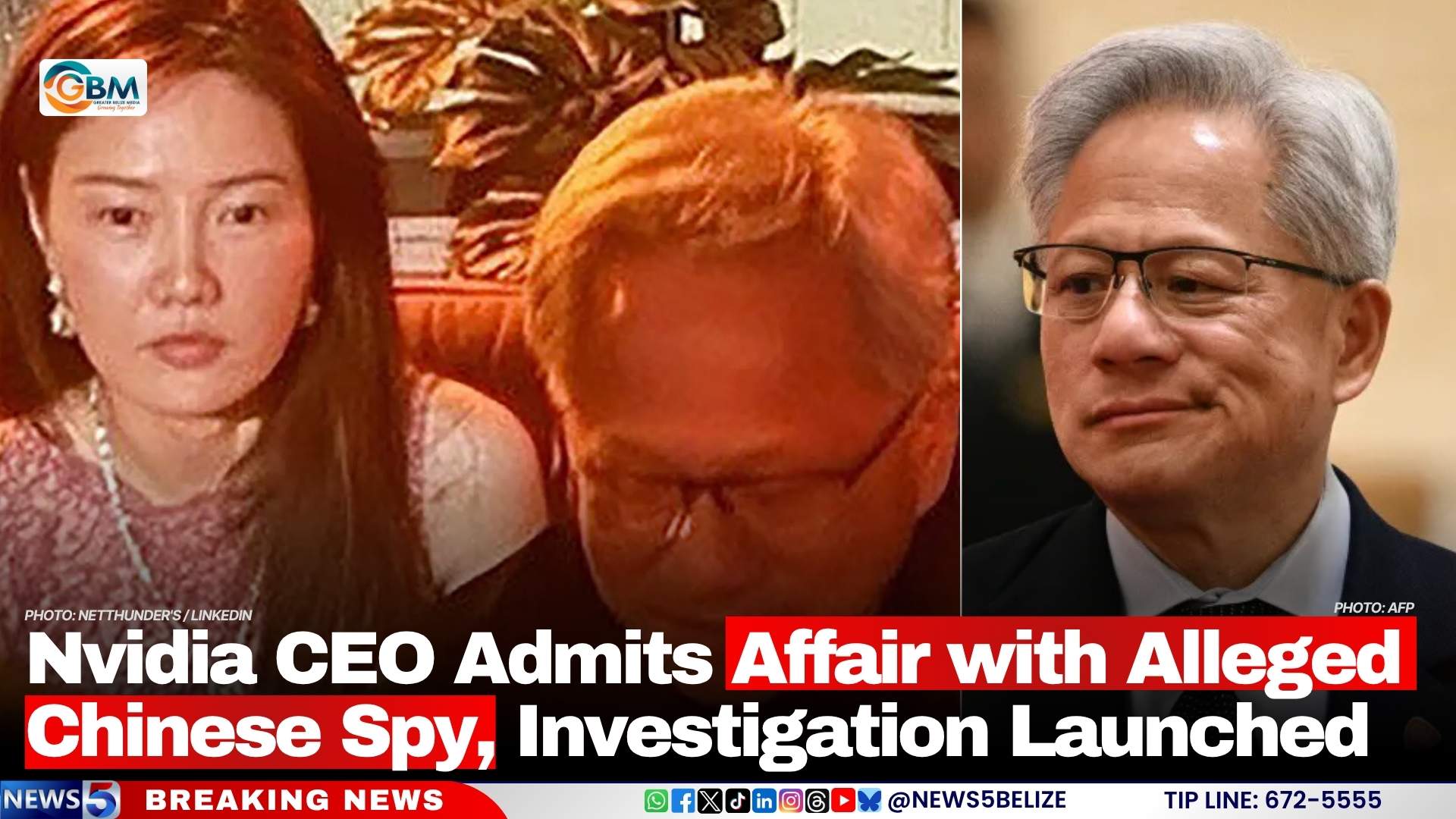
On November 9, 2026, chip industry leader Nvidia confirmed that its board of directors has formally launched a full internal probe into whether 63-year-old chief executive Jensen Huang was the target of a Chinese intelligence operation, following Huang’s voluntary disclosure to the board of a long-running intimate relationship with a female Chinese business executive accused of passing sensitive information to Beijing.
The New York Times first identified the woman as Alice Huang, a non-family relation of the Nvidia CEO: a former television reporter turned senior executive at Singapore-headquartered data center firm Megaspeed, who works as a specialized chip procurement specialist. U.S. intelligence officials have reportedly flagged her as an operative directly funneling proprietary industry data to Chinese national security bodies, according to the Times’ independent sourcing.
In an internal company letter circulated to all Nvidia staff and obtained by the Associated Press, Huang issued a public apology to his family, colleagues and stakeholders, acknowledging he had engaged in an extramarital affair that fell short of the high personal and professional standards expected of him as a public-facing industry leader, while affirming he would take full accountability for all his personal decisions. The Nvidia board issued a concurrent statement noting that at this preliminary stage of the review, there is no credible evidence to indicate that classified U.S. national security data or the company’s closely guarded trade secrets related to its flagship AI semiconductor designs have been leaked, but the probe will exhaustively review all available communications and access logs to rule out any potential compromise.
The high-stakes development has sent shockwaves through global tech and financial markets: the sprawling AI sector shed a staggering $2.5 trillion in total market capitalization in a single trading session, as investors weighed the potential ripple effects of the allegations for a firm that sits at the absolute center of the global artificial intelligence technology race. Nvidia has already been at the epicenter of ongoing U.S. government regulatory efforts to restrict the export of its most advanced AI chips to mainland China, making any potential intelligence breach tied to its top executive a matter of direct national security concern for Washington.
In a surprise public statement on Sunday, U.S. President Donald Trump offered a full-throated defense of Huang, describing the Nvidia founder as a man of unimpeachable integrity who had delivered an “amazing job for our country” by building the most competitive advanced chip ecosystem on U.S. soil. The Nvidia board has confirmed that Huang will retain his position as chief executive for the full duration of the investigation, and has signed a formal agreement to provide full, unimpeded cooperation with all internal and relevant federal agency review processes.