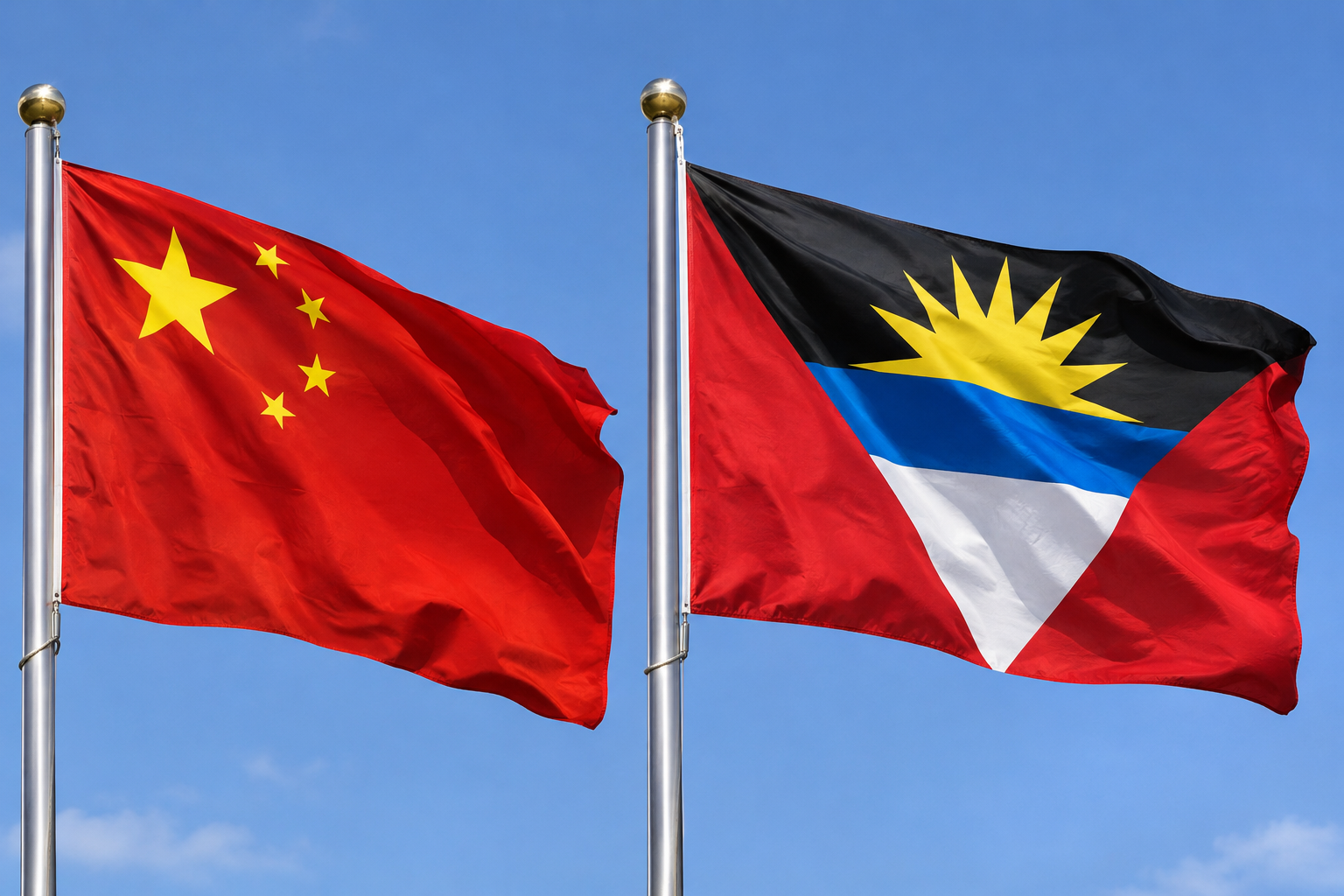
During a recent appearance on his weekly “Browne and Browne Show” broadcast last Saturday, Antigua and Barbuda’s Prime Minister Gaston Browne pushed back against external narratives framing his nation’s diplomatic and economic ties with China as a component of U.S.-China geopolitical competition, emphasizing that the partnership is rooted exclusively in the Caribbean nation’s urgent domestic development priorities. Browne outlined the systemic financial inequities that small island developing states (SIDS) face on the global stage: most conventional lending windows impose exorbitant interest rates hovering between 10% and 11%, paired with inflexible short repayment timelines of just five to seven years, a stark contrast to the low-cost, concessional financing Beijing extends at roughly 2% annual interest over 20-year repayment schedules. The prime minister noted that Antigua and Barbuda’s classification as a upper-middle-income economy has locked it out of many of the preferential low-interest financing packages extended to lower-income nations, even as its geographic vulnerability to climate shocks and limited domestic revenue streams leave it in critical need of flexible, long-term capital. He confirmed that his administration has clearly communicated to U.S. policymakers in Washington that the bilateral relationship with China poses no security or strategic threat to American interests, and that Antigua and Barbuda has no intention of taking sides in superpower geopolitical rivalries. Browne added that his government’s core priority is to see the world’s two largest economies collaborate constructively, rather than engage in zero-sum competition that harms smaller nations. Beyond Chinese financing, he highlighted that Saudi Arabia has emerged as a newer partner offering similarly favorable concessional terms, citing recent funding for the University of the West Indies that aligns with the low-interest, long-repayment model his administration prioritizes. The prime minister also revealed that he raised the structural flaws in global development financing directly with World Bank President Ajay Banga during Banga’s official visit to Antigua and Barbuda, calling out the prohibitive costs of private-sector lending arranged through major international development institutions. Browne noted that small local businesses cannot turn a profit when forced to take on debt at double-digit interest rates, a dynamic that stifles private sector growth across SIDS. Framing his administration’s outreach to diverse concessional financing partners as part of a decades-long national advocacy campaign for sweeping reform of the global international financial architecture, Browne reiterated that Antigua and Barbuda’s entire foreign policy approach to economic partnerships is designed solely to leverage access to affordable capital, with no hidden geopolitical agenda targeting the United States or any other major power.
Antigua and Barbuda defends China ties as source of cheaper development loans