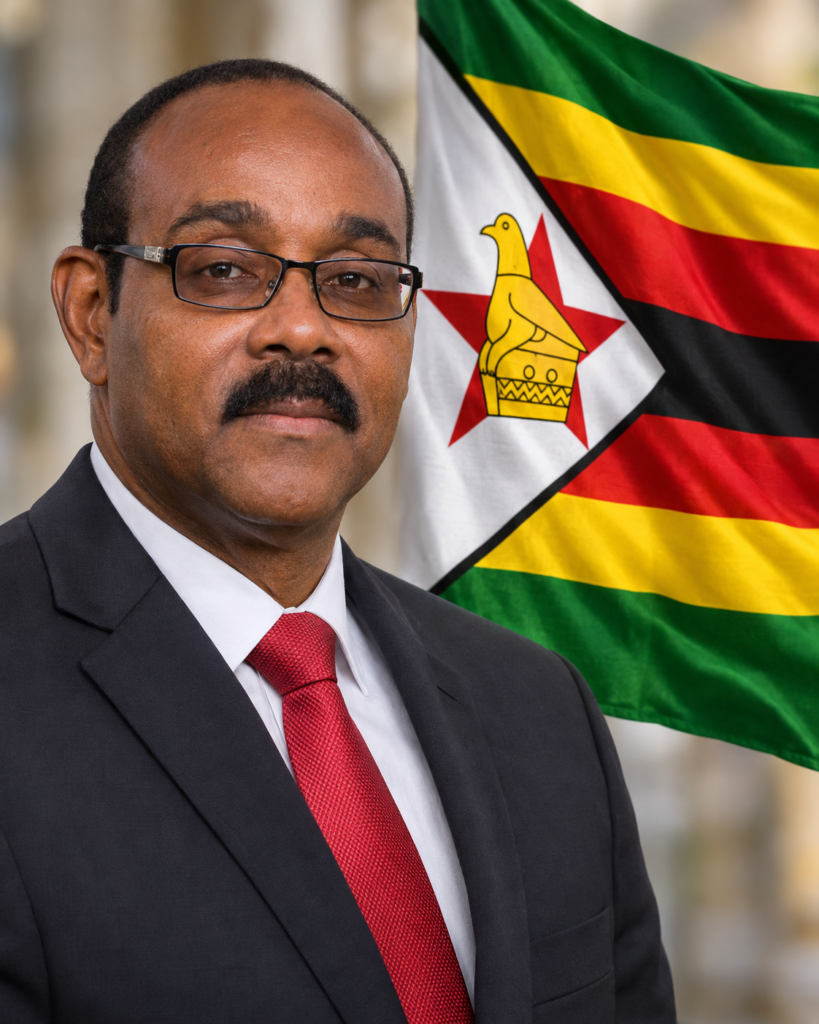
During a recent appearance on his weekly “Browne and Browne Show” broadcast last Saturday, Antigua and Barbuda Prime Minister Gaston Browne publicly confirmed that steering Zimbabwe’s long-pending return to the Commonwealth will stand as one of the highest-priority diplomatic tasks of his upcoming two-year tenure as the association’s chair, a role tied to Antigua and Barbuda’s upcoming hosting of the Commonwealth Heads of Government Meeting. Browne noted that preliminary collaborative work with Zimbabwean authorities is already underway to advance the readmission bid, though he declined to share a formal negotiation timeline, outline remaining unmet entry conditions, or confirm that all 56 member states have already reached a preliminary consensus to approve the country’s re-entry.
Zimbabwe’s history with the 56-nation bloc stretches back to 1980, when it joined the Commonwealth immediately following its formal independence from white minority rule. The country was first suspended from the association in 2002 in response to widespread international condemnation of a disputed presidential election that year, before formally withdrawing entirely in December 2003 under the leadership of then-President Robert Mugabe, after Commonwealth member states voted to extend its suspension indefinitely. The push to rejoin the bloc first gained traction under current Zimbabwean President Emmerson Mnangagwa, who formally launched the country’s readmission campaign in 2018, shortly after he assumed office.
Under official Commonwealth rules, any new or returning member state must secure full consensus from all sitting heads of government of existing member nations, with the formal application process overseen jointly by the Commonwealth Secretary-General, national governments of current members, and the rotating chair of the association. The Commonwealth’s official membership criteria mandate that all participating states must uphold the bloc’s core foundational values: free and fair democratic governance, full adherence to the rule of law, protection of universal human rights, and unobstructed freedom of expression, all of which have remained central points of evaluation for Zimbabwe’s bid over the past six years.
Multiple recent updates have signaled incremental progress toward a possible readmission. A 2022 assessment mission deployed by the Commonwealth Secretariat to Zimbabwe reported that the country had made tangible strides toward meeting membership benchmarks, and found broad cross-society support for rejoining the bloc across the ruling government, opposition political parties, grassroots civil society groups, and national religious leadership. In June 2025, the British government issued a formal statement acknowledging the measurable progress Zimbabwe has made on governance reforms, noting that it would welcome the country’s return to the Commonwealth once all preconditions are fully satisfied, while explicitly clarifying that no single nation holds unilateral decision-making power over membership outcomes, which require collective agreement from all member states. Browne’s latest public comments make clear his intent to accelerate the multi-stakeholder negotiation process, though no firm timeline for a final vote on Zimbabwe’s readmission has been set to date.