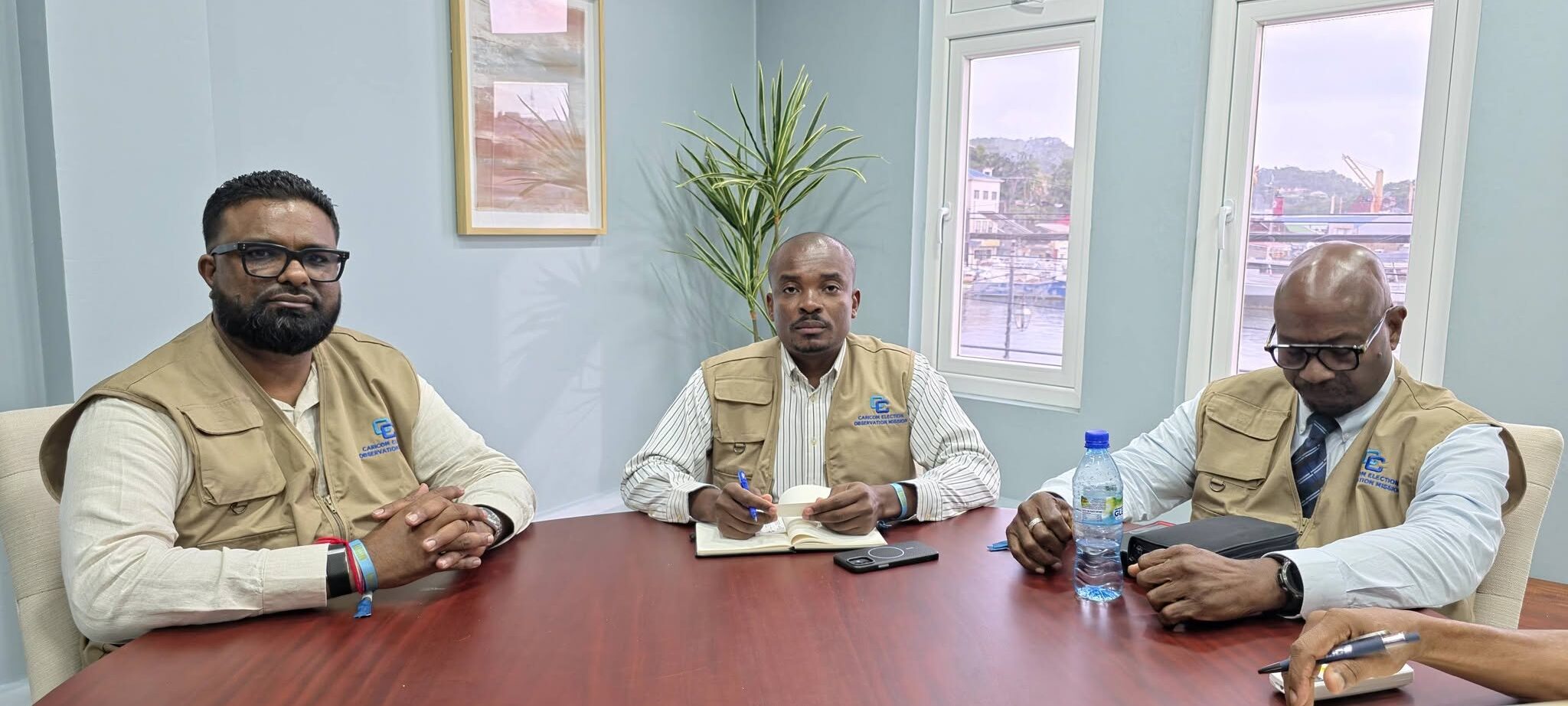
Delivering its preliminary findings at a post-election press briefing on 6 November, the Caribbean Community (CARICOM) Election Observation Mission (CEOM) confirmed that Grenada’s 5 November general election unfolded in a fully peaceful, well-organized manner with no major disruptions recorded across the twin-island nation. Led by Chief of Mission Herman St Helen, the 16-member observation team deployed across mainland Grenada and its sister isle Carriacou, visiting 282 polling stations spanning all 15 national constituencies to cover roughly 98% of all official voting sites in the two territories. The CEOM cohort arrived in Grenada in staggered arrivals between 29 October and 1 November, laying the groundwork for its assessment through a comprehensive series of pre-election consultations. The team held productive discussions with a wide cross-section of stakeholders: leadership from all contesting political parties including the National Democratic Congress, New National Party, Democratic People’s Movement, and People’s National Party; top officials from the Royal Grenada Police Force including Commissioner Randy Connaught and his senior command; the Supervisor of Elections Arthur Pierre and his full administrative team; representatives from civil society groups, trade unions, the local chamber of commerce, disability advocacy bodies, media associations, independent constitutional reform caucuses, and independent election monitoring coalitions, as well as prominent local political analysts and social commentators. These pre-election engagements allowed the mission to gain a holistic view of pre-vote preparedness, public sentiment, and existing institutional frameworks ahead of polling day. On 5 November, observers documented that nearly all polling sites opened promptly at the scheduled 6 a.m. start time, with sufficient law enforcement deployment, well-stocked election materials, and fully trained, courteous poll workers on site to support voters. Dedicated assistance was extended to elderly citizens and persons with disabilities, while representatives from a minimum of two contesting political parties were present at the vast majority of voting divisions to oversee proceedings. Voter activity maintained a steady pace during the early morning hours and the final window before polls closed, with a lull in foot traffic through the midday period. The mission also monitored the full end-to-end electoral process beyond regular polling hours, including the 2 November advance voting exercise for frontline police personnel, the official 5 p.m. closure of polling stations, the sealing of ballot boxes, the secure transit of voting materials to centralized holding facilities, and the full ballot counting process. St Helen extended formal commendations to the Office of the Supervisor of Elections, all frontline poll staff, law enforcement officers, political party representatives, and the broader electorate for their collaborative, responsible conduct that upheld the integrity of the electoral process. When pressed for details on potential reform measures in the upcoming final assessment, St Helen noted that the mission’s full cohort had not yet finalized discussions on targeted recommendations, but confirmed that the forthcoming document would address all key observations logged during the monitoring period. The interim statement released on 6 November does not represent the CEOM’s full, conclusive evaluation of the election, with a comprehensive final report including targeted actionable recommendations set to be submitted to the CARICOM Secretary-General within the coming weeks.