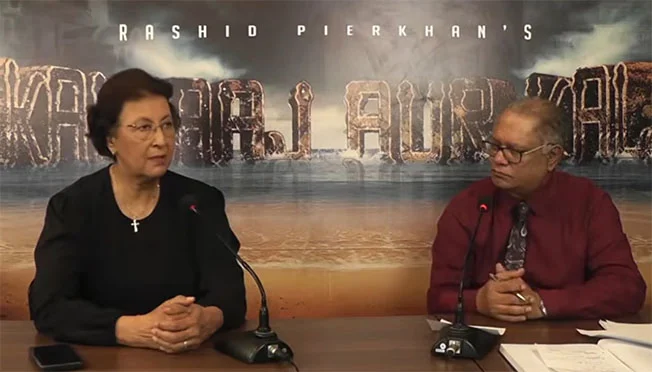
During a wide-ranging appearance on the popular Kal Aaj Aur Kal talk show hosted by Faried Pierkhan last Saturday, Suriname’s President Jennifer Simons laid bare deep, systemic flaws in the national government’s operational capacity, stating that the bottlenecks are far more severe than she anticipated even after decades of legislative experience as a longstanding member of the National Assembly. Simons explained that the transition from drafting formal laws and regulatory oversight to the on-the-ground execution of public policy has emerged as an extraordinarily heavy, unmet administrative burden, with state operational performance deteriorating steadily in recent years to create crippling delays across every priority sector. Even when cabinet decisions have been formally signed off and full funding allocated for public projects, implementation is often stalled for months on end, with a residential housing development cited as a key example: eight months can pass between official project approval and the first ground being broken, even with no shortage of budget for the initiative. Simons emphasized that lack of financing is rarely the root cause of these holdups, noting that large sums of earmarked public funding often sit unused for extended periods while projects are trapped in endless layers of redundant administrative red tape. To tackle these bottlenecks, the president has committed to launching a full cross-ministerial audit before the end of the current calendar year, working directly with all cabinet members to map every point of delay across government departments and roll out targeted reforms to speed up policy delivery. These implementation gaps are most acutely visible in core priority areas including agricultural development, public housing, healthcare service expansion, and ongoing public service modernization efforts. Simons framed widespread digitalization of government administrative workflows as a dual-purpose critical intervention: it will not only cut down unnecessary procedural delays, but also reduce opportunities for corrupt practice by digitizing paper-based, opaque approval processes. The president expressed particular alarm that these persistent capacity shortfalls have left Suriname drastically underprepared for the explosive growth of its emerging offshore oil industry, five years after the country first discovered commercially viable crude reserves in 2020. She acknowledged that successive administrations had failed to move fast enough to build the social and economic infrastructure required to manage the oil sector’s ripple effects, noting that the previous Santokhi government had made insufficient progress on pre-development preparations, but stressed that the accumulated gaps are the product of decades of underinvestment and underperformance across multiple administrations, rather than the fault of a single term in office. As the oil industry expands at a rapid pace, Suriname faces imminent, surging demand for new housing, increased food production, skilled labor, and expanded public utilities, Simons warned. Without fast-tracked investments to expand local domestic supply of these goods and services, the higher spending power of well-paid oil sector workers will drive sharp inflation that disproportionately harms ordinary working-class citizens who are not employed in the high-wage energy industry. A second major unaddressed bottleneck highlighted by the president is the widespread misalignment between Suriname’s formal education system and the evolving needs of its national labor market. She shared a recent case where a major private sector firm sought to hire hundreds of local workers for open roles, but could barely find qualified candidates that met the position requirements. Simons pushed back against the common narrative that local Surinamese workers are inherently unqualified, calling on private enterprises to invest in structured, long-term on-the-job training programs that can run for six months to a full year to upskill new hires. At the same time, she acknowledged deep flaws in the national education system, noting that many schools still cannot offer mandatory mathematics classes due to critical shortages of qualified teaching staff. While the current administration is rolling out programs to rehabilitate school infrastructure and expand access to qualified educators, these efforts are themselves slowed down by the same public sector implementation gaps the president is targeting. Simons concluded her remarks by noting that the government cannot erase decades of accumulated administrative underperformance overnight. Meaningful, long-term improvement will require a full cultural shift across all government ministries, with restructured operational workflows that prioritize rapid, accountable execution of approved policies. She emphasized that the coming 12 to 18 months represent a make-or-break window for Suriname to get its administrative house in order, so that the country can simultaneously resolve longstanding social and economic backlogs and steer the incoming oil boom to deliver shared prosperity for all residents, rather than allowing the new wealth to exacerbate inequality and price hikes for ordinary families.
Simons erkent trage overheid: geld beschikbaar, maar uitvoering blijft achter