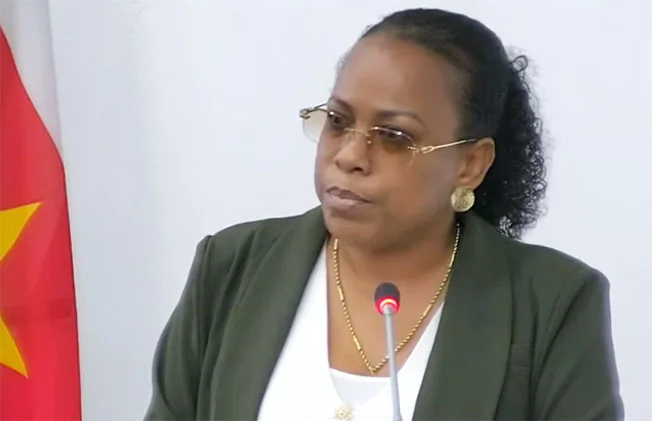
On November 7, co-initiator Rossellie Cotino of the National Democratic Party (NDP) laid out a series of targeted amendments to the draft Tax Justice Administration Act during deliberations in Suriname’s National Assembly, designed to cut unnecessary caseloads for the judiciary and make tax dispute resolution more transparent and accessible for ordinary citizens and local businesses.
Cotino’s core proposal mandates that all future rulings issued by the planned independent specialized tax court be released to the public with all identifying personal and corporate details fully redacted. Under this framework, taxpayers, business operators, and even the national tax authority would be able to cross-reference decisions from past cases with nearly identical fact patterns, allowing them to anticipate likely outcomes of their own disputes before escalating to formal court proceedings. Cotino noted this provision would directly address widespread concerns raised by fellow parliamentarians about the accessibility of the new judicial process and the risk of overburdening the already stretched judicial system with a surge of new tax cases.
The proposed independent tax court is set to replace the existing long-standing tax dispute appeal body, which Cotino emphasized has failed to operate effectively for decades. She pushed back against calls to retain an extra intermediate appeal step before taxpayers can bring their cases to the specialized court, arguing the redundant layer would only prolong resolution times for frustrated taxpayers who have already faced years of delays under the broken current system. Cotino clarified that the anonymized ruling publication provision is still a preliminary draft that will be subject to further cross-party consultation before the bill moves to a final vote.
Cotino also threw her support behind a separate proposal to slash the maximum review period for initial tax objection claims from 12 months to just 6 months, with a single allowed 6-month extension permitted only under exceptional, clearly defined circumstances. This adjustment would cut the total maximum timeline for resolving a tax dispute from the current 2 years down to 1 full year. Additionally, she called for strict, bounded limits on any extensions to the window for the tax court to issue final rulings, requiring every extension request to be accompanied by a formal, written public justification. She also signaled openness to revising existing rules around the burden of proof in tax cases, noting that even if the burden of proof is shifted or heightened for taxpayers, tax inspectors must remain legally obligated to provide full, reasonable, and sufficient supporting evidence for every tax assessment they issue.
Acknowledging that the original draft of the Tax Justice Administration Act requires revisions across multiple sections, Cotino noted that ongoing parliamentary deliberations have yielded valuable new feedback and targeted adjustment proposals from both fellow assembly members and cabinet representatives. Lawmakers are currently conducting follow-up reviews of three key ambiguous areas: the formal legal definition of an “interested party” eligible to file a tax dispute, required court proceeding languages, and transitional rules to cover cases already in the pipeline under the old appeal system. Cotino added that there is no need to codify every minor organizational operational detail directly into the text of the law, as administrative implementation matters fall under the purview of the national tax authority and the independent judicial system. The group of bill initiators plans to integrate all agreed-upon amendments into a revised draft before wrapping up the full parliamentary review process.
Cotino: Belastinguitspraken publiceren om nieuwe geschillen te voorkomen