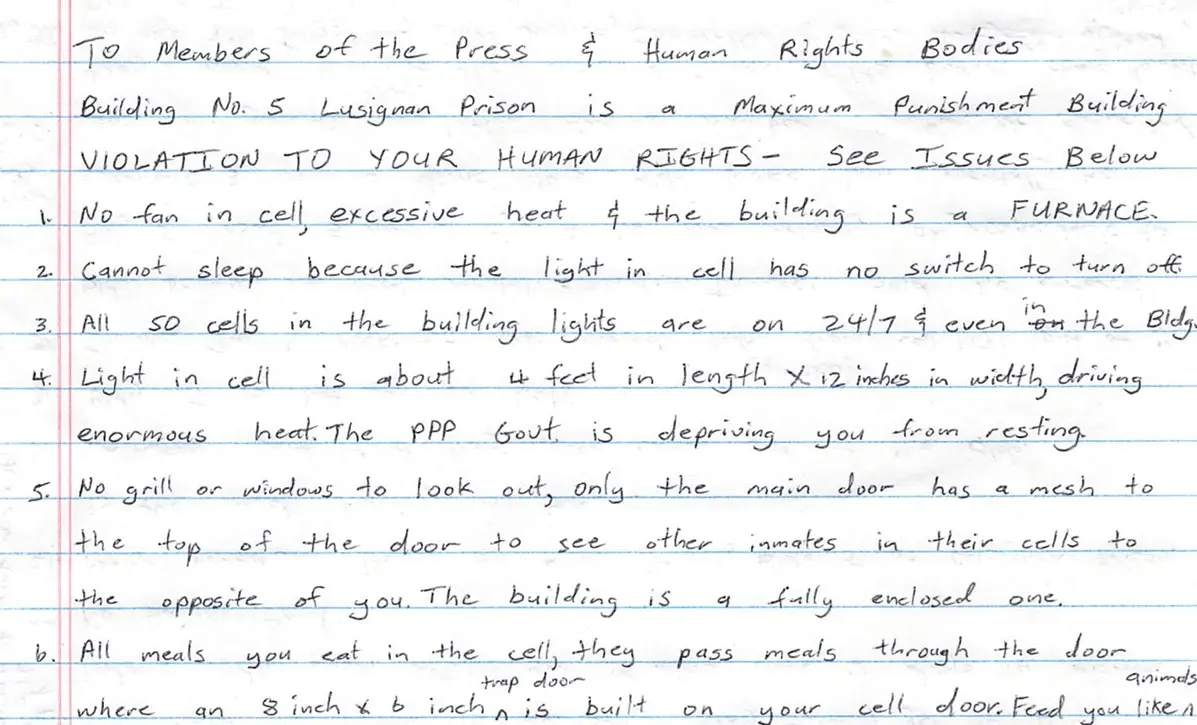
On November 7, 2026, newly surfaced handwritten allegations from Guyana’s Opposition Leader Azruddin Mohamed, who is currently on remand at Lusignan Prison, have ignited a heated public dispute over detention conditions, human rights compliance, and government transparency. The document, disseminated to media outlets by Mohamed’s sister Hana Mohamed-Dmitriyeva, outlines a sweeping catalogue of alleged mistreatment that the politician claims violates the United Nations Nelson Mandela Minimum Rules for the Treatment of Prisoners. Mohamed was remanded to custody on October 30, 2026, alongside 20-year-old police constable Ryan Greene, under Section 9 (2)(b) of Guyana’s Cybercrime Act, which criminalizes unauthorized disclosure of national security-related electronic data. If convicted, both face a maximum fine of GYD$8 million and five years of imprisonment, in connection with allegations that Greene shared footage of an October 12 shooting targeting a vehicle carrying Mohamed, his driver, and a staff member — an incident purportedly captured by a senior superintendent of the Guyana Police Force’s espionage unit. The 33-point handwritten dossier from Mohamed details harrowing conditions in the facility’s Building 5, which he describes as “halfway to hell.” Specific claims include non-functional cell fans that turn the enclosed, windowless unit into a sweltering furnace, 24/7 operating overhead lights with no individual switches that make rest impossible, smoke from a nearby dumpsite seeping into the building to impair breathing, and meals passed through an 8×6 inch trap door in cell doors that he says treats inmates “like animals.” He further alleges severe violations of religious freedom, including no access to halal food, no religious leaders permitted to enter the building, and a total ban on Muslim inmates attending weekly Jumaah prayers in other prison blocks, exacerbated by the absence of clocks to track prayer times. Mohamed also reports near-total isolation: inmates are locked in cells for 23 hours and 50 minutes per day, with only 10 minutes allocated for daily showers that take place under constant camera surveillance, armed guard supervision, and mandatory foot shackles, with no privacy whatsoever. Recreation time is restricted to 15 minutes twice per month, with no access to table tennis equipment for over three months prior to his arrival, and family visits are limited to a maximum of 20 minutes once per week, conducted in the same building with listening officers and full shackling. He adds that prison officials moved 17 other inmates out of Building 5’s top floor hours before his arrival, leaving him completely alone on the upper level in what he claims is a deliberate effort by the ruling PPP government to break him mentally. The dossier also includes corroborating anecdotes from other detainees, including reports that a previously mentally stable inmate named Timothy McKenzie was transferred for psychiatric evaluation just one day before the dossier was written, after five months of conditions in Building 5 that left him psychologically unwell. It further notes that an inmate who reported identical conditions to Guyana’s Chief Justice during a July 2026 judicial visit was immediately punished with 37 days of continuous shackling, revoked visit and phone privileges, and no access to canteen services, while three local fishermen held in the block for three days cried nonstop and stated they would rather die than remain in the facility. The release of these explosive allegations comes days after Guyana’s Attorney General Anil Nandlall publicly rejected all claims of mistreatment during a recent bail hearing for Mohamed’s mother Bonita Mohamed, presenting photos of the opposition leader’s cell and asserting that he is held in purpose-built accommodations reserved for high-profile prisoners, with no oppressive conditions or solitary confinement. The Guyana Prison Service (GPS) had already issued an official statement on November 2, 2026, pushing back against human rights violation claims, publishing two days of official detention logs that show Mohamed was granted 9 hours and 20 minutes outside his holding area on November 1, received multiple family and attorney visits, nearly 45 minutes of total personal phone time, a 90-minute welfare counselling session, a medical assessment with cough medication, and writing and reading materials, and even told the Director of Prisons during a late-night visit that he had no outstanding complaints. GPS officials confirmed on November 7 that they had received the full handwritten dossier of allegations, and have formally submitted the document directly to the Director of Prisons for full review and follow-up action. In his public appeal, Mohamed has explicitly called on independent media outlets and domestic and international human rights organizations to conduct unannounced on-site inspections of Lusignan Prison, and specifically Building 5, to verify the conditions he has documented and hold authorities accountable for any breaches of national and international prisoner treatment standards.
Opposition Leader purportedly lists concerns about prison conditions from behind bars