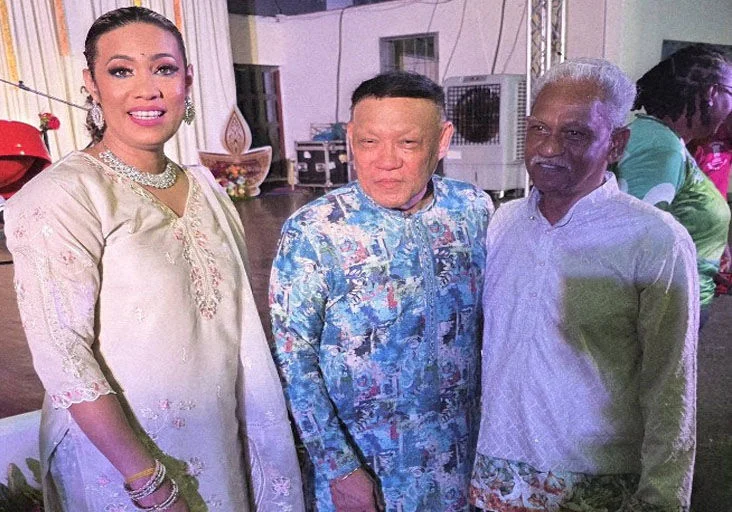
Trinidad and Tobago’s Housing Minister David Lee has suffered a significant legal blow this week, as the High Court has formally dismissed his bid to block an ongoing criminal prosecution against him, removing a key procedural barrier that threatened to derail the case before it could reach a full trial. The landmark ruling, delivered Wednesday by Justice Westmin James, struck down Lee’s application for judicial review and constitutional redress, which had contested the lawfulness of his October 2025 re-arrest and subsequent committal to stand trial alongside co-accused businessman Hugh Leong Poi.
Justice James’s ruling affirmed multiple critical points of legal procedure related to the case, which dates back to initial charges filed against Lee in September 2022. The minister was first accused of misbehaviour in public office and conspiring with Leong Poi to defraud the state of more than $1.4 million in improperly awarded tax exemptions linked to the purchase of a high-end Mercedes-Benz AMG G63 Wagon. After a preliminary enquiry concluded in April 2025, then-acting Chief Magistrate Christine Charles upheld a no-case submission and ordered Lee’s full discharge, seemingly ending the proceedings at the lower court level.
Just 24 hours before the statutory six-month window to challenge that discharge expired on October 6, 2025, Director of Public Prosecutions Roger Gaspard, SC, invoked Section 23(5) of the Indictable Offences (Preliminary Enquiry) Act to file an application for an arrest warrant that would compel Lee to stand trial. High Court Justice Hayden St Clair-Douglas approved the warrant the same day, and Lee was taken back into custody the following morning.
Lee’s legal team, led by Senior Counsel Fyard Hosein, had argued the DPP’s application was invalid, claiming the legislative provision under which the warrant was sought had already been repealed, and that the move constituted an entirely new set of proceedings filed under defunct law. They further asserted that Lee was entitled to a pre-warrant hearing to contest the application, and that the DPP could only use this specific legal mechanism in exceptional circumstances, such as the emergence of major new evidence or proof of severe lower court procedural error. The defence also alleged that Justice St Clair-Douglas had improperly rubber-stamped the DPP’s request without conducting an independent review of the case record.
In his comprehensive judgment, Justice James rejected every line of Lee’s legal challenge. He cited Section 33(2) of the Administration of Justice (Indictable Proceedings) Act, which explicitly preserves all provisions of the former Preliminary Enquiry Act for cases that were already formally instituted before the new legislation came into force, noting that Lee’s original case had been launched on October 10, 2022. The judge emphasized that the DPP’s post-discharge application was not a fresh legal proceeding, but a permitted procedural step within the original 2022 case file, filed well within the legally mandated six-month deadline.
Justice James further clarified that the relevant statutory framework does not require exceptional new evidence to challenge a magistrate’s discharge, and is designed specifically to allow the DPP to argue that the lower court reached an incorrect conclusion on the sufficiency of existing evidence, subject to independent review by a High Court judge. No evidence was presented to support the claim that Justice St Clair-Douglas failed to conduct a full, independent assessment of the case record before issuing the warrant, the judge added.
“The DPP held statutory authority to file this application, and the committal judge held corresponding authority to issue the warrant. Since the applicant had no legal right to a hearing before the warrant was granted, Lee’s October 7, 2025 arrest was carried out under a fully lawful warrant issued in strict compliance with due process of law,” Justice James stated in his formal ruling.
While the judgment clears the path for the long-delayed criminal case against Lee and Leong Poi to move forward to trial, Justice James confirmed that the Housing Minister retains two key remaining legal rights: he may raise any argument before the assigned trial judge that continuing the prosecution constitutes an abuse of court process, and he may file a formal appeal of Wednesday’s High Court ruling at a higher judicial level. Justice James declined to issue any cost orders against Lee, noting that the statutory interpretation questions at the heart of the case were unprecedented and carried significant public importance for the national legal system.
The DPP’s legal team was led by Senior Counsel Ian Benjamin, with additional representation from the Office of the Attorney General’s in-house legal team throughout the proceedings.