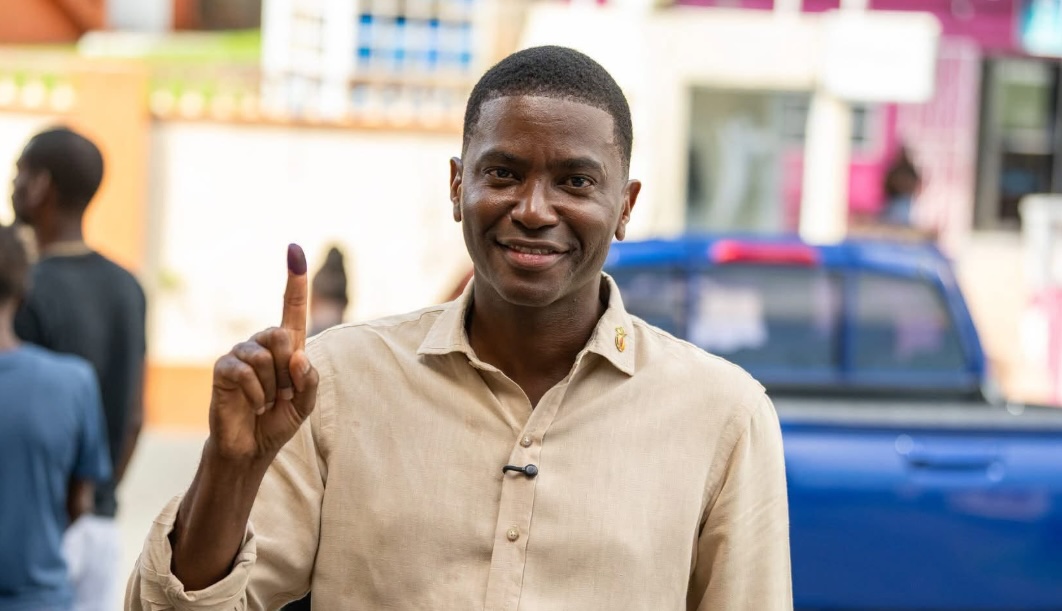
Grenada’s 2026 Thursday general election delivered a historic landslide win for Prime Minister Dickon Mitchell and his ruling National Democratic Congress (NDC), as the party moved within reach of a near-total sweep of the 15-seat national parliament, prompting Mitchell to declare Friday, November 6, an official national public holiday for voter celebration. Mitchell, who called the snap election two years ahead of the 2027 constitutional deadline, defended his home St David constituency by a resounding margin, securing 5,318 votes to easily outpace main opposition New National Party (NNP) candidate Noleen Roxanne James Thompson, who garnered just 2,138 ballots. The single NNP bright spot came in the St George North West constituency, where candidate Tawfiq Adrian Marlan Joseph claimed the party’s only parliamentary seat with 2,052 votes, leaving his NDC challenger with just 89 votes and the People’s National Party (PNP) rival with 69. The election marked a devastating personal defeat for NNP leader Emmalin Pierre, who had campaigned to become the first female prime minister of Grenada, Carriacou and Petite Martinique. Pierre, who had narrowly beaten incumbent Education Minister David Andrew by just over 200 votes in the 2022 general election, lost her St Andrew South East seat by 162 votes this cycle, finishing with 1,849 ballots against Andrew’s 2,011, while Democratic People’s Movement (DPM) candidate Shirley McQueen earned a mere 19 votes. The election also spelled a major upset for long-time political figure Peter David, a former foreign affairs minister who first claimed the Town of St George’s seat in 2003. David, who split from the major parties to launch the new DPM and field nine candidates across constituencies, was widely tipped by pre-election analysts to emerge as a pivotal kingmaker in the new parliament, but he finished third in his home race with only 730 votes, losing out to Attorney-General Claudette Joseph’s 1,269 ballots, while the NNP candidate took 536. None of the smaller fringe parties on the ballot managed to gain meaningful voter traction, including the historic Grenada United Labour Party (GULP) founded in 1950 by the nation’s first prime minister Sir Eric Gairy, alongside the People’s National Party, Grenada Social Democratic Party, Grenada Renaissance Party, and Change of Hope for Grenada, Carriacou and Petite Martinique. Preliminary data released by the official Parliamentary Elections Office (PEO) recorded a 63.3% voter turnout, with 61,264 valid ballots cast across the tri-island state. The NDC earned a commanding 37,369 total votes, the NNP trailed with 22,567, and the DPM secured just 1,189 ballots. Regional political analysts weighed in on the unprecedented results in interviews with the Caribbean Media Corporation (CMC). Trinidad-based analyst Derek Ramsamooj noted the outcome reflected broad public approval for Mitchell’s young, dynamic leadership, framing the result as the end of the NNP’s decades-long era as a dominant governing force, and urging the opposition party to rebuild with fresh leadership if it hopes to return to power in future cycles. Ramsamooj added that the NDC entered the campaign with far greater accumulated political capital and resources, leveraging both targeted transactional outreach and sustained grassroots momentum to outperform the NNP, even amid a sometimes fiercely contested campaign period. Barbados-based commentator Peter Wickham confirmed the election was entirely free, fair, and unmarred by political violence, calling it one of the most historic votes in Grenada’s modern political history. He noted that while late informal polling had suggested the NNP had clawed back significant voter support ahead of polling day, that projected rebound never materialized, resulting in what he described as “political carnage” for the opposition party. Wickham also highlighted that Mitchell had notched his second historic electoral upset, following his earlier defeat of long-serving former prime minister Dr Keith Mitchell, this time thoroughly dismantling the political machine the former NNP leader built. Even as he acknowledged the NDC’s decisive win, Wickham characterized the party’s campaign as surprisingly pedestrian and unremarkable, and suggested that 51-year-old NNP leader Emmalin Pierre may wish to consider stepping away from frontline politics following her devastating loss. NDC deputy chairman Randal Robinson framed the landslide as a public mandate for the administration’s 2022 manifesto commitments, arguing that voters rewarded the party for delivering on tangible campaign promises rather than relying on empty rhetoric.