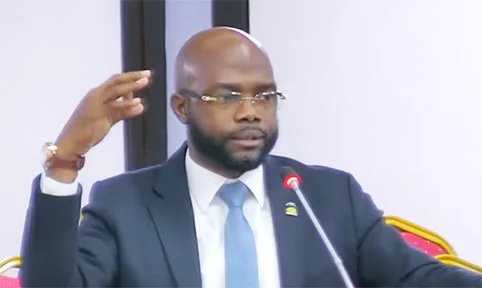
On November 6, Suriname’s Minister of Public Health, Welfare and Labor André Misiekaba formally confirmed in the National Assembly (DNA) that three specialized surgeons at Paramaribo’s Diakonessenhuis hospital have turned down a government-mediated compensation proposal, deepening a months-long payment dispute that has already halted their care for patients covered by the state-run Staatsziekenfonds (SZF) public health insurance scheme. The dispute traces back to a previously undisclosed monthly supplementary payment of SRD 300,000 that the three surgeons received on top of their standard procedure-based earnings, a benefit the former SZF leadership first flagged as unsubstantiated in August 2023. After SZF administrators failed to receive any formal documentation justifying why only these three surgical specialists qualified for the exclusive top-up, and no comparable payments were extended to other practicing surgeons across Suriname, the fund froze all disbursements earlier this year, triggering widespread discontent within the national surgical professional community over unequal treatment. When National Democratic Party (NDP) parliamentarian Silvana Afonsoewa raised the issue during a plenary session, she issued a stark warning that ordinary patients were bearing the brunt of the administrative and financial standoff, noting the three surgeons perform high-stakes, complex pediatric and oncological operations that no other small pool of specialists in the country can deliver. Afonsoewa criticized the SZF for abruptly cutting off payments without first negotiating a formal, mutually agreed new compensation framework with the medical team, emphasizing that fair remuneration for specialized medical staff must be balanced against the non-negotiable priority of uninterrupted patient care. In an attempt to de-escalate the impasse, Misiekaba held direct negotiations with the three surgeons and their legal representative, putting forward a transitional compromise: a retroactive monthly supplementary stipend of SRD 200,000 to cover the period since payments were paused, while a cross-sector working group conducted a full review to design a standardized, transparent, equitable long-term compensation structure for all specialized surgical staff nationwide. The three surgeons formally rejected this proposal shortly after the talks concluded, and notified the ministry they would no longer accept or treat any SZF-insured patients, leaving dozens of pre-scheduled operations in limbo. Misiekaba clarified that his administration will not reinstate the original SRD 300,000 exclusive top-up, as such a non-transparent, unequal arrangement cannot be justified with public health funding. Instead, the ministry is now exploring an alternative payment model already successfully implemented at the Academisch Ziekenhuis Paramaribo (AZP), where supplementary stipends for specialized clinical staff are disbursed directly through hospital administrative channels rather than paid as direct, unregulated transfers from the SZF. As a temporary stopgap to prevent life-threatening care disruptions, the ministry has launched a full audit of all patients currently under the three surgeons’ care or with pre-booked procedures, and has reached a formal agreement with AZP to take over all urgent surgical cases immediately. Misiekaba noted he cannot yet release exact figures on the total number of affected patients or the full scope of non-urgent procedures that may need rescheduling, but confirmed ongoing closed-door negotiations with Diakonessenhuis leadership to resolve the standoff as quickly as possible, with full updates scheduled to be submitted to the parliament’s permanent Public Health Committee once a formal draft agreement is finalized.
Misiekaba: SZF bood chirurgen Diakonessenhuis SRD 200.000 aan, maar voorstel afgewezen