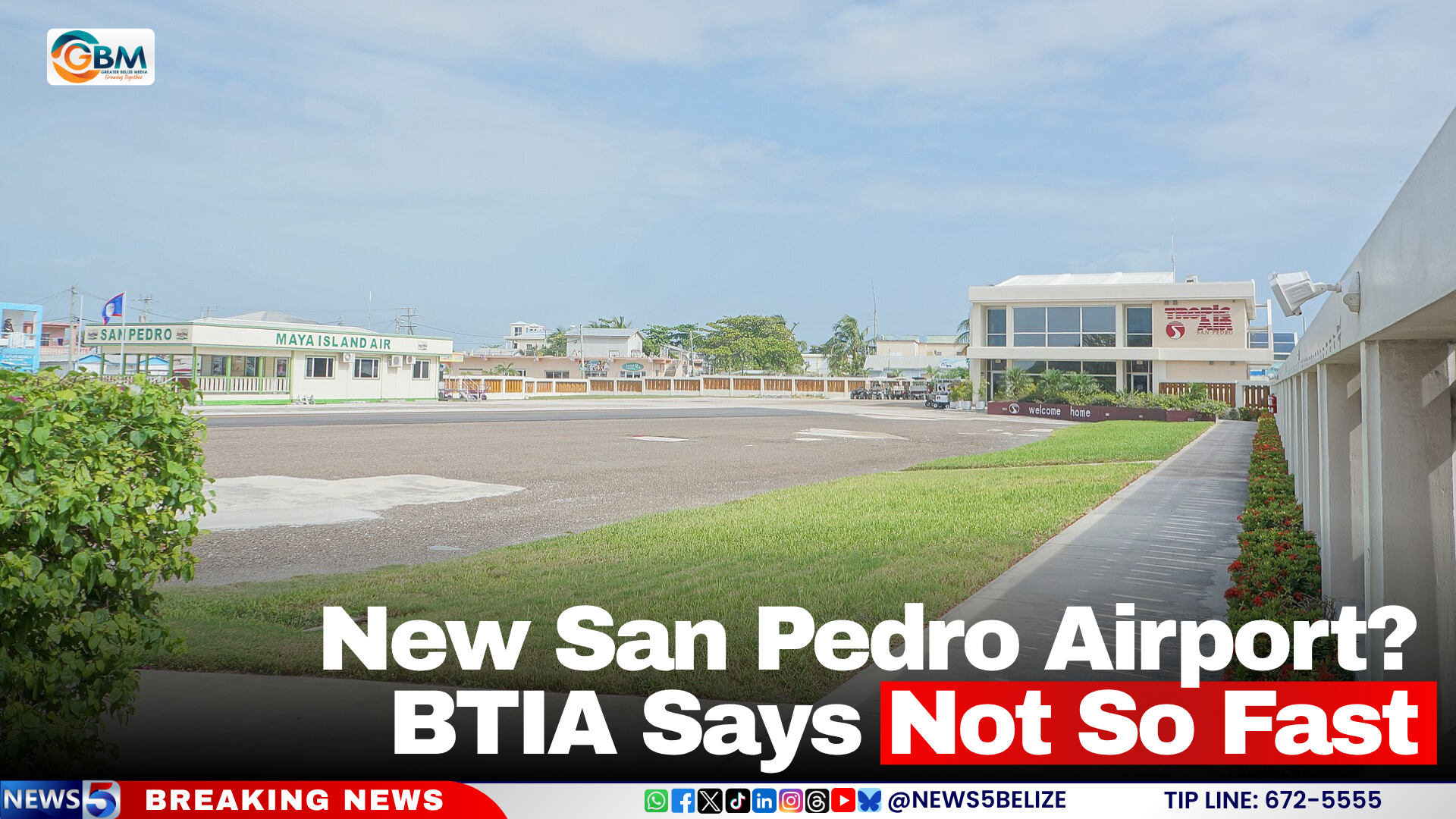
Plans to construct a brand-new airport facility in the northern stretch of Ambergris Caye, with a long-term goal of phasing out San Pedro’s existing John Greif II Municipal Airport, have sparked widespread pushback from local tourism industry groups, resident associations, and community leaders across the Belizean island. The proposal, initially outlined in the Inter-American Development Bank’s strategic development framework for Ambergris Caye, suggests repurposing the land occupied by the current downtown airport for expanded urban development once the new northern facility becomes operational. But critics argue that rolling out this large-scale infrastructure project without first conducting full, inclusive public consultations and resolving longstanding unmet community needs would deliver severe, avoidable harm to the island’s core economic and social fabric.
During a recent local chapter meeting, members of the Belize Tourism Industry Association (BTIA) San Pedro branch reached a unified formal position opposing the proposed new airport development, according to chapter chairperson Melanie Paz. Paz emphasized that the relocation of all airport operations away from the town centre would trigger cascading negative economic consequences for downtown San Pedro’s hospitality, retail, and service businesses that rely heavily on easy, convenient access for arriving air travellers. She further noted that the island has far more urgent, unaddressed priorities that deserve public and private investment far ahead of a multi-million dollar new airport build, including gaps in local healthcare services, crumbling road and utility infrastructure, persistent road traffic congestion, inadequate waste management systems, and the ongoing recurring sargassum seaweed crisis that disrupts coastal tourism operations annually. Most critically, Paz pointed out that to date no formal consultations have been held with local residents, the BTIA, the San Pedro Chamber of Commerce, or any other key stakeholder groups that would be directly impacted by the airport relocation plans.
BTIA National President Efren Perez clarified that the industry association is not fundamentally opposed to targeted infrastructure development that supports the island’s growth, but that there is no urgent operational need for a full replacement airport at this time. He highlighted that significant public investment was poured into the existing John Greif II Airport just a few years prior, including a major runway extension project that expanded the facility’s capacity to handle larger aircraft and higher passenger volumes.
Even residents living in the northern districts of Ambergris Caye have raised sharp concerns about the proposal, according to Catherine Paz, president of the Ambergris North Alliance. She noted that local northern communities are worried not just about the unvetted airport plan, but also about a separate proposed cross-border bridge that would run through the protected Bacalar Chico National Park to connect the island to Mexico. Both large-scale projects, she argued, are being floated before basic public services and foundational local infrastructure are upgraded to meet the needs of the island’s growing permanent population and tourist base.
San Pedro Mayor Wally Nuñez sought to clarify the Town Council’s official position in a recent public statement, noting that the local government is not opposed to the construction of a secondary runway in northern Ambergris Caye entirely. The council’s formal objection is only to any immediate move to close the existing municipal airport, he explained. The original, narrow vision for a northern runway was to host a fixed-base operator facility primarily serving private aircraft, as well as offering a secondary access point for local airlines to fly visitors directly to remote luxury resorts located on the island’s northern tip. Nuñez added that the full phase-out and closure of the existing downtown airport, as recommended in the IDB plan, is far from a finalized decision, and he does not foresee such a move being feasible for at least the next 20 years. He confirmed that a secondary northern runway could be developed on a much shorter timeline, but only after comprehensive environmental, economic, and operational feasibility studies are completed, and full, transparent public consultations are held with all affected community and industry groups.
Both the BTIA and the Ambergris North Alliance have stated publicly that they stand ready to collaborate in good faith with national and local government authorities to engage in structured, inclusive dialogue before any binding decisions are made regarding the future of the island’s airport infrastructure and long-term community development trajectory.