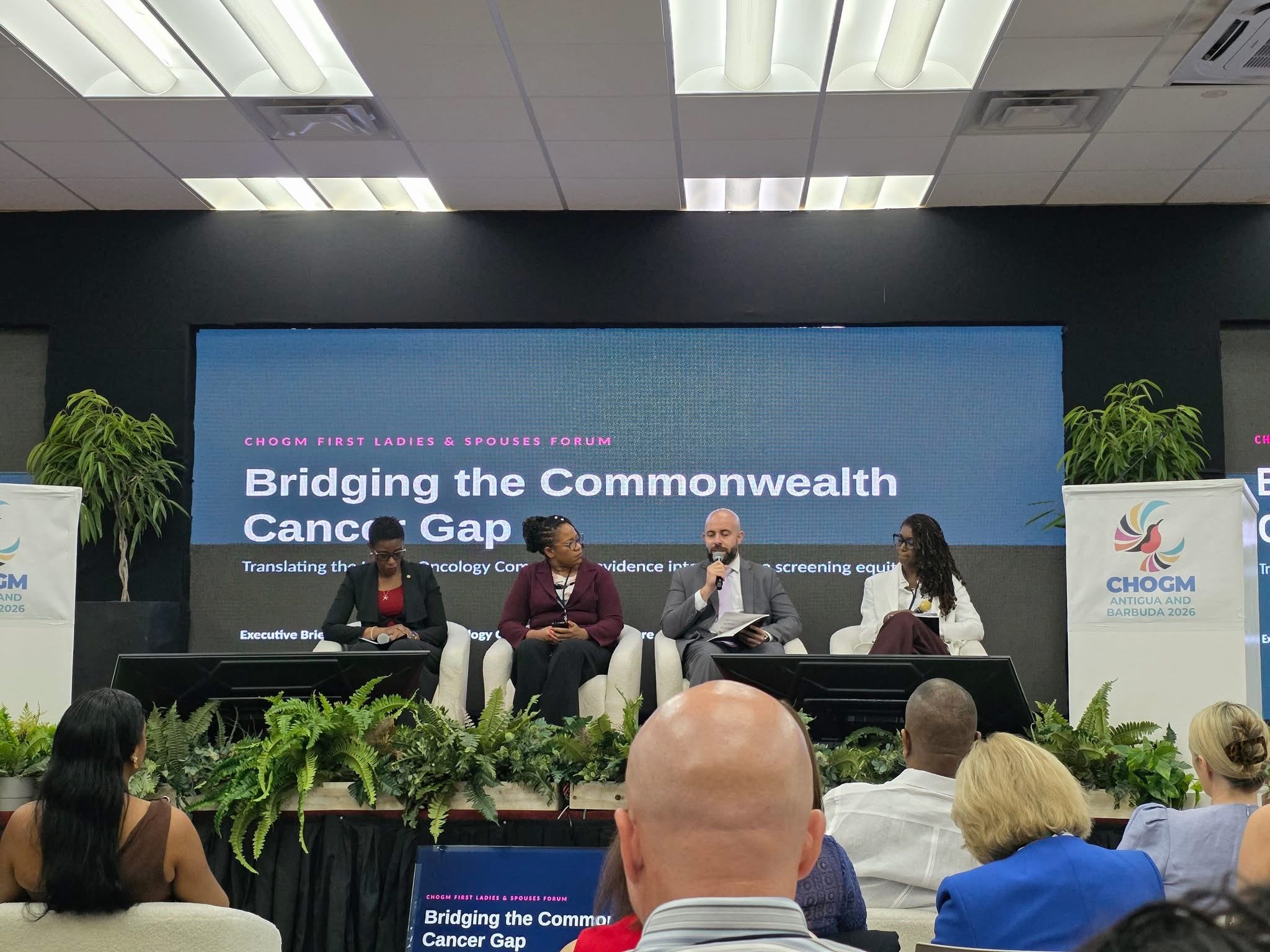
As the official 2026 Commonwealth Heads of Government Meeting (CHOGM) Spouses’ Programme kicked off, Antigua and Barbuda’s leading public health expert presented the nation’s groundbreaking, years-long progress toward eradicating cervical cancer as a public health threat to a global audience of Commonwealth stakeholders. Dr. Cherrie Tulloch, who leads the island nation’s National Cervical Cancer Elimination Task Force, walked attendees through the country’s actionable framework, tangible outcomes, and replicable best practices during her featured address at the launch event.
The national strategy, Dr. Tulloch explained, rests on three non-negotiable foundational pillars: unwavering high-level political backing for public health priorities, the relentless dedication of frontline care teams (with a specific nod to the critical role of nursing staff across all community and clinical sites), and coordinated cross-border partnerships with regional and global health bodies. The national HPV vaccination programme first launched in 2018, and was followed by a carefully phased rollout of evidence-based HPV DNA testing: a successful pilot demonstration project ran between 2022 and 2023, before the service was expanded to every community across the country in 2025. Jointly administered by Antigua and Barbuda’s Ministry of Health, the Pan American Health Organization (PAHO), and non-profit global health partner Basic Health International, the full programme has leveraged digital health record systems to streamline screening workflows, automate patient reminders, and eliminate gaps in post-screening follow-up care.
By October 2025, official public health data confirmed that 62.9% of all women eligible for cervical cancer screening across the country had completed testing, putting the nation on a fast track to hit the World Health Organization’s global 70% screening coverage target well ahead of projected timelines. The expanded screening network has also identified 411 women with positive HPV test results who received immediate, targeted follow-up care, a milestone that underscores that screening efforts only deliver meaningful impact when paired with seamless access to timely diagnosis, evidence-based treatment, and long-term patient monitoring.
Drawing on half a decade of on-the-ground implementation experience, Dr. Tulloch shared tailored guidance for other Commonwealth member states working to advance their own cervical cancer elimination goals. She urged national health authorities to adopt fully integrated, long-term sustainable models that link every step of the care continuum: HPV vaccination, routine screening, diagnostic services, curative treatment, and ongoing patient support. Additional actionable recommendations included scaling widespread public education campaigns to counter widespread community misconceptions and harmful social stigma around HPV, expanding access to care through innovative solutions such as at-home self-sampling kits and extended after-hours clinic operations, and investing in robust, interoperable health information systems to reduce gaps in patient tracking and enable real-time programme performance monitoring.
For lower-resource nations that are just launching their cervical cancer elimination roadmaps, Dr. Tulloch advised first conducting a full audit of existing health system capacity, identifying and elevating dedicated champions within both government leadership and local community groups, building new programmes on top of pre-existing, well-established primary care services, and prioritizing knowledge-sharing with peer nations that share similar demographic, geographic and economic contexts. She emphasized that cervical cancer elimination is not an unattainable aspirational target, but a fully achievable public health milestone – one that demands consistent, multi-year national commitment, dedicated sustained funding, and cross-sector collaboration. For small island developing states across the Commonwealth and beyond, Antigua and Barbuda’s carefully documented, results-driven experience provides a practical, tested blueprint to boost preventive care uptake, catch cases at the earliest possible stage, and eventually eliminate cervical cancer as a preventable cause of death.