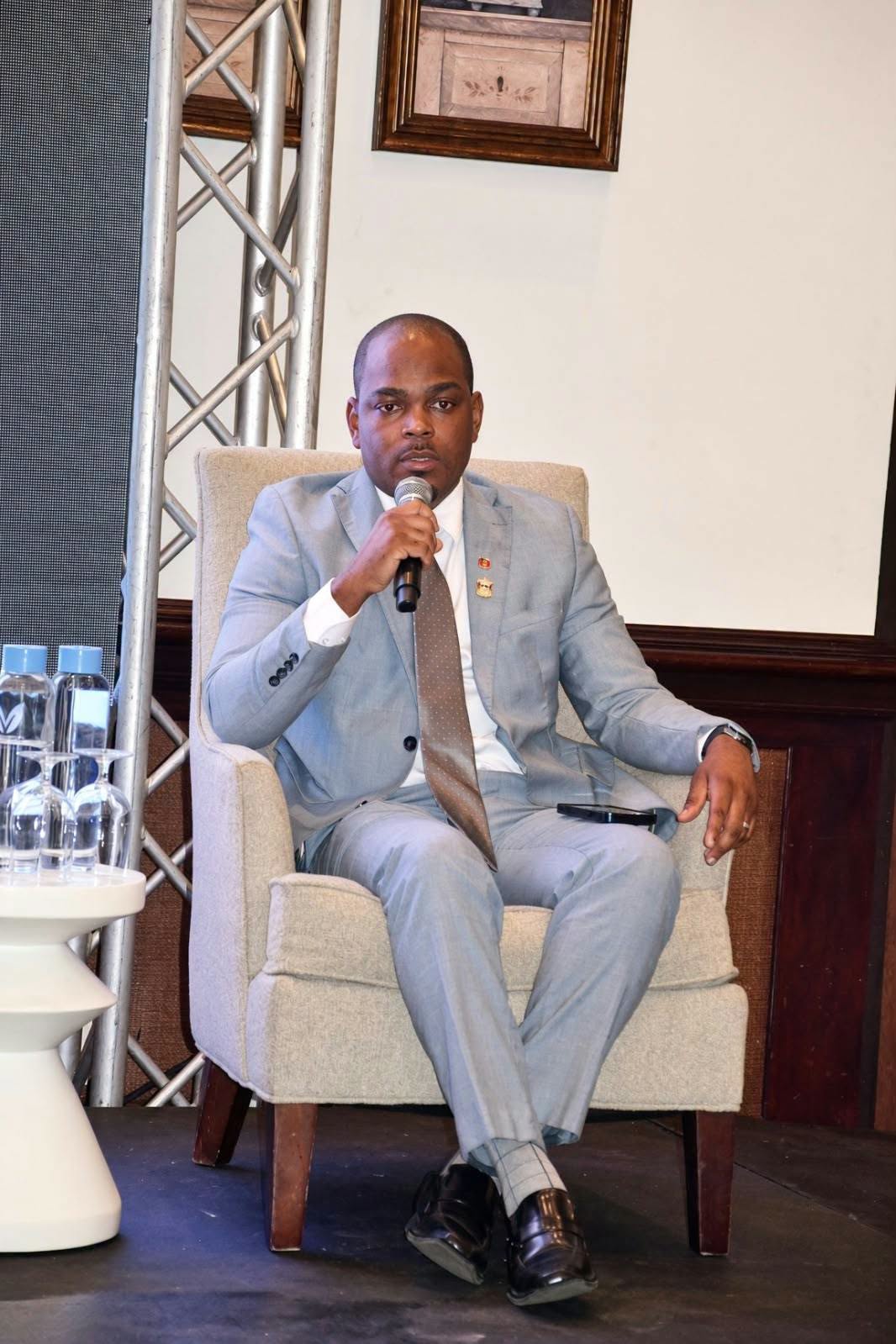
Delivering a landmark address at the Global Citizen Sessions: From the Front Lines to COP31 hosted at Sandals Grande Antigua this Wednesday, the Honourable Michael Joseph, Antigua and Barbuda’s Minister of Health, Wellness, Environment and Civil Service Affairs, laid out a clear, urgent policy roadmap for small island developing states (SIDS) ahead of the upcoming UN Climate Change Conference (COP31) to be held in Antalya, Türkiye. At the core of his address was a three-pronged call to global stakeholders: scaled, accessible climate financing for climate-vulnerable nations, deepened cross-regional collaboration across the Caribbean and global SIDS blocs, and a just, properly resourced global phase-out of fossil fuels that leaves no marginalized community behind.
Minister Joseph emphasized that the 1.5°C global warming threshold, established as the non-negotiable guardrail to avoid catastrophic, irreversible climate impacts, must remain the central north star of all COP31 negotiations, rather than being sidelined by competing national economic interests. For nations like Antigua and Barbuda, which face existential threats from rising sea levels, extreme hurricanes and chronic drought far out of proportion to their minimal historical greenhouse gas emissions, the minister stressed that global climate action must pair ambitious emission reduction targets with massive investments in local adaptation capacity, community resilience building, and fully funded support for loss and damage incurred by climate disasters that can no longer be avoided.
A key focus of the minister’s intervention was the systemic barriers that lock SIDS out of the flexible, low-cost funding they need to respond to the climate crisis. He noted that current climate financing frameworks largely force small island nations to take on high-interest commercial loans for critical resilience projects, pushing many already debt-burdened Caribbean states further into fiscal peril. Instead, he called for sweeping reforms to unlock expanded access to concessional, zero-interest and fully grant-based climate funding earmarked specifically for adaptation and loss and damage response, rather than the majority of current green finance that prioritizes large-scale emission reduction projects in wealthy, industrialized nations.
Minister Joseph also laid out a targeted regional priority for the Caribbean: a coordinated, cross-border push to end the region’s crippling dependence on expensive, volatile imported fossil fuels, which currently drain billions of dollars from local national budgets each year. He outlined that targeted investments in distributed renewable energy systems, next-generation battery storage infrastructure, and hardened, climate-resilient public electricity grids would not only cut the Caribbean’s collective carbon footprint, but also drastically reduce energy costs for households and small businesses while insulating local communities from the disruption of extreme weather events that routinely knock out power across the region.
As one of the earliest and most vocal national backers of the Fossil Fuel Non-Proliferation Treaty Initiative, Antigua and Barbuda reaffirmed its longstanding advocacy for a structured, fair global phase-out of fossil fuels that assigns responsibility for transition costs proportionally to historical emitters, rather than placing unfair burdens on low-emission vulnerable nations. During the event’s fast-paced closing rapid-fire segment, Minister Joseph formalized three non-negotiable commitments he is urging all Commonwealth member state leaders to bring to the COP31 negotiating table: unwavering alignment with the 1.5°C warming ambition, a dramatic, immediate scaling up of accessible climate finance for vulnerable nations, and a fully funded, equitable global energy transition that prioritizes the needs of frontline and marginalized communities.
Minister Michael Joseph Highlights Climate Financing and Renewable Energy Priorities Ahead of COP31 at Global Citizen Session