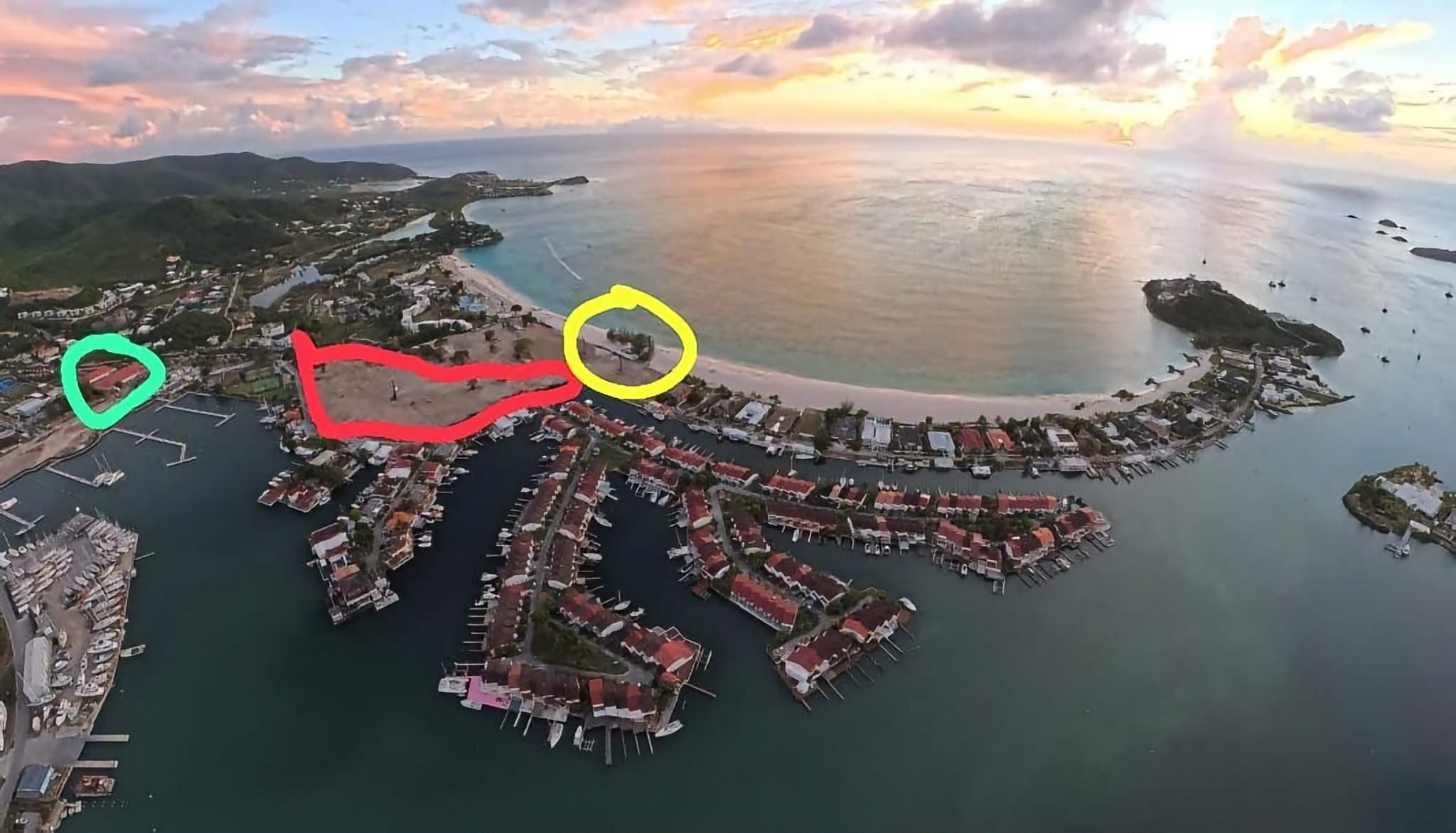
A community-led demonstration to safeguard longstanding public access to Jolly Harbour South Beach is set to take place on November 4, with local residents invited to assemble at Sandra’s Beach Bar from 3:30 p.m. to voice their collective demands. Organizer Fuller laid out a detailed suite of grievances in a widely shared extended video appeal, outlining alleged deviations from the Jolly Harbour original master development plan that he says have eroded core public amenities. According to his claims, designated public parking spaces earmarked in the initial planning blueprint have been absorbed into the adjacent Nikki Beach resort development, with one former public parking lot now repurposed as a sales office integrated into the resort expansion. Fuller has questioned the logic of permitting a tripling of the local residential and visitor population in the Jolly Harbour catchment while simultaneously eliminating the parking infrastructure designed to support that volume of users. Compounding the parking concerns, he asserts that a formerly wide, multi-user beach access corridor has been narrowed to a mere 2.5-foot pedestrian walkway, a restriction that he says creates unnecessary barriers for local residents, vendors, and families. Fuller pushed back against official suggestions that local residents travel outside the Jolly Harbour community and use alternative access points via Jolly Beach, arguing that residents living within the development have a fundamental right to reach South Beach without being forced to leave their neighborhood and source off-site parking. He has directed sharp criticism at the national Development Control Authority, alleging that no meaningful public consultation, stakeholder meetings, or town hall forums were held to discuss the coastal development changes that have altered public access. Fuller emphasized that South Beach is a versatile, high-value public space that has long hosted community events ranging from beach volleyball and casual cricket matches to sailing regattas, open-air concerts, and small-scale tourism activities. He traced the origins of the beach’s protected public footprint to a mandate from former Prime Minister V.C. Bird during Jolly Harbour’s initial construction, noting that the late leader had encouraged targeted private investment while enforcing strict shoreline setback rules to reserve ample coastal space for public use. Fuller insisted that these long-standing public protection guarantees must remain in place even as property ownership and development plans evolve over time. Local small business operators have also borne the brunt of the restricted access, according to Fuller’s claims: Sandra’s Beach Bar now faces major logistical hurdles transporting food, beverages, and other critical supplies to its premises after sections of the access route were fenced off, while a cohort of local beach vendors have been forcibly relocated from Jolly Harbour to the more distant Ffryes Beach. Fuller framed the fight for public beach access as a broader fight to protect Antigua and Barbuda’s most valuable economic assets, noting that previous generations could not have foreseen the massive revenue potential that the country’s unspoiled coastal landscapes would generate for the tourism sector. He advocated for a model of sustainable coastal development that allows local communities to earn livelihoods from their natural resources without depleting them, warning that “if you destroy the resources, then you eat today and starve tomorrow.” He made a special appeal to local parents to bring their children to the demonstration, framing the gathering as an educational opportunity to teach younger generations about the country’s coastal heritage and the importance of collective advocacy to defend public shared spaces. Fuller also raised separate unconfirmed environmental concerns related to dredging and land reclamation work near Barnacle Point, alleging that excavated dredge spoil is being dumped on seagrass beds located within a formally designated marine protected area. He criticized the apparent contradiction between the national government’s public appeals for international climate action funding and domestic development decisions that he says are actively damaging sensitive coastal ecosystems, noting that low-income households will bear the brunt of any resulting environmental harm and lost access to natural public resources. Fuller called directly on sitting Prime Minister Gaston Browne and all stakeholders involved in the Nikki Beach and Jolly Harbour expansion projects to immediately address the community’s parking and access demands, suggesting that developers could easily acquire an adjacent beachfront parcel to restore lost public parking capacity. He noted that demonstration attendees are encouraged (but not required) to wear white as a unifying symbol for the public access movement. At the time of publication, no formal responses to Fuller’s allegations have been received from the Antigua and Barbuda government, the Development Control Authority, or the representatives of the Nikki Beach development team, and none of the claims related to unapproved construction, unconsulted planning changes, or marine ecosystem damage have been independently verified.
Protest set for today over beach access at Jolly Harbour in Antigua and Barbuda