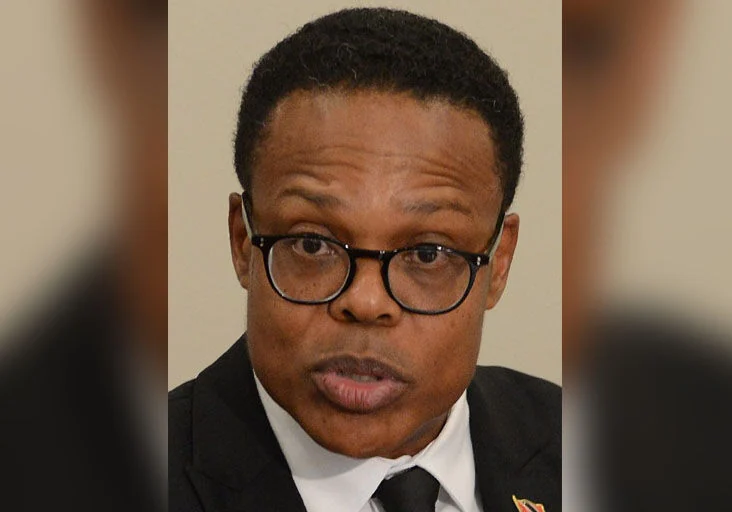
In two unprecedented breaks from long-held diplomatic tradition, Trinidad and Tobago has deviated from its decades-old foreign policy stance at United Nations General Assembly votes this week, sparking sharp criticism from a senior former government official. On Monday, the twin-island nation abstained from the annual UNGA resolution endorsing the International Criminal Court (ICC) report — a measure it had consistently co-sponsored and fully supported from the ICC’s founding onward, a position deeply rooted in national legacy. Just days prior, Port of Spain broke with more than 30 years of established diplomatic practice by casting a vote alongside the United States against a UN resolution demanding an end to Washington’s long-running economic embargo on Cuba. The consecutive shifts in the country’s international positioning have drawn fierce condemnation from Dr Amery Browne, the former minister of Foreign and Caricom Affairs, who accused the current administration of abandoning the foundational principles that have guided Trinidad and Tobago’s global engagement for generations. In a public statement released this week, Browne directed sharp criticism at Prime Minister Kamla Persad-Bissessar and sitting Foreign Affairs Minister Sean Sobers over the ICC abstention. “Prime Minister Kamla Persad-Bissessar and Minister Sean Sobers have now turned their unprincipled and destructive hands toward the International Criminal Court,” Browne remarked. “They continue to disgrace our foreign service and our national sovereignty with every decision that they make in the international and regional arena, without exception.” Browne framed the government’s new voting posture as a pattern of “furtive subservience to a foreign agenda,” and emphasized that it directly repudiates the legacy of former prime minister and president Arthur NR Robinson, the Trinidad and Tobago leader whose 1989 UN proposal for a permanent global criminal court laid the critical groundwork for the ICC’s eventual establishment via the 1998 Rome Statute. “This is yet another example of the Prime Minister’s new-found discipleship in fascism leading to a national position that conflicts with international law and the UN Charter,” Browne said, adding that the abstention devalues Robinson’s life’s work to create a global mechanism to prosecute perpetrators of genocide, war crimes, crimes against humanity, and acts of aggression. “This week’s abstention is a marker of the unprincipled cowardice of the current UNC Cabinet, which brings shame to Trinidad and Tobago and embarrassment to the diplomacy and standards for which this nation was well regarded and respected,” he continued. The ICC resolution was formally adopted during the 34th plenary meeting of the UN General Assembly in New York, tallying 92 votes in favor, 13 against, and 36 total abstentions. Trinidad and Tobago’s choice to abstain placed it outside the consensus of most Caricom member states: Barbados, Jamaica, Guyana, and Belize all voted in full support of the measure, while the group of abstaining nations included Colombia, Egypt, India, and China. Countries that voted against the resolution included the United States, Russia, and Israel. The vote unfolded against a backdrop of escalating external pressure on The Hague-based ICC, most notably from the United States, which has imposed targeted sanctions on ICC judicial staff and implemented retaliatory measures in response to the tribunal’s independent cross-border investigations. Earlier on the day of the vote, ICC President Judge Tomoko Akane delivered a pre-recorded address to the General Assembly, condemning unilateral sanctions and entry bans targeting the court’s judiciary, warning that such coercive measures threaten the institution’s judicial independence and constitute deliberate attempts to derail global justice efforts. The abrupt pivot in Trinidad and Tobago’s longstanding pro-ICC stance has raised widespread questions about the unstated considerations driving the government’s revised diplomatic priorities, particularly as Washington ramps up its public and private campaign against the international court. Local outlet the Trinidad Express attempted to reach Foreign Affairs Minister Sobers for comment on the rationale behind the new voting positions, but Sobers — who is currently attending the 2026 Commonwealth Heads of Government Meeting in St John’s, Antigua and Barbuda — did not respond to WhatsApp inquiries sent by the newsroom by late evening local time.