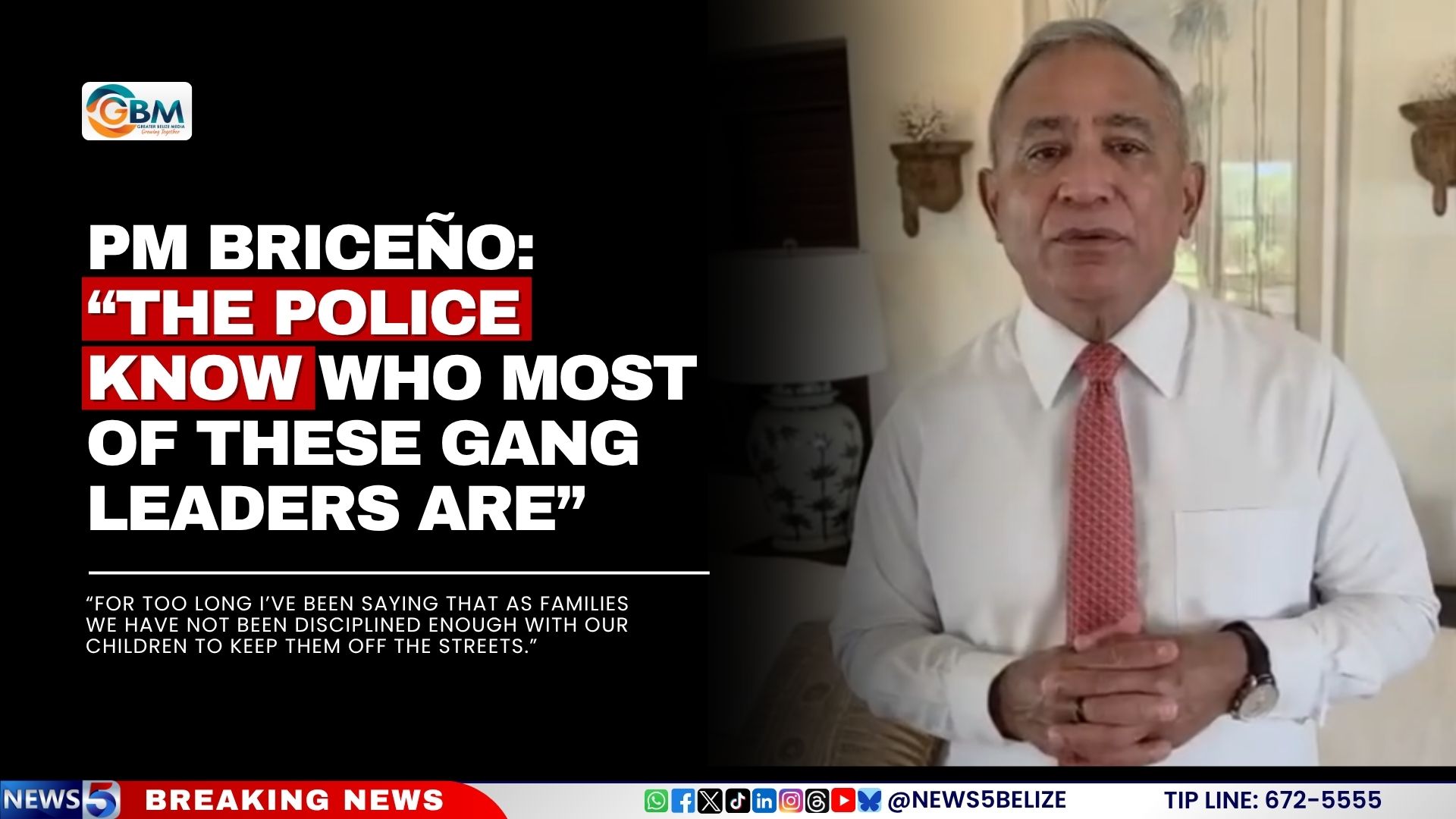
On November 3, 2026, Belizean Prime Minister John Briceño delivered a public address focused on national public safety, outlining a multi-stakeholder action plan to curb gang-related violence across the country, days after targeted state of emergency (SOE) measures went into effect on November 1 in high-risk zones including sections of Belize City, Ladyville, Cotton Tree, and Unitedville. The address came immediately after Briceño held a virtual Zoom consultation with National Security Minister Michel Chebat, who walked the prime minister through recent on-the-ground security updates, the ongoing rollout of the SOE, and a suite of upcoming law enforcement and community intervention initiatives designed to restore public confidence in personal safety. Briceño confirmed that local law enforcement agencies have already identified the vast majority of active high-level gang leaders operating in affected communities, and emphasized that the administration is now prioritizing targeted enforcement operations to remove these figures from public spaces to eliminate the threat they pose to ordinary residents. A subset of the planned security and social support measures are still pending formal Cabinet review and approval before they can be launched publicly. Beyond law enforcement actions, Briceño framed the fight against gang violence as a collective national responsibility that requires coordinated participation from every segment of Belizean society: government bodies across all levels, all registered political parties, private sector enterprises, public service agencies, non-governmental organizations, and individual households. He delivered a particularly direct message to parents, noting that for years, insufficient household discipline has contributed to young people being left unsupervised and vulnerable to gang recruitment on neighborhood streets. To address the root causes of gang involvement, Briceño highlighted the administration’s upcoming Second Chance Program, a targeted intervention framework for at-risk youth and existing gang members that will provide structured disciplinary support, vocational skills training, and formal apprenticeship placements. Reiterating a longstanding policy priority, Briceño emphasized that meaningful, stable employment is the single most effective social intervention a government can deliver to prevent young people from being drawn into criminal activity, noting that the current administration is prioritizing job creation to reduce the idle youth population that is most susceptible to gang recruitment. He closed the address by calling for unified national solidarity to confront the public safety crisis as a shared collective challenge rather than a burden solely borne by law enforcement.